More homeless people are squatting in abandoned suburban housing. Eduardo M. Peñalver, co-author of the forthcoming book "Property Outlaws" thinks cities should acquire these properties and allow the former owners to live in them as renters.


"As rising unemployment pushes more people out of their houses and apartments and growing numbers of Americans cannot find a place to perform these essential functions legally, they will have little choice but to break the law. And so some of them are turning to a strategy that has cropped up repeatedly in American history-squatting...As the current recession picks up speed, we are confronted with the ingredients for a squatting boom.
The difference between the 1970s and today is that the crisis last time was focused on the urban centers, while this time around the suburbs are the site of the greatest mismatch between people without homes and homes without occupants.
[A]n outbreak of squatting is a sign that governments should change their housing policies to make it easier for poor people to find the housing they need-as law-abiders instead of renegades...The sudden increase in squatting shows that the housing market that is out of kilter. The solution is not to chase squatters off, but to bring the market back into balance by helping them find a place to call home."
Read the full story: Homesteaders in the Hood
Reducing the Number of Abandoned Properties in Louisville
Louisville, like many other cities around the country, has been working hard to reduce the number of abandoned buildings. Recent efforts have provided the city with a new road map for blight reduction.
One in Nine U.S. Homes Empty
Empty homes are littered in cities across the country. According to the U.S. Census Bureau, one out of every nine U.S. homes is unoccupied.
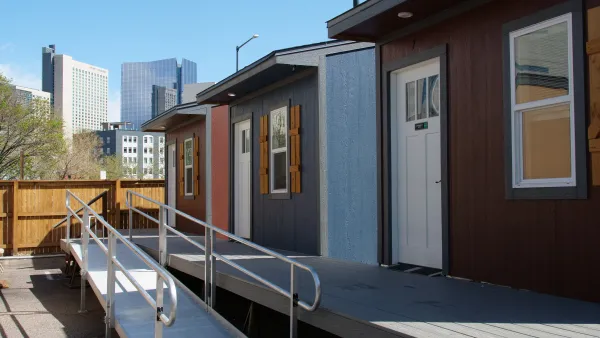
Denver is solving homelessness. Why aren't the rest of us?
Since 2023, Denver's street homeless population has decreased by 64%, proving that effective tools exist to support those in need of housing.

Desperate measures: Advocates weigh draining Lake Powell to fill Colorado River
Draining the reservoir could reduce evaporation losses by a couple hundred thousand acre-feet.

Eastern Nebraska is running out of electricity
Data centers and electrification are straining eastern Nebraska’s grid, throttling economic development.

Malls are becoming the midtowns of the future
Mall and office park redevelopments are a generational opportunity to create new nodes of urbanity.

Officials claim feds 'rushed' Amtrak environmental review
Amtrak plans to move their Chicago maintenance facility from an industrial area to a residential one.

NYC breaks ground on anti-flooding infrastructure project
New York City's new system will reduce stormwater flows to local sewers by 90%.

One Kentucky town’s secret to affordable housing
The Smoketown Community Land Trust has already built seven affordable homes for community members.

FREE Course: Walkable City 1: Why Walkability?
After describing his path towards focusing on walkability as the essence of good planning, Jeff Speck marches through his five principal reasons for making more walkable places.
Reinventing Malls: Planning Alchemy—Turning Gray Fields Into Gold
The course focuses on the opportunities and imperatives that shape reinvention of mall sites.

City of Rosemead
Rutgers University, Edward J. Bloustein School of Planning and Public Policy
One Hundred Miles
University of Michigan School for Environment and Sustainability (SEAS)
Hunter College, City University of New York (CUNY)
The Architects Foundation
City of Cambridge
Montrose County
The Pocatello Development Authority