Empty homes are littered in cities across the country. According to the U.S. Census Bureau, one out of every nine U.S. homes is unoccupied.


"Dirt where a lush lawn should be. Vacant lots on either side. And the sale price: $729,900 for a never-lived-in, 5,500-square-foot, five-bedroom, 3.5-bath custom home that about a year ago was listed for more than $1.2 million."
"In a nearby subdivision of this community of 246,000, one of the largest suburbs in metropolitan Phoenix, a foreclosure sign in the front yard of a more modest house signals yet another financially troubled home needing a buyer."
"Multiply that scenario hundreds of thousands of times. From Maine to Hawaii, millions of new McMansions, post-World War II bungalows, modern downtown lofts, exurban town homes and inner-city row houses sit empty. This unprecedented glut of vacant homes - one in nine homes across the USA, according to the Census Bureau - will change the real estate landscape for years."
Read the full story: Open house, anyone? 1 in 9 homes sit empty
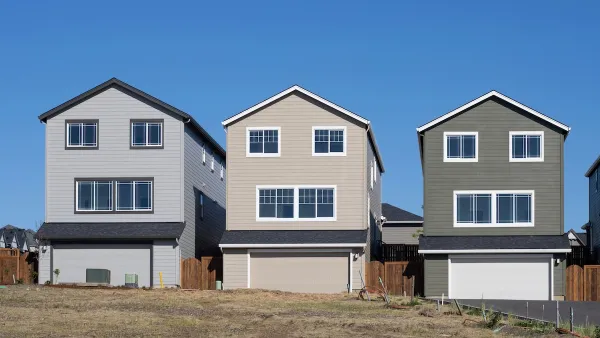
What’s in a Name? Investors vs. Speculators
We don’t often make a clear distinction between investors and speculators, which makes it harder to identify harmful behavior — and to find solutions for it.
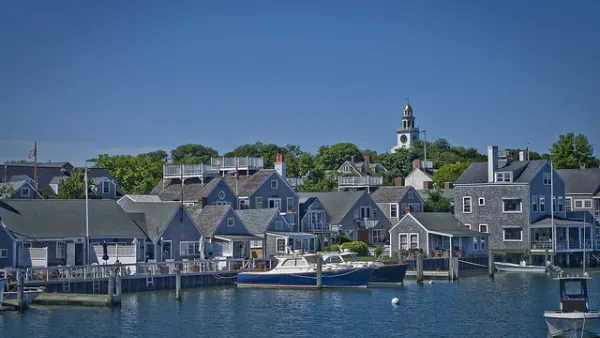
Nantucket Residents Pass on More Stringent Regulation of Short-Term Rentals
A recent Nantucket Town Meeting resolved a long-simmering controversy regarding short-term rentals.
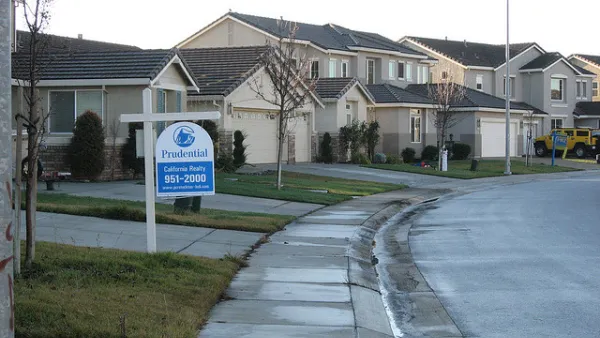
August Expiration Date for Federal Foreclosure Moratorium Raises Concerns
The housing market has yet to devolve like in 2008, thanks to a federal safety net put in place in March, but a wave of foreclosures is still a possibility as protections begin to expire.

Desperate measures: Advocates weigh draining Lake Powell to fill Colorado River
Draining the reservoir could reduce evaporation losses by a couple hundred thousand acre-feet.

Eastern Nebraska is running out of electricity
Data centers and electrification are straining eastern Nebraska’s grid, throttling economic development.

Malls are becoming the midtowns of the future
Mall and office park redevelopments are a generational opportunity to create new nodes of urbanity.

Officials claim feds 'rushed' Amtrak environmental review
Amtrak plans to move their Chicago maintenance facility from an industrial area to a residential one.

NYC breaks ground on anti-flooding infrastructure project
New York City's new system will reduce stormwater flows to local sewers by 90%.

One Kentucky town’s secret to affordable housing
The Smoketown Community Land Trust has already built seven affordable homes for community members.

FREE Course: Walkable City 1: Why Walkability?
After describing his path towards focusing on walkability as the essence of good planning, Jeff Speck marches through his five principal reasons for making more walkable places.
Reinventing Malls: Planning Alchemy—Turning Gray Fields Into Gold
The course focuses on the opportunities and imperatives that shape reinvention of mall sites.

City of Rosemead
Rutgers University, Edward J. Bloustein School of Planning and Public Policy
One Hundred Miles
University of Michigan School for Environment and Sustainability (SEAS)
Hunter College, City University of New York (CUNY)
The Architects Foundation
City of Cambridge
Montrose County
The Pocatello Development Authority