Flashy plans to build a green city on an island near Shanghai have yet to take any shape. The Chinese government claims the project is still on its way.


"Bold environmental solutions are as appealing to policymakers as they are to engineers who want to put their stamp on the cities of tomorrow. One such project is Dongtan, a planned eco-city on an alluvial island near Shanghai. Designed by Arup, a British design firm, to house 500,000 people on a 8,600-hectare (21,250-acre) site, it was billed as a low-carbon alternative to urban sprawl and a blueprint for other eco-cities. But four years on, not a single green building has gone up on the site."
"The reason lies not in the spluttering global economy but in the political corridors of Shanghai, the powerful city to which Chongming island belongs. A prime mover behind Dongtan was a former Shanghai Communist Party chief, Chen Liangyu, who steered the land into the hands of Shanghai Industrial Investment Corporation, or SIIC, a state-owned developer, and lent his prestige to the project. Then, in 2006, Mr Chen was sacked for property-related corruption. He was later convicted and is under house arrest. The way big land deals are done in Shanghai has been changed."
"A noticeable loser is Dongtan. Arup's original plan had 50,000 residents moving in by 2010, when Shanghai hosts the World Expo. That has now been quietly dropped. Arup's Roger Wood says SIIC has opted to put construction on hold, pending further permits. He denies, however, that the project has been cancelled."
Read the full story: City of dreams
China's Eco-Cities Stumble and Fall
The ambitious green Chinese city of Dongtan was hyped up to be one of the most environmentally friendly cities in the world. But now, like other eco-city plans, work on the project has slowed to a halt.
Planning an 'Eco-City'
This piece from Scientific American looks at plans for three "eco-cities".
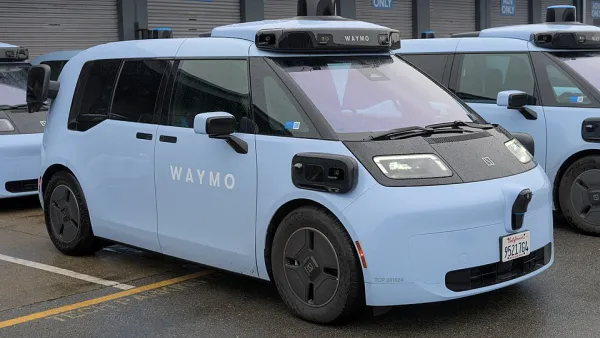
Waymo’s Ojai robotaxis from China now able to pick up all riders
Steep tariffs and tight federal laws haven’t stopped Waymo from purchasing over 3,200 vehicles from Zeekr, a Chinese manufacturer.

Planetizen Federal Action Tracker
A weekly monitor of how Trump’s orders and actions are impacting planners and planning in America.

Washington state to charge fee to drivers with fuel-efficient cars
Revenue from the fee will go towards supporting the state’s highways.

Trump to blast ‘hydrocarbon highway’ through ‘world’s longest art gallery’
Environmental and historic preservation groups are suing to stop the project.

Data centers need power – lower income, rural residents pay the price
In 2025, data centers paid only 38% of the energy infrastructure costs linked to their growth, with households, especially rural and low-income residents, bearing the remaining burden.

MBTA Green Line project moved to next phrase of CIG program
The modernization effort will cost $4.08 billion.

22-mile pedestrian and bike path to encircle Atlanta by 2030
The project will also support affordable housing.

FREE Course: Walkable City 1: Why Walkability?
After describing his path towards focusing on walkability as the essence of good planning, Jeff Speck marches through his five principal reasons for making more walkable places.
Reinventing Malls: Planning Alchemy—Turning Gray Fields Into Gold
The course focuses on the opportunities and imperatives that shape reinvention of mall sites.

City of Charlotte
City of Rosemead
Rutgers University, Edward J. Bloustein School of Planning and Public Policy
University of Michigan School for Environment and Sustainability (SEAS)
Hunter College, City University of New York (CUNY)
The Architects Foundation
University District Partnership