Next American City's Jeffrey Hill reads through the federal stimulus bill to find good news for cities.


"Take it from someone who has braved all 1,200-plus pages of HR-1: the economic stimulus package contains an abundance of funding figures that should make urban enthusiasts very happy."
"The American Recovery and Reinvestment Act is set to provide:
$7.22 billion for projects and programs administered by the U.S. Environmental Protection Agency (EPA) to promote green jobs.
$6 billion to the Clean Water and Drinking Water Fund, $4 billion of which will be used help communities with water quality and waste-water infrastructure needs and $2 billion of which will be spent on drinking water infrastructure needs. $1.2 billion, or 20 percent, must be used for green infrastructure.
$100 million for competitive grants to evaluate and clean up former industrial and commercial brownfields. (Note- This portion of the bill was modified by an unnamed U.S. senator to put "brownfields" in quotes.)"
Read the full story: What the Stimulus Bill Really Means for Cities
Recovery or Rerun?
A new government-sponsored watchdog website will allow citizens to track stimulus-funded projects. It's an effort to insure accountability. Neal Pierce wonders if that accountability will translate into smarter patterns of development.
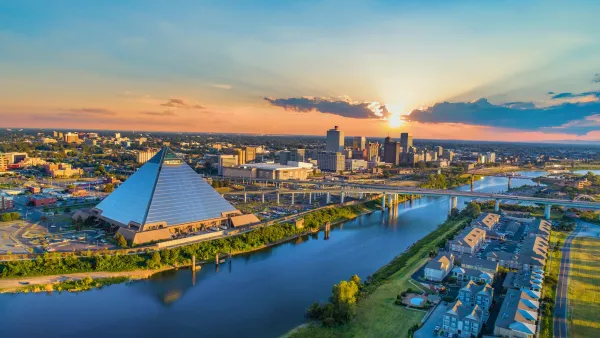
15 US cities and their global namesakes
Hundreds of cities around the United States are named after other places. We tour a few of them.
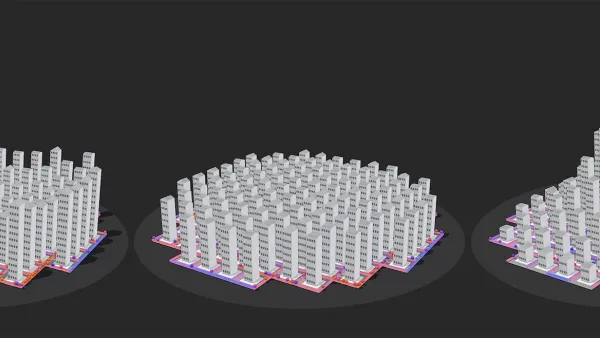
New study visualizes how city shapes impact mobility
Whether circular or linear, the shape and layout of cities affects how their residents get around.

Planetizen Federal Action Tracker
A weekly monitor of how Trump’s orders and actions are impacting planners and planning in America.

California plans to bury El Niño’s downpour
If the state plays its cards right, it may be able to store a billion acre-feet of El Niño’s water in aquifers.

Desperate measures: Advocates weigh draining Lake Powell to fill Colorado River
Draining the reservoir could reduce evaporation losses by a couple hundred thousand acre-feet.

Chicago voters approve permanent festival grounds, penalty for vacant property owners
Currently, major summer and fall festivals take over public parks for weeks at a time, drawing criticism from nearby residents

NYC votes to cut outdoor dining red tape, speed up permitting
New York City also voted to allow the Department of Transportation to begin work on urgent projects before notifying elected officials.

California appears to reject Prop. 45
The proposition would have expanded the projects that qualify for a streamlined environmental review, effectively paring down the California Environmental Quality Act.

FREE Course: Walkable City 1: Why Walkability?
After describing his path towards focusing on walkability as the essence of good planning, Jeff Speck marches through his five principal reasons for making more walkable places.
Reinventing Malls: Planning Alchemy—Turning Gray Fields Into Gold
The course focuses on the opportunities and imperatives that shape reinvention of mall sites.

City of Rosemead
Rutgers University, Edward J. Bloustein School of Planning and Public Policy
One Hundred Miles
Hunter College, City University of New York (CUNY)
The Architects Foundation
University of Cincinnati Online
City of Cambridge
Montrose County
The Pocatello Development Authority