Buildings and homes built as a product of the Works Progress Administration of the 1930s are being torn down at a rate that some find unsettling.


"'It's ironic to be tearing them down just when America is going through tough times again,' said the biographer Robert Caro, who wrote about the WPA in 'The Power Broker,' his book about the builder Robert Moses. 'We should be preserving them and honoring them. They serve as monuments to the fact that it is possible to combine infrastructure with beauty.'"
"Professors, authors and architects have formed the National New Deal Preservation Association. State governments from Arkansas to California are compiling lists of WPA-era projects still standing.
'They are redolent of a moment when there was more emphasis on making an integrated community - not just building houses, but auditoriums, community centers and schools,' said the architect Hugh Hardy, who restored Radio City Music Hall in New York City. 'It's a better use of energy, in a time of fiscal restraint, to see what we can reuse, remake and renew,' he added. 'It's monstrous to say you have to tear them down.'"
Read the full story: New Deal architecture faces bulldozer
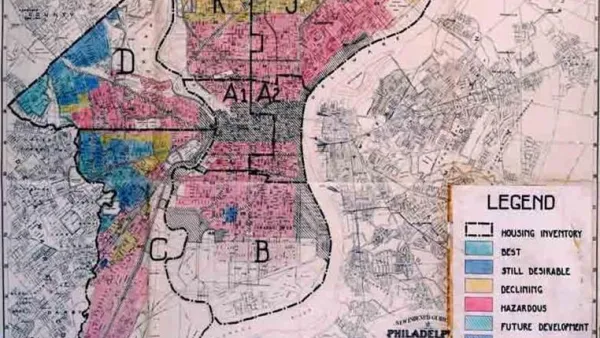
New Research Reexamines HOLC's Role in Redlining
New Deal agencies did engage in discriminatory lending practices–but not quite in the way we think.
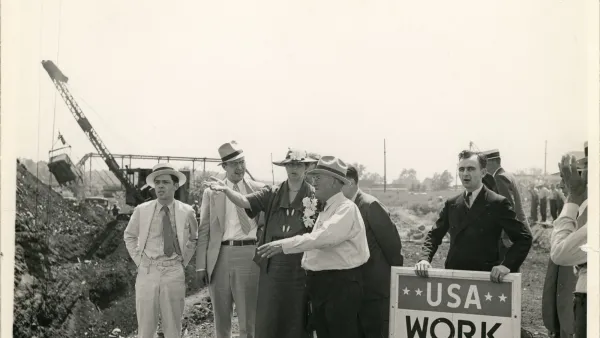
Biden Learning From the Unrealistic Expectations of Past Economic Stimulus Efforts
Taking lessons from his time working in the Obama administration, President Biden is tempering promises of quick job creation with long-term reinvestment.
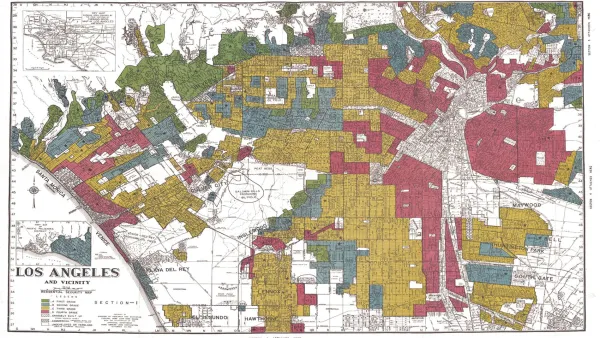
Lessons From Decades of Racist Land Policy
President and CEO of the Lincoln Institute of Land Policy Dr. George McCarthy traces the legacy of racist policy and offers guidance toward an economic recovery that begins to undo systemic racism.

Planetizen Federal Action Tracker
A weekly monitor of how Trump’s orders and actions are impacting planners and planning in America.

California plans to bury El Niño’s downpour
If the state plays its cards right, it may be able to store a billion acre-feet of El Niño’s water in aquifers.

Desperate measures: Advocates weigh draining Lake Powell to fill Colorado River
Draining the reservoir could reduce evaporation losses by a couple hundred thousand acre-feet.

Housing is the top priority of Seattle’s sole new councilmember
Jenks campaigned on building 1,000 new units of affordable housing.

New tax cuts may slash $1.5 billion in funding for Miami transit, public parks
Amendment 3 will save Miami-Dade homeowners $2,700 in 2028.

Arizona, Wisconsin, Pennsylvania hope to finally advance climate goals post-midterms
The three states have spent years under Republican or divided control.

FREE Course: Walkable City 1: Why Walkability?
After describing his path towards focusing on walkability as the essence of good planning, Jeff Speck marches through his five principal reasons for making more walkable places.
Reinventing Malls: Planning Alchemy—Turning Gray Fields Into Gold
The course focuses on the opportunities and imperatives that shape reinvention of mall sites.

City of Rosemead
Rutgers University, Edward J. Bloustein School of Planning and Public Policy
One Hundred Miles
University of Michigan School for Environment and Sustainability (SEAS)
Hunter College, City University of New York (CUNY)
The Architects Foundation
City of Cambridge
Montrose County
The Pocatello Development Authority