The master plan will replace an outdated, complex zoning law and address urban housing, wetlands preservation, and transit, among other things. New Orleans is finally "poised for sustained growth," according to the plan's lead consultant.


"Among the ideas for the master plan and revised zoning law presented by Dixon and Larissa Brown of Goody Clancy and Jack Swenson of Camiros, a Chicago planning firm focusing on zoning issues, were:
-- Using incentives, disincentives and regulations to promote infill construction and repair of blighted buildings in old neighborhoods that have lost population and need more density to support expanded services and shopping opportunities. "The city's future does not lie anywhere in being more like a suburb," Dixon said.
-- Promoting the development of 'neighborhood centers' that can combine schools, health clinics, shops, recreational attractions and social services.
-- Focusing on redevelopment of major vacant or underused "opportunity sites" such as the former Lindy Boggs Medical Center, the Earhart Boulevard corridor, the former Kennedy High School site and the large vacant tract at the upriver end of the Ernest N. Morial Convention Center."
Read the full story: City Planning Commission gets look at New Orleans' first master plan


Planetizen Federal Action Tracker
A weekly monitor of how Trump’s orders and actions are impacting planners and planning in America.

‘Going backwards:’ Baltimore mayor, students rally against state's transit funding plan
Maryland's proposed six-year plan provides no funding for Baltimore’s BMORE bus program and reduces its road maintenance funding.
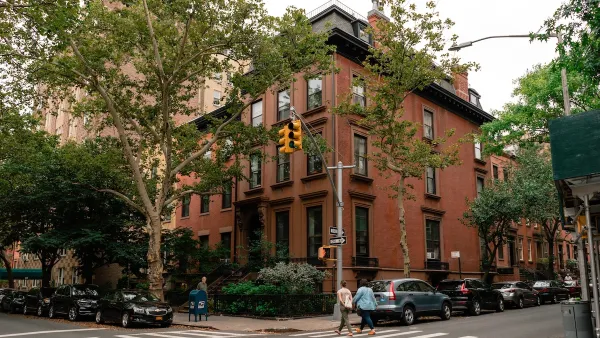
Mamdani sent nearly 6,000 pied-à-terre tax warnings to homes that didn’t qualify
A judge has ordered the administration to cancel thousands of pied-à-terre tax notices after it sent 35% of them erroneously.

Mamdani sent nearly 6,000 pied-à-terre tax warnings to homes that didn’t qualify
A judge has ordered the administration to cancel thousands of pied-à-terre tax notices after it sent 35% of them erroneously.

Detroit to transform waterfront with $2.2 billion investment
Developers will convert about 18 acres of unused parking lot space into civic spaces.

‘Going backwards:’ Baltimore mayor, students rally against state's transit funding plan
Maryland's proposed six-year plan provides no funding for Baltimore’s BMORE bus program and reduces its road maintenance funding.

FREE Course: Walkable City 1: Why Walkability?
After describing his path towards focusing on walkability as the essence of good planning, Jeff Speck marches through his five principal reasons for making more walkable places.
Reinventing Malls: Planning Alchemy—Turning Gray Fields Into Gold
The course focuses on the opportunities and imperatives that shape reinvention of mall sites.

City of Thousand Oaks
City of Wisconsin Rapids
Harvard University Graduate School of Design
The Architects Foundation
University of Cincinnati Online
Northern Illinois Transit Authority (NITA)
The Pocatello Development Authority
The Urban Renewal Agency of the City of Pocatello