If climate change is behind the horrific brush fires in Australia, then North Americans should be concerned about climatic changes killing off their own forests.


"[Australia's] fires should be regarded as the face of climate change, and...we can expect similar events to happen [in the United States]. Victoria (in Southeastern Australia) has been facing a severe drought for years. There's also recently been a heat-wave, with the temperature briefly hitting 115 degrees F last week. Extraordinarily dry conditions and heat led to massive fires, which as of this writing have killed at least 135 people and possibly over 200.
[A]s Global Warming intensifies, the tropics expand. As the tropics expand...that dry area where all the world's deserts are located moves a bit closer to the poles. Lots of other changes in precipitation happen, too.
Our turn is coming. Across the American west, trees are dying due to climate change. A few weeks ago, a study found 'Old-growth forests once studded with pine, hemlock and fir trees are dying across the western U.S. and Canada at double the rate of a half-century ago in what scientists are blaming on climate change.'
Droughts, warming and dead trees- these are the necessary ingredients for massive fires. How many canaries do we need?"
Read the full story: Hell Comes to Australia: The Face of Climate Change

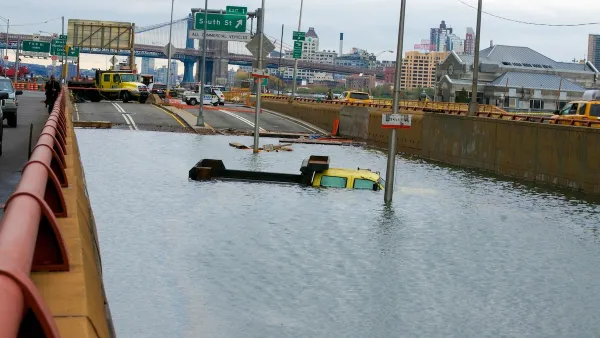
Over a Quarter of US Homes Face ‘Severe or Extreme’ Climate Risk
The number of U.S. homes at risk from hurricanes, fires, or flooding is valued at close to $13 trillion.
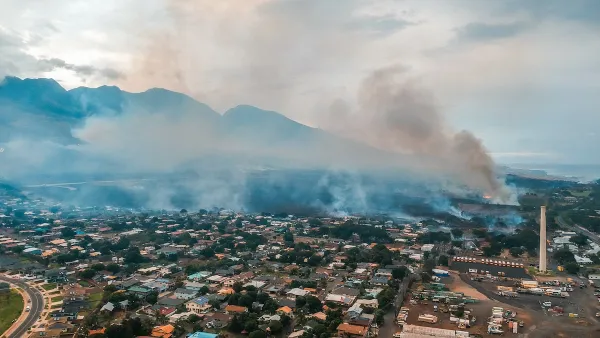
Maui's Deadly Firestorm: Investigating the Tragedy and Lessons for the Future
FRONTLINE's Maui’s Deadly Firestorm investigates the 2023 Lahaina wildfire, uncovering critical failures in preparedness and response while examining the tragedy’s causes, impact, and lessons for future disaster prevention.

Infrastructure Must Catch Up With Climate Change
The worsening effects of extreme weather events are accelerating the deterioration of critical infrastructure, leaving communities more vulnerable.

Planetizen Federal Action Tracker
A weekly monitor of how Trump’s orders and actions are impacting planners and planning in America.

HUD modernizes 50-year-old manufactured housing framework
The Next Generation Manufactured Housing Action Plan establishes new energy-efficiency standards for manufactured homes, and new guidelines for anchoring them.

Data reveals that NYC’s bet on congestion pricing has paid off
After almost two years of the program, reports show positive impacts on traffic and air quality and no disruptions to parking.

How Chicago, New York and Seattle are funding transit projects amid tough times
Notes from the American Public Transportation Association's TransForm conference in Chicago.

Transport for London tackles hate crime spike with free bystander training
Recorded hate crime offences on the London's transport network have increased by 36 per cent.

Denver is solving homelessness. Why aren't the rest of us?
Since 2023, Denver's street homeless population has decreased by 64%, proving that effective tools exist to support those in need of housing.

FREE Course: Walkable City 1: Why Walkability?
After describing his path towards focusing on walkability as the essence of good planning, Jeff Speck marches through his five principal reasons for making more walkable places.
Reinventing Malls: Planning Alchemy—Turning Gray Fields Into Gold
The course focuses on the opportunities and imperatives that shape reinvention of mall sites.

One Hundred Miles
County of Mendocino
planning NEXT
The Architects Foundation
University of Cincinnati Online
Montrose County
Northern Illinois Transit Authority (NITA)
The Pocatello Development Authority