Officials are complaining about the first draft of the economic stimulus package, arguing that it does not dedicate enough money to transit projects and heavily favors road building.


"The House bill would provide about $43 billion for roads, transit and airport projects, well below the $53 billion recommended by House Transportation Committee Chairman James Oberstar (D., Minn.). Many House members had figured the transportation component of the bill would exceed $85 billion, as the price tag of the overall package swelled to $825 billion in recent weeks."
"Some members of the House transportation committee objected to the proposed level of investment during a Democratic caucus session Thursday, and several members later spoke out during a committee meeting. Highways and Transit Subcommittee Chairman Peter DeFazio (D., Ore.) suggested the committee draft a letter or resolution to House Speaker Nancy Pelosi objecting to the transport section of the stimulus bill."
"Special-interest groups from labor unions to businesses also voiced objections. Environmental groups criticized the proposed spending for mass-transit systems and intercity rail projects, which was about $7 billion less than Mr. Oberstar had recommended. They have argued that expansion of mass-transit systems could help ease problems posed by climate change, congestion and oil consumption."
"Critics noted that the stimulus bill would spend three dollars on highways for every one dollar spent on mass-transit systems. When hearings begin next week, environmental groups said, they would push to lower that ratio or even put funding for transit on an equal footing with highways."
Read the full story: Transportation Aid Levels Decried

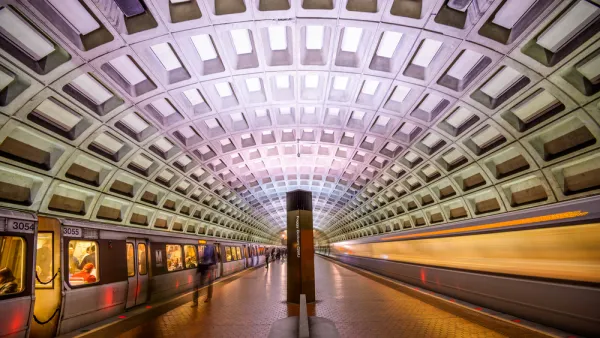
Republicans, Democrats, and Transit
Depending on how the issue is phrased, support for public transit can be bipartisan.
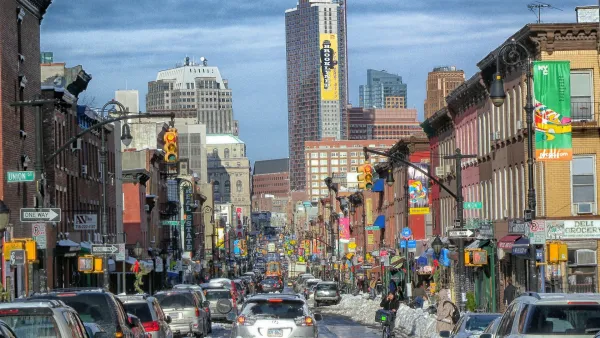
Thinking About Infrastructure and Housing, Part 2
Is inadequate infrastructure a reason to keep new housing out of cities?
For Reducing Traffic, Americans Favor Transit Over Roads
Finally, something Red and Blue America can agree on! A new poll published this week by the NRDC shows support for local investment in transit to reduce traffic crosses the country's wide political and geographic divides.

Planetizen Federal Action Tracker
A weekly monitor of how Trump’s orders and actions are impacting planners and planning in America.

The state-sanctioned urbicide of Austin
People don’t kill cities. Freeways do.

US to reduce Colorado River water deliveries to Mexico
A new Colorado Treaty amendment reduces Mexico’s Colorado River water allocation by 250,000 acre feet.

Nation's most wind-powered state turns to coal as data centers increase energy demand
For the first time in decades, Iowa has increased its generation of coal power.

NYC cools commuters with city's first rain garden above a bus stop
New York City officials say the plants in the rain garden can absorb 16 gallons of rainwater during heavy storms.

Brightline West’s future may rely on $6 billion federal loan
The company has until Nov. 2 to make a $400 million equity investment into its proposed high-speed rail line.

FREE Course: Walkable City 1: Why Walkability?
After describing his path towards focusing on walkability as the essence of good planning, Jeff Speck marches through his five principal reasons for making more walkable places.
Reinventing Malls: Planning Alchemy—Turning Gray Fields Into Gold
The course focuses on the opportunities and imperatives that shape reinvention of mall sites.

Eagle County Government
Harvard University Graduate School of Design
Nashville Planning Department
The Architects Foundation
University of Cincinnati Online
The Pocatello Development Authority
The Urban Renewal Agency of the City of Pocatello
Journal of the American Planning Association