The economic recession is hurting the California High Speed Rail Authority, the lead agency developing the high speed rail network for which the state's voters approved $10 billion in bonds in 2008. With no buyers, the bond money is unavailable.


"The California High Speed Rail Authority's budget for the current fiscal year, which ends in June, included $29 million from the sales of high-speed rail bonds authorized by voters in November. But because of the state budget crisis, the credit crisis and the poor market for bonds, the state treasurer has not sold any of the rail bonds."
"That's left the rail authority without cash at a time when Californians are eager to see the 800-mile fast train system built. At an authority meeting Thursday, officials said they had halted payments on engineering and design contracts in progress and are holding off on awarding new contracts."
"So far, consultants under contract with the authority are continuing to work despite the outstanding bills. On Jan. 16, the authority will appeal to the state's Pooled Money Investment Board - the state controller, the treasurer and the head of the finance department - for a $29 million loan so it can complete the work it plans to finish this year."
"But in case that doesn't happen, the authority directed its staff to come up with a list of contracts that can be put on hold without significantly slowing progress on the project."
Read the full story: Cash crunch slows high-speed rail project
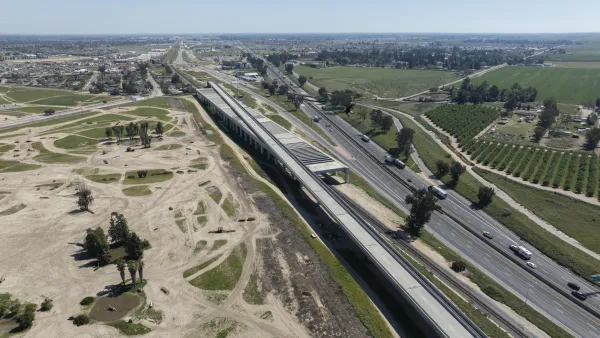
California High-Speed Rail Authority could be broke by the end of 2027
A report from the Office of Inspector General says the authority must borrow against state infusions to stay afloat.
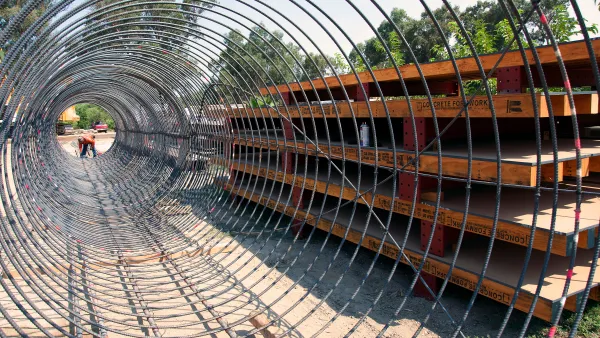
California High Speed Rail to lay first tracks
High Speed Rail Authority officials describe the milestone as "the moment this project truly begins to become a railroad."
TOD Opportunities Around America's First True High-Speed Rail Line
Brightline West hopes to break ground, in anticipation of a 2027 opening. Cities in the Inland Empire and High Desert areas of Southern California are looking to take advantage.

Desperate measures: Advocates weigh draining Lake Powell to fill Colorado River
Draining the reservoir could reduce evaporation losses by a couple hundred thousand acre-feet.

Eastern Nebraska is running out of electricity
Data centers and electrification are straining eastern Nebraska’s grid, throttling economic development.

Move over, LA: St. Louis gears up for Olympics, invests millions in downtown redevelopment
The Missouri city will host the 2028 Olympic soccer group stage and knockout matches.

Mass. votes against statewide minimum lot size for single-family homes
Over 2 million residents voted on Question 7; it was decided by just over 30,000 votes.

Maryland’s $15 billion bridge project gains key approval
The Maryland Transit Authority said the project will create over 60,000 jobs and add $23 billion to the local economy.

‘No clear next steps’ for Chicago's permanent festival grounds
Eleventh Ward Ald. Nicole Lee has suggested Soldier Field as a possible location for the permanent event space.

FREE Course: Walkable City 1: Why Walkability?
After describing his path towards focusing on walkability as the essence of good planning, Jeff Speck marches through his five principal reasons for making more walkable places.
Reinventing Malls: Planning Alchemy—Turning Gray Fields Into Gold
The course focuses on the opportunities and imperatives that shape reinvention of mall sites.

City of Rosemead
Rutgers University, Edward J. Bloustein School of Planning and Public Policy
One Hundred Miles
University of Michigan School for Environment and Sustainability (SEAS)
Hunter College, City University of New York (CUNY)
The Architects Foundation
City of Cambridge
Montrose County
The Pocatello Development Authority