The New Yorker profiles Van Jones, a leading environmental activist and the driving force behind the movement to create a green energy jobs policy in the United States.


"'I love Barack Obama,' he said. 'I'd pay money just to shine the brother's shoes. But I'll tell you this. Do you hear me? One man is not going to save us. I don't care who that man is. He's not going to save us. And, in fact, if you want to be real about this-can y'all take it? I'm going to be real with y'all. Not only is Barack Obama not going to be able to save you-you are going to have to save Barack Obama.'"
"The logo of Green for All, which is based in Oakland, California, is a sun rising over a crowded cityscape. The group's goal is to broaden the appeal of the environmental movement and, at the same time, bring jobs to poor neighborhoods. Jones often says that he is trying to 'green the ghetto.'"
"'Your goal has to be to get the greenest solutions to the poorest people,' Jones told me. 'That's the only goal that's morally compelling enough to generate enough energy to pull this transition off. The challenge is making this an everybody movement, so your main icons are Joe Six-Pack-Joe the Plumber-becoming Joe the Solar Guy, or that kid on the street corner putting down his handgun, picking up a caulk gun.'"
Read the full story: Greening the Ghetto
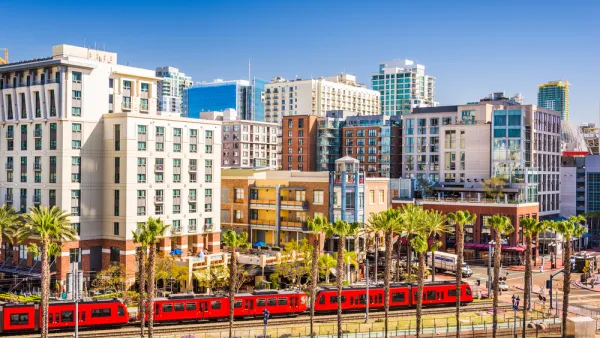
America’s 10 ‘Greenest’ Cities
A new analysis ranks cities based on their environmental quality, energy consumption and production, transportation, density, and other factors.

Report: Cities’ Climate Plans Fail to Include Workforce Development
While a few cities have detailed goals and investment strategies for building their green workforce, most U.S. cities fail to address the need for the training and education of a new generation of workers.
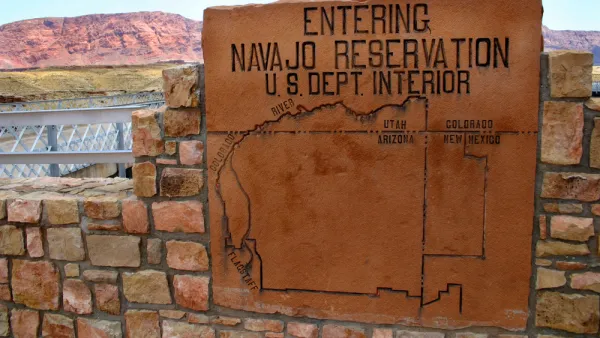
Navajo Leaders: Renewable Energy Transition Must Account for Equity
Native American leaders in the Southwest want to ensure their communities have a voice, and an opportunity for well-paying jobs, in renewable energy projects on Native land.

Planetizen Federal Action Tracker
A weekly monitor of how Trump’s orders and actions are impacting planners and planning in America.

California plans to bury El Niño’s downpour
If the state plays its cards right, it may be able to store a billion acre-feet of El Niño’s water in aquifers.

Desperate measures: Advocates weigh draining Lake Powell to fill Colorado River
Draining the reservoir could reduce evaporation losses by a couple hundred thousand acre-feet.

Mamdani’s pied-à-terre tax survives legal challenge
A panel of judges found that the plaintiffs failed to demonstrate injury as a result of New York City's implementation of the tax.

Eastern Nebraska is running out of electricity
Data centers and electrification are straining eastern Nebraska’s grid, throttling economic development.

Seattle passes record-breaking transit services expansion
Proposition 1 will double the city’s transit tax to add 95,000 more bus trips and preserve 180,000 bus trips annually.

FREE Course: Walkable City 1: Why Walkability?
After describing his path towards focusing on walkability as the essence of good planning, Jeff Speck marches through his five principal reasons for making more walkable places.
Reinventing Malls: Planning Alchemy—Turning Gray Fields Into Gold
The course focuses on the opportunities and imperatives that shape reinvention of mall sites.

City of Rosemead
Rutgers University, Edward J. Bloustein School of Planning and Public Policy
One Hundred Miles
University of Michigan School for Environment and Sustainability (SEAS)
Hunter College, City University of New York (CUNY)
The Architects Foundation
City of Cambridge
Montrose County
The Pocatello Development Authority