The massive flood of coal ash sludge in Tennessee may be the most serious environmental disaster in the nation's history and promises to be a flashpoint for opponents of coal power. [Includes slideshow of spill damage].


"This is not the first time that the coal ash containment ponds have breached at the Kingston Fossil plant...But this environmental disaster may be the worst in the country's history and the threats to health and the environment are severe, as the residents are beginning to learn.
[And] there may be good reason for alarm...As reported in the New York Times, December 30, TVA finally revealed an inventory of the Kingston Fossil Plant waste generation in detail : 'In just one year, the plant's byproducts included 45,000 pounds of arsenic, 49,000 pounds of lead, 1.4 million pounds of barium, 91,000 pounds of chromium and 140,000 pounds of manganese. Those metals can cause cancer, liver damage and neurological complications, among other health problems. And the holding pond ... contained many decades' worth of these deposits.'
The coal disaster at Kingston has clued Americans in to the real consequences of coal...many are hoping that the Kingston spill will be the impetus to help Americans commit to the immediate transition away from coal to clean, renewable energy."
Read the full story: Can America Clean Up from Its Worst Environmental Disaster?
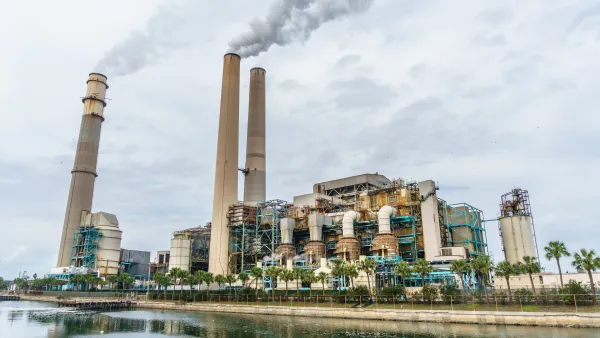
EPA to slash water treatment requirements for coal plants, citing growing electricity demand from AI data centers
The agency says the revisions to wastewater regulations — which critics call dangerous to human health — will decrease energy production costs by $1.1 billion annually.

Trump Officials Want to Keep Coal Plants “100% Open”
While officials tout the return of coal power as the answer to the affordability crisis, critics point to America’s aging coal infrastructure as a pain point in its return.
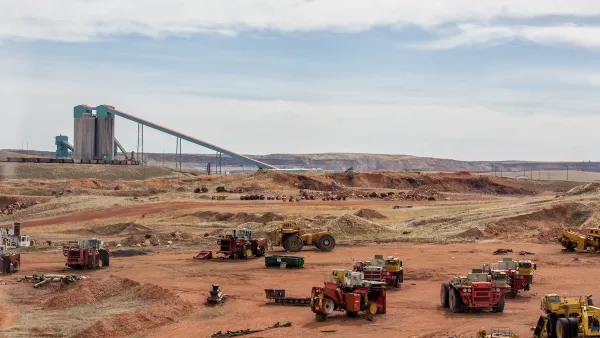
A Win for ‘Keep it in the Ground’
Coal mining in Wyoming will take a major hit as a result of a U.S. Department of Interior plan to cease future leasing of coal mines in the nation's most productive coal mining basin. The decision casts a spotlight on the presidential election.

Planetizen Federal Action Tracker
A weekly monitor of how Trump’s orders and actions are impacting planners and planning in America.

California plans to bury El Niño’s downpour
If the state plays its cards right, it may be able to store a billion acre-feet of El Niño’s water in aquifers.

Desperate measures: Advocates weigh draining Lake Powell to fill Colorado River
Draining the reservoir could reduce evaporation losses by a couple hundred thousand acre-feet.

Chicago voters approve permanent festival grounds, penalty for vacant property owners
Currently, major summer and fall festivals take over public parks for weeks at a time, drawing criticism from nearby residents

NYC votes to cut outdoor dining red tape, speed up permitting
New York City also voted to allow the Department of Transportation to begin work on urgent projects before notifying elected officials.

California appears to reject Prop. 45
The proposition would have expanded the projects that qualify for a streamlined environmental review, effectively paring down the California Environmental Quality Act.

FREE Course: Walkable City 1: Why Walkability?
After describing his path towards focusing on walkability as the essence of good planning, Jeff Speck marches through his five principal reasons for making more walkable places.
Reinventing Malls: Planning Alchemy—Turning Gray Fields Into Gold
The course focuses on the opportunities and imperatives that shape reinvention of mall sites.

City of Rosemead
Rutgers University, Edward J. Bloustein School of Planning and Public Policy
One Hundred Miles
Hunter College, City University of New York (CUNY)
The Architects Foundation
University of Cincinnati Online
City of Cambridge
Montrose County
The Pocatello Development Authority