The Wall St. Journal calls new transportation secretary Ray LaHood the "secretary of earmarks", and one of the biggest spenders in Congress.


"As a long-time and stalwart Member of the House Appropriations Committee, Mr. LaHood facilitated the incontinent spending that helped Republicans lose their majority in 2006. And he did so unapologetically, once telling a reporter for the Peoria Journal Star, "The reason I went on the Appropriations Committee, the reason other people go on the Appropriations Committee, is they know that it puts them in a position to know where the money is at, to know the people who are doling the money out and to be in the room when the money is being doled out."
Mr. LaHood was also among those who most resisted backbench GOP efforts to curb earmarks. "If people like Ray LaHood and others aren't able to earmark dollars, that money will be spent by some bureaucrat in Washington, D.C.," he said earlier this year. "And who knows better how to spend money on worthwhile projects than a community and an individual Congressman?" We'll be fascinated to see how he interprets that governing dictum now that he's on the other side of Pennsylvania Avenue."
Read the full story: Obama's Secretary of Earmarks
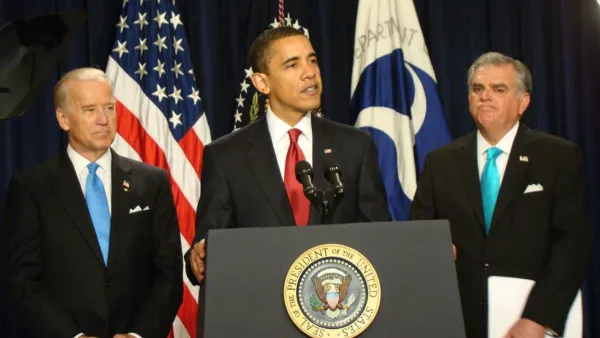
Leave Transit Projects to Transit Experts, Not Politicians
Stephen Smith sheds light on the problems of leadership holding back Obama's dream of high-speed rail.
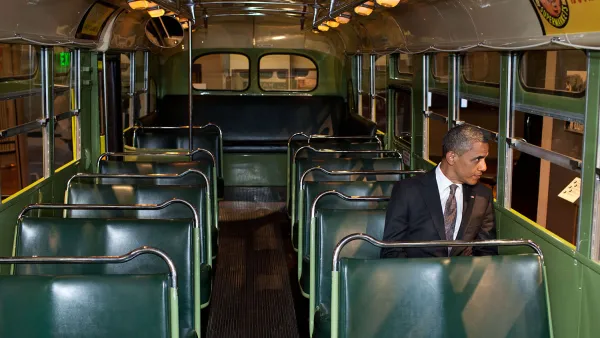
Obama on the Record Against Sprawl, Inequality by Design
Former President Barack Obama was at the AIA’s national conference in Chicago earlier this month. His presentation included some strong words about the effects of sprawl.
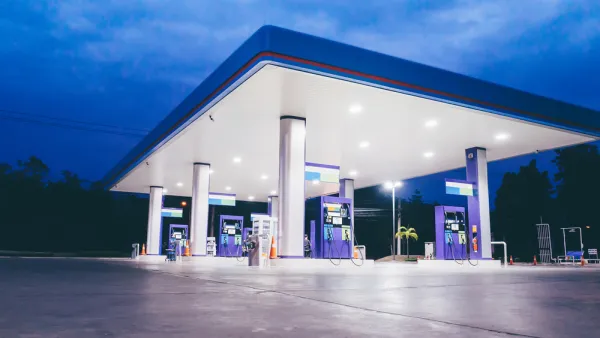
Biden Proposes Gas Tax Holiday to Reduce Gas Prices
President Biden asked Congress on June 22 to suspend federal fuel taxes, unchanged since 1993, for three months to provide motorists 'relief' at the pump. Additionally, he asked states to follow suit and for oil companies to increase refining.

Planetizen Federal Action Tracker
A weekly monitor of how Trump’s orders and actions are impacting planners and planning in America.

Eastern Nebraska is running out of electricity
Data centers and electrification are straining eastern Nebraska’s grid, throttling economic development.

Study reveals best places in the U.S. for cycling, walking
New research from Streetlight Data examines bicycle and pedestrian miles per capita in the 100 largest U.S. cities by population.

DSA members accuse Mamdani of 'abandoning values' over housing redevelopment
New York City's mayor plans to replace about 2,000 units of public housing with private, mixed-income housing.

All sides of BRT debate unhappy with CDOT’s most recent move
The Colorado Department of Transportation is no longer considering center-running bus lanes for Colorado Boulevard.

Massachusetts bogs generate both power, and cranberries
Putting solar panels above farmland is one way Massachusetts is advancing toward its goal of net-zero carbon emissions by 2050.

FREE Course: Walkable City 1: Why Walkability?
After describing his path towards focusing on walkability as the essence of good planning, Jeff Speck marches through his five principal reasons for making more walkable places.
Reinventing Malls: Planning Alchemy—Turning Gray Fields Into Gold
The course focuses on the opportunities and imperatives that shape reinvention of mall sites.

City of Rosemead
Rutgers University, Edward J. Bloustein School of Planning and Public Policy
One Hundred Miles
University of Michigan School for Environment and Sustainability (SEAS)
Hunter College, City University of New York (CUNY)
The Architects Foundation
City of Cambridge
The Pocatello Development Authority
The Urban Renewal Agency of the City of Pocatello