The New Amsterdam Project in Cambridge, Mass., recently debuted a fleet of pedal-powered cargo tricycles, aimed at clients who want to reduce their carbon footprint.


China, India, and other developing nations have long utilized bicycle-based delivery for many goods – but are shifting toward engine-powered vehicles. Across North America, bicycle delivery services exist in several cities. Yet pedal-powered hauling for cargo has been largely a no-show in the United States.
That makes NAP stand out for its sole focus on human-powered cargo delivery, says Andrew Brown, the company's founder and CEO. A psychiatrist by training and lover of all things bicycle-related, Mr. Brown launched the company last fall and now finds himself dividing time between cycling to companies where he counsels workers – and making deliveries.
"We're getting trucks off the road, that's one of our goals," says Brown. "Each time we make a delivery, we demonstrate that there's a better way – a system that is less expensive, better for their products, better for the environment, and for their community."
Actually there are many goals for this windmill tilter. An encounter in an Amsterdam coffee shop in 2005 – in which a local man regaled him with stories about his nation's bicycle culture, a place where politicians and even the queen ride regularly – set the wheels in motion.
Read the full story: Cargo trikes nudge delivery trucks in Cambridge, Mass.

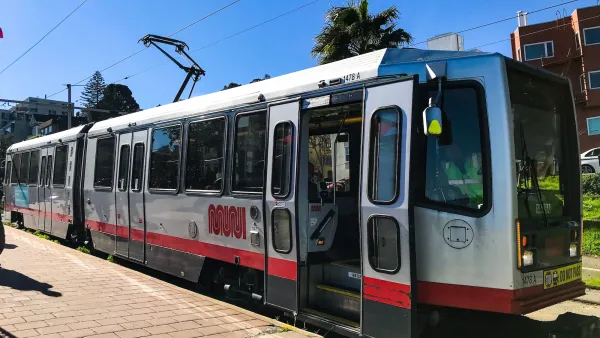
San Francisco cyclists push to allow bikes on Muni trains
The agency is one of few that bans bikes from its trains due to space constraints.
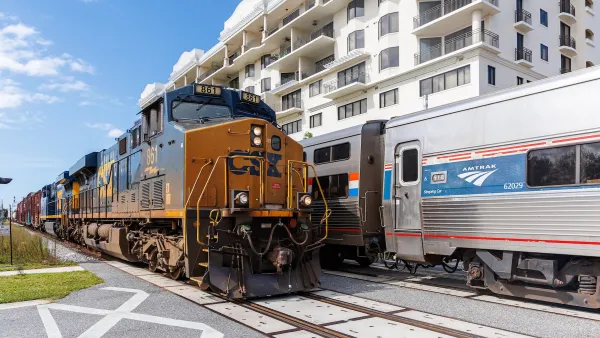
Who owns US railroad tracks?
Nearly three-quarters of Amtrak's trains operate on tracks owned by private companies. What does this mean for U.S. passenger rail?
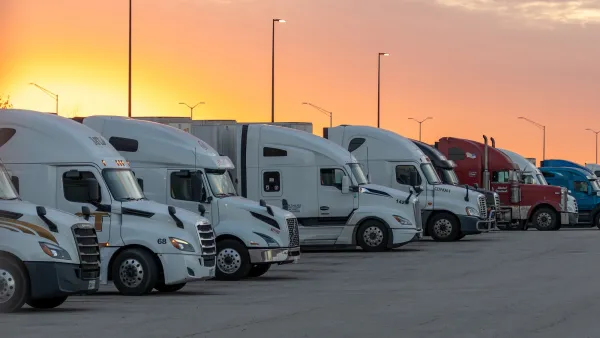
New Federal Rules Require Comprehensive State Plans for Truck Parking
States will now have to inventory and account for truck parking facilities on freight corridors.

Planetizen Federal Action Tracker
A weekly monitor of how Trump’s orders and actions are impacting planners and planning in America.

Amtrak, CN end decades-long dispute with eight-year agreement
The new operating agreement establishes an updated framework for the companies to work together, including processes to resolve disputes.

Judges permit Denver to divert 77,000 acre feet from the Colorado River for reservoir expansion
Overuse and climate change have caused the Colorado River’s water levels to plummet.

NYC DOT wants faster, more permanent street upgrades
The city is examining ways to build more concrete infrastructure without getting entangled in 'decades-long' projects.

'Something we’ve never seen before:' rising utility rates could strain city finances nationwide
Data centers, climate change and other factors have caused utility rates in the United States to increase by 38% since 2020.

Trump to overrule local leaders, lease millions of acres of America’s Pacific Island territories’ seafloors to mining companies
International law says that the Indigenous people of America’s territories have a right to prior and informed consent regarding projects that impact their countries.

FREE Course: Walkable City 1: Why Walkability?
After describing his path towards focusing on walkability as the essence of good planning, Jeff Speck marches through his five principal reasons for making more walkable places.
Reinventing Malls: Planning Alchemy—Turning Gray Fields Into Gold
The course focuses on the opportunities and imperatives that shape reinvention of mall sites.

Harvard University Graduate School of Design
KFH Group Inc.
Greater Baltimore Committee
The Architects Foundation
University of Cincinnati Online
The Pocatello Development Authority
The Urban Renewal Agency of the City of Pocatello