The current economic downturn has meant a drop in commodity prices, including for recycled materials. Now Toronto is facing the prospect of warehousing their collected recycleables until the market improves.


"Toronto could end up stockpiling tonnes of unwanted plastic, paper or glass collected in the city's blue bins, waste officials warn, if the economic crisis forces recycling plants that buy the material to close.
Geoff Rathbone, the city's general manager of solid waste, said his department is drawing up contingency plans as a lack of demand for the products made from recyclables and the stunning drop in oil, pulp and metals prices puts some of the recycling plants the city deals with 'under significant stress.'
Sinking prices will likely also eat into the annual $28-million the city makes from selling recyclables and scrap metal: Its price for once-lucrative aluminum cans is down nearly 50 per cent from September to $1,100 a tonne.
But Mr. Rathbone said the real concern is that if the crisis continues for much longer, plants could shut down and leave Toronto with a growing inventory of recyclables that it is forced to rent expensive warehouse space to store."
Read the full story: Economic crisis puts Toronto in recycling crunch
Is Riding Transit Necessarily Better For The Environment Than Driving?
In the third of a 5-part "Rethinking Green" series, the National Post casts doubt on public transit's ability to reduce global warming while praising driving; applying similar scrutiny to recycling and aquaculture in the first and second installments
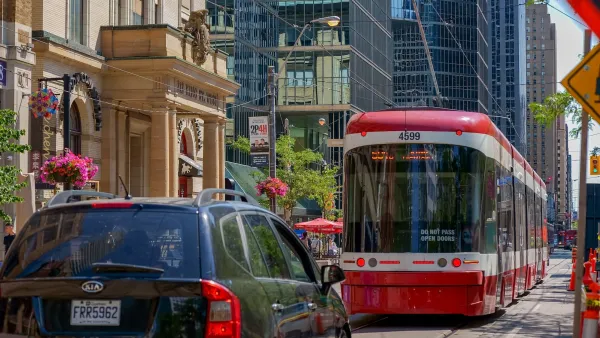
Toronto Man Beats Streetcar on Foot to Highlight Traffic Delays
Runner Mac Bauer says he hopes his project spurs the city to improve transit speed and reliability.
Ontario Judge Saves Toronto Bike Lanes
A court order bars the provincial government from removing bike lanes, saying the decision would make roads more dangerous and fail to reduce congestion.

Planetizen Federal Action Tracker
A weekly monitor of how Trump’s orders and actions are impacting planners and planning in America.

California plans to bury El Niño’s downpour
If the state plays its cards right, it may be able to store a billion acre-feet of El Niño’s water in aquifers.

Desperate measures: Advocates weigh draining Lake Powell to fill Colorado River
Draining the reservoir could reduce evaporation losses by a couple hundred thousand acre-feet.

In Texas, data centers are swallowing promised parkland
Residents who moved to Taylor, Texas for a rural community now have to contend with three data centers in their backyard.

How a Chicago-sized wind farm beat the odds and powered on
The project spanned five presidential administrations and a standoff with a U.S. military base.

MTA gives itself 30 days to transform pit into basketball court
The site has been under construction since 2022; the city originally estimated it would finish the court in 2024.

FREE Course: Walkable City 1: Why Walkability?
After describing his path towards focusing on walkability as the essence of good planning, Jeff Speck marches through his five principal reasons for making more walkable places.
Reinventing Malls: Planning Alchemy—Turning Gray Fields Into Gold
The course focuses on the opportunities and imperatives that shape reinvention of mall sites.

City of Rosemead
Rutgers University, Edward J. Bloustein School of Planning and Public Policy
One Hundred Miles
Hunter College, City University of New York (CUNY)
The Architects Foundation
University of Cincinnati Online
City of Cambridge
Montrose County
The Pocatello Development Authority