Of primary importance will be dealing with the National Highway Trust Fund, long the source of federal transportation funding, but not having seen an increase in the gas tax for 15 years, it is essentially broke - spending more than it brings in.


"A key problem is the Highway Trust Fund, which generates about $50 billion annually for road, bridge and transit projects. The vast majority of this money -- about 82 percent -- goes to roads and bridges, while 15 percent goes to transit and 3 percent toward highway safety."
"In the past fiscal year, the fund was taking in less revenue than it was paying out to states. It was headed for insolvency in September when Congress stepped in with an $8 billion emergency transfer from the general fund."
"It won't get us through the year," said John Horsley, executive director of the American Association of State Highway and Transportation Officials.
The "nonpartisan National Surface Transportation Policy and Revenue Study Commission, chartered by Congress, recommended gradually increasing the federal gas tax to 40 cents a gallon, a move that the Bush administration and many in Congress have opposed. President-elect Barack Obama has not said whether he favors raising the tax."
"The new secretary also will have to quickly craft a proposal for Congress to reauthorize the nation's five-year transportation spending plan, which expires in September. The law gives $286 billion to transportation projects."
Thanks to Bay Area Transportation News
Read the full story: For New Transportation Secretary, a Hard Road Ahead
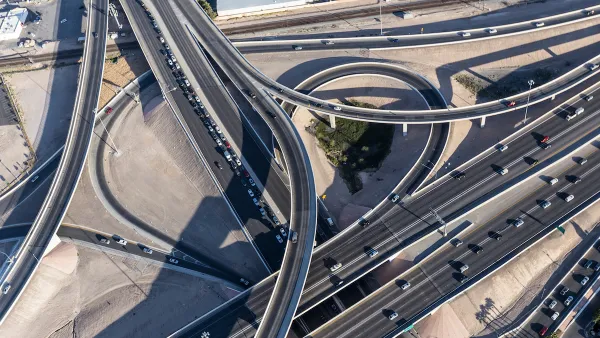
Restoring Solvency to the Highway Trust Fund
The Highway Trust Fund, the nation's source of road and bridge funding, went bankrupt in 2008 and has since relied on transfers from the General Fund to supplement fuel taxes. Republican Senators have proposed a new funding source: an EV fee.
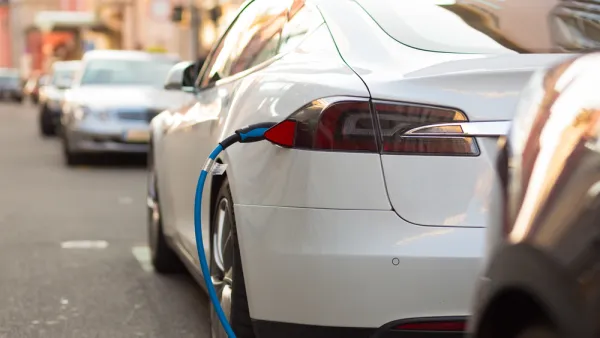
Federal Lawmakers Target Electric Vehicles in Transportation Reauthorization
How will motorists who don't pay gas taxes fund road upkeep? That's one of the questions that the Senate Environment & Public Works Committee hopes to answer this summer as they work to reauthorize the FAST Act before it expires on Sept. 30, 2020.
Pelosi-Schumer-Trump Infrastructure Plan Already Meeting Resistance
Introduced on April 30, the $2 trillion conceptual plan is likely to be dismissed by Congressional Republicans wary of increasing taxes and adding to the deficit, according to an extensive article by The Hill published three days later.

Planetizen Federal Action Tracker
A weekly monitor of how Trump’s orders and actions are impacting planners and planning in America.

California plans to bury El Niño’s downpour
If the state plays its cards right, it may be able to store a billion acre-feet of El Niño’s water in aquifers.

Desperate measures: Advocates weigh draining Lake Powell to fill Colorado River
Draining the reservoir could reduce evaporation losses by a couple hundred thousand acre-feet.

Mamdani’s pied-à-terre tax survives legal challenge
A panel of judges found that the plaintiffs failed to demonstrate injury as a result of New York City's implementation of the tax.

Eastern Nebraska is running out of electricity
Data centers and electrification are straining eastern Nebraska’s grid, throttling economic development.

Seattle passes record-breaking transit services expansion
Proposition 1 will double the city’s transit tax to add 95,000 more bus trips and preserve 180,000 bus trips annually.

FREE Course: Walkable City 1: Why Walkability?
After describing his path towards focusing on walkability as the essence of good planning, Jeff Speck marches through his five principal reasons for making more walkable places.
Reinventing Malls: Planning Alchemy—Turning Gray Fields Into Gold
The course focuses on the opportunities and imperatives that shape reinvention of mall sites.

City of Rosemead
Rutgers University, Edward J. Bloustein School of Planning and Public Policy
One Hundred Miles
University of Michigan School for Environment and Sustainability (SEAS)
Hunter College, City University of New York (CUNY)
The Architects Foundation
City of Cambridge
Montrose County
The Pocatello Development Authority