Downtown Nantucket has acquired a Main St. residents backyard in a prime spot for a pocket park. Landscape architect David W. Bartsch dug in to create an historically correct park style.


"Choosing an appropriate historic aesthetic was not a simple task, given Nantucket's scant history of public parks, said Bartsch. After some deliberation, he arrived at the Victorian period of the late 19th century, more than two centuries after Nantucket's founding, when public parks gained popularity in the United States in recognition of their public health benefit.
'There were good comments and ideas that contributed to the park design from various townspeople I spoke with throughout the design process, as well as the Historic District Commission members and staff,' said Bartsch. 'Because of the age we live in, the park will be influenced by 21st-century ideas but it will try to follow the construction and function of 19th-century parks.'
The park's development did not involve a public process because the land is privately held by the Land Bank, which will pay for the its development and maintenance."
Read the full story: “Vest-pocket” park underway at corner of Main and Fair
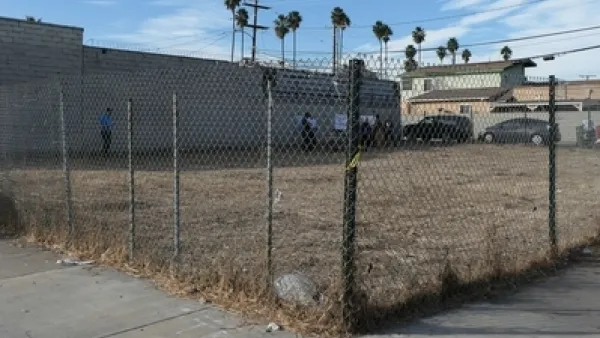
Improving Communities With Pocket Parks
Construction begins for a new pocket park in Westmont, an underserved unincorporated community in Los Angeles County.
The Hidden Parks of New York
Midtown New York is some of the densest property in the U.S., but in between the skyscrapers you can find a number of small, hidden oases from the busy streets.

Washington state to charge fee to drivers with fuel-efficient cars
Revenue from the fee will go towards supporting the state’s highways.

Illinois considers spending $1 billion in taxpayer money on data center
A quantum computing campus and data center are currently under construction in Chicago.

Trump to blast ‘hydrocarbon highway’ through ‘world’s longest art gallery’
Environmental and historic preservation groups are suing to stop the project.

Boston City Council votes to no longer mandate parking in residential developments
The Boston Zoning Commission still needs to approve the proposal.

Passengers in New York, California lift off in air taxis
Two air taxi companies have received a Special Airworthiness Market Survey Certificate, which allows them to service passengers.

MTA to upgrade subway signals for entire network by 2050
This is the first time New York City has planned to modernize subway signals in the Bronx.

FREE Course: Walkable City 1: Why Walkability?
After describing his path towards focusing on walkability as the essence of good planning, Jeff Speck marches through his five principal reasons for making more walkable places.
Reinventing Malls: Planning Alchemy—Turning Gray Fields Into Gold
The course focuses on the opportunities and imperatives that shape reinvention of mall sites.

City of Charlotte
City of Rosemead
Rutgers University, Edward J. Bloustein School of Planning and Public Policy
University of Michigan School for Environment and Sustainability (SEAS)
Hunter College, City University of New York (CUNY)
The Architects Foundation
University District Partnership