Mayor Michael Bloomberg has announced plans to charge a six-cent fee for every plastic bag taken at the register. While good for the environment, some New Yorkers still don't like the idea.


"At the 2000 N.Y. Deli on Second Avenue at 103rd Street in East Harlem, the owner, Sammy Ali, 30, said his customers would balk at paying for plastic. 'No way,' Mr. Ali said on Thursday. 'They ask us for plastic bags for free as it is. When we say no, they curse us out. They demand a bag for a 25-cent bag of chips.'
At Citarella on the Upper West Side, a customer, Anita Ramautar, said she would begrudgingly change her behavior, if only to deny the city the pleasure of collecting the money. 'I'll bring my own bag," she said. "Why would I give them 5 cents?'"
"Some residents, meanwhile, complained that the timing of the plan could not have been any worse, given that the mayor recently announced plans to raise property taxes earlier than expected, cut financing for a host of programs and possibly raise the sales or income tax."
Read the full story: In Mayor’s Plan, the Plastic Bag Will Carry a Fee
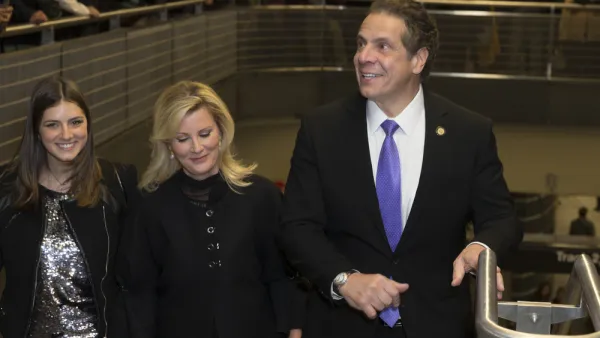
Gov. Andrew Cuomo Proposes Plastic Bag Ban After Killing New York City's Bag Law
The Democratic governor proposed a ban on single-use plastic bags in his state-of-the-state address on Jan. 15. Nearly two years earlier, he signed a bill that prevented New York City from charging for bags as the District of Columbia and Boston do.
It's Official: No More 'Paper or Plastic' in California
If you forget to bring a bag, pay a dime for either a paper or reusable plastic bag. Single-use plastic bags will disappear from grocery stores and pharmacies on July 1, convenience and liquor stores a year later. A composting bill was also signed.
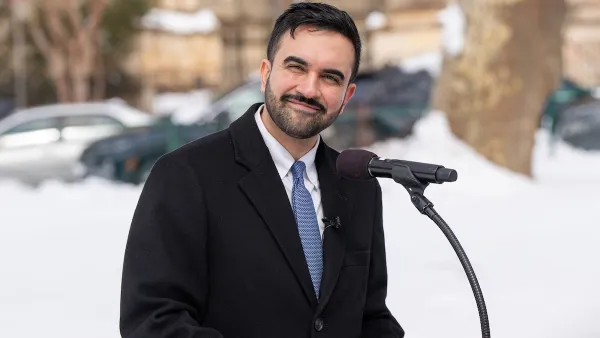
Mamdani’s pied-à-terre tax survives legal challenge
A panel of judges found that the plaintiffs failed to demonstrate injury as a result of New York City's implementation of the tax.

Planetizen Federal Action Tracker
A weekly monitor of how Trump’s orders and actions are impacting planners and planning in America.

California plans to bury El Niño’s downpour
If the state plays its cards right, it may be able to store a billion acre-feet of El Niño’s water in aquifers.

Desperate measures: Advocates weigh draining Lake Powell to fill Colorado River
Draining the reservoir could reduce evaporation losses by a couple hundred thousand acre-feet.

Los Angeles just elected an urban planner as its mayor
Transportation analysts are optimistic that Raman will be more aggressive in addressing transit issues than Bass.

Mamdani’s pied-à-terre tax survives legal challenge
A panel of judges found that the plaintiffs failed to demonstrate injury as a result of New York City's implementation of the tax.

Eastern Nebraska is running out of electricity
Data centers and electrification are straining eastern Nebraska’s grid, throttling economic development.

FREE Course: Walkable City 1: Why Walkability?
After describing his path towards focusing on walkability as the essence of good planning, Jeff Speck marches through his five principal reasons for making more walkable places.
Reinventing Malls: Planning Alchemy—Turning Gray Fields Into Gold
The course focuses on the opportunities and imperatives that shape reinvention of mall sites.

City of Rosemead
Rutgers University, Edward J. Bloustein School of Planning and Public Policy
One Hundred Miles
University of Michigan School for Environment and Sustainability (SEAS)
Hunter College, City University of New York (CUNY)
The Architects Foundation
City of Cambridge
Montrose County
The Pocatello Development Authority