A team of management consulting and foreign policy professionals has released a report analyzing which cities of the world are most global in reach, looking at business activity, human capital, and information exchange. New York comes out on top.


"The top cities on the index-which also include Tokyo, Hong Kong, and Los Angeles-aren't surprising, given their financial markets and sophisticated business climates. But their positions as global leaders also are bolstered by the presence of top-quality universities, world-class museums, international cuisine, and culturally diverse populations. New York, for instance, has the world's largest foreign-born citizenry and Tokyo boasts the largest number of inhabitants with university degrees.
[Paul Laudicina, managing officer and chairman of A.T. Kearney] says the index also helps to explain why businesses choose headquarters in places that can present considerable cost disadvantages. A good example is the San Francisco Bay Area, ranked 15th, where real estate prices and taxes are among the highest in the U.S. The region is made more appealing, Laudicina says, by high quality of life, the prevalence of multidisciplinary academic and scientific research, and other cultural dimensions.
The index reveals another trend, too. Cities in emerging economies, such as Beijing, Moscow, Shanghai, and Dubai, eventually may dislodge the old guard. China's industrial explosion and Russia's recent oil and gas boom have pulled in tourists, foreign investment, and internal migrants looking for the fruits of prosperity."
Read the full story: The World's Most Global Cities

Watch: The Errors Behind 'Best Cities' Rankings
Despite its long history of ranking the best cities to live in the United States, Money Magazine should not be cited as an authority on the matter, according to this video.
What Are America's Best Cities?
For the second year running, Businessweek has conducted an evaluation of America's 100 largest cities to determine their list of the top 50. Alex Konrad discusses the results.
Are These the Next 15 Hot Cities?
No, we're not talking about climate change - this list from Business Insider imagines which U.S. cities will be the best cities to live in in the future of 20 years from now.

Planetizen Federal Action Tracker
A weekly monitor of how Trump’s orders and actions are impacting planners and planning in America.

Eastern Nebraska is running out of electricity
Data centers and electrification are straining eastern Nebraska’s grid, throttling economic development.
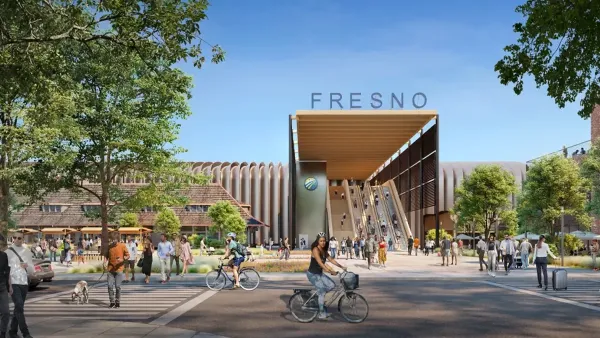
California High-Speed Rail Authority picks trainset manufacturer
The California High-Speed Rail Authority aims to start servicing passengers by 2033.

States are counting on battery farms. Some towns don’t want them.
While fire safety has improved, some communities are still wary.

Dallas releases zoning code overhaul to officials
The drafted overhaul is over 400 pages long.

NYC renovations for dangerous, ‘mercilessly crammed’ street delayed until 2027
Construction was supposed to begin this fall.

FREE Course: Walkable City 1: Why Walkability?
After describing his path towards focusing on walkability as the essence of good planning, Jeff Speck marches through his five principal reasons for making more walkable places.
Reinventing Malls: Planning Alchemy—Turning Gray Fields Into Gold
The course focuses on the opportunities and imperatives that shape reinvention of mall sites.

City of Rosemead
Rutgers University, Edward J. Bloustein School of Planning and Public Policy
One Hundred Miles
University of Michigan School for Environment and Sustainability (SEAS)
Hunter College, City University of New York (CUNY)
The Architects Foundation
City of Cambridge
The Pocatello Development Authority
The Urban Renewal Agency of the City of Pocatello