As the city pulls more and more people from the suburbs back to the center, planners and developers in Charleston are warming up to the idea of infill development.


"For the largest towns and cities in the region, the buzzword for new growth and development is "infill," and it goes hand-in-hand with a push for interconnected neighborhoods in which homes are mixed with shops and offices."
"The goal, which is expected to be re-emphasized as municipalities update their comprehensive plans, is to bring more homes and businesses into areas that are already developed, with a mix of uses that can reduce the need to drive everywhere."
"While there are certainly lots of people who still aspire to live on a leafy cul-de-sac on the outskirts of town, there's growing consumer interest in driving less and living in town-like settings in which shops and offices are nearby, perhaps within walking distance."
"'I think that everybody is seeing the national and international trends, with energy use and the kind of communities people want to live in,' said Christopher Morgan, Charleston's Planning Division director."
FULL STORY: Cities battle sprawl by filling in the holes

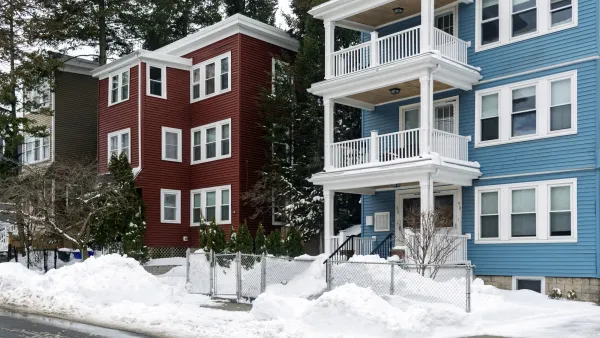
Boston's 'sliver lots' could yield over 1,500 affordable homes
The city has identified over 500 vacant parcels suitable for infill housing.
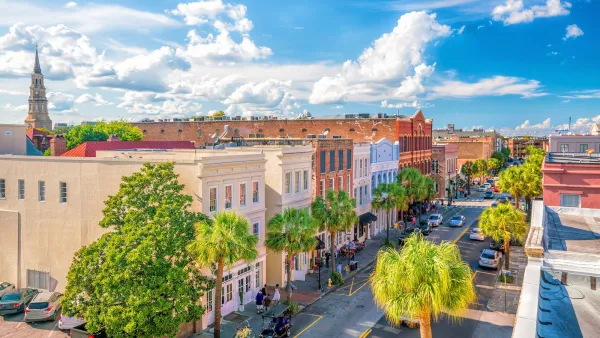
Charleston Creates ‘Workforce Housing District’ With Permanent Affordability
The city has a goal of adding 3,500 new housing units by 2032.
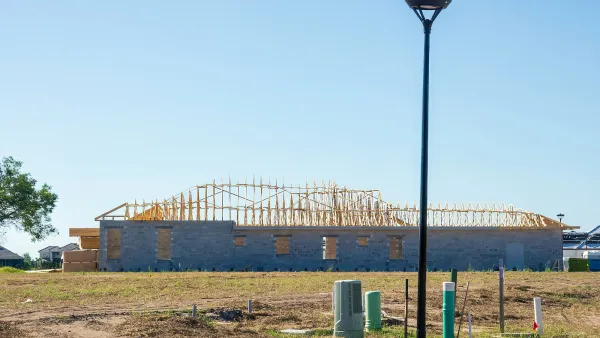
Florida Legislature Passes Bill to Encourage Infill Housing on Brownfields
If signed by the state’s governor, the bill would require cities to allow housing development on lots over 5 acres.

Planetizen Federal Action Tracker
A weekly monitor of how Trump’s orders and actions are impacting planners and planning in America.

The state-sanctioned urbicide of Austin
People don’t kill cities. Freeways do.

US to reduce Colorado River water deliveries to Mexico
A new Colorado Treaty amendment reduces Mexico’s Colorado River water allocation by 250,000 acre feet.

5 New England states march closer to 800 megawatt wind energy project
Securing federal approval for the project may be complicated under the Trump administration, which has historically been hostile towards domestic wind power.

Baltimore to break ground on $50 million Transit Priority Project
The project will bring faster bus trips, safer streets and better bike connections to Baltimore.

Airbnb launches $250 million 'last-dollar financing' housing accelerator, makes first investment in Austin
The company will put $6.4 million towards affordable housing development in Texas’ capital.

FREE Course: Walkable City 1: Why Walkability?
After describing his path towards focusing on walkability as the essence of good planning, Jeff Speck marches through his five principal reasons for making more walkable places.
Reinventing Malls: Planning Alchemy—Turning Gray Fields Into Gold
The course focuses on the opportunities and imperatives that shape reinvention of mall sites.

Eagle County Government
Harvard University Graduate School of Design
Nashville Planning Department
The Architects Foundation
University of Cincinnati Online
The Pocatello Development Authority
The Urban Renewal Agency of the City of Pocatello
Journal of the American Planning Association