MBTA is spending almost $200 million for 75 new rail cars from a South Korean company that has yet to sell its cars in the U.S., so rail experts have expressed doubts about the wisdom of this purchase for the troubled Boston T.


The Massachusetts Bay Transportation Authority "has placed a $190 million bet (for 75 new double-decker cars) on a company, Hyundai Rotem that has yet to open an assembly plant on American soil, a requirement under federal law."
"Even if someone's produced very good trains elsewhere in the world, doing it in the United States is a whole new drill," said Fred Salvucci, former Massachusetts transportation secretary and now a lecturer at MIT.
"To win the MBTA contract, Rotem bid $30 million less than Kawasaki (the Japanese company that has built rail cars for the MBTA and many of the nation's largest transit agencies for two decades), its only competitor.
The MBTA order will be third in line at Rotem's Philadelphia plant" after Philadelphia's SEPTA and Southern California's Metrolink.
From Ventura County Star:"Metrolink's new cars are reported to be safest yet":
"The train cab and trailer cars - 117 of them - cost more than $230 million and were ordered more than two years ago.
Made by Rotem USA Corp., a division of Hyundai Motors Group in South Korea, the rail cars include the latest "crash energy management" technology developed over a decade of study by the U.S. Department of Transportation."
Thanks to Bay Area Transportation News
Read the full story: T betting on untried firm to build fleet

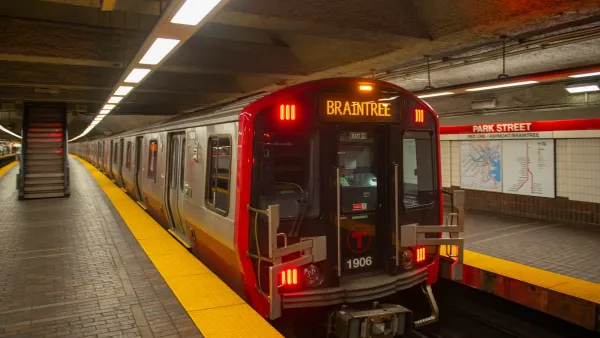
MBTA Rail Car Builder to Furlough 161 Workers, Delay Fleet Upgrade
Key components are stuck in customs as the Chinese-based producer works to certify that the parts were not produced with forced labor.
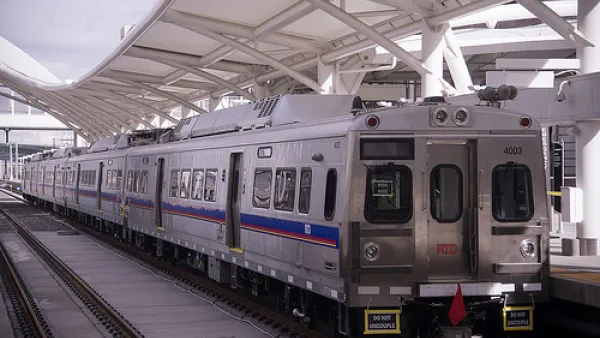
Denver's Commuter Rail Cars: Same as SEPTA's But Without the Defects
Denver's transit agency is running very similar Hyundai Rotem EMUs on their new A Line to the airport. The car shells are imported from South Korea and assembled in the same Philadelphia plant as SEPTA's problem-plagued Silverliner V cars.
Safety of Southern California's New Metrolink Cab Cars Questioned
After a February Metrolink commuter train crash in Oxnard, Calif., train officials hailed the new Korean rail cars as having performed well. Now they have expressed second thoughts, and are replacing the front cab cars with BNSF locomotives.

Planetizen Federal Action Tracker
A weekly monitor of how Trump’s orders and actions are impacting planners and planning in America.

California plans to bury El Niño’s downpour
If the state plays its cards right, it may be able to store a billion acre-feet of El Niño’s water in aquifers.

Chicago breaks ground on $3 billion megadevelopment
The new neighborhood, titled Foundry Park, will one day host 3,700 residences.

This road in NYC is infamously dangerous — and Mamdani can't fix it
New York City's Ocean Parkway is known for reckless driving, but the power to implement safety measures lies with the state rather than the city.

One of Denver’s busiest corridors to gain BRT
The project will span 18 miles and contain 74 bus rapid transit stations.

275,000 bus trips are at stake on Seattle's ballot
If passed, the Seattle Transit Measure would trigger a 0.3% sales tax and raise an average of $138 million per year to maintain and expand Seattle’s bus services.

FREE Course: Walkable City 1: Why Walkability?
After describing his path towards focusing on walkability as the essence of good planning, Jeff Speck marches through his five principal reasons for making more walkable places.
Reinventing Malls: Planning Alchemy—Turning Gray Fields Into Gold
The course focuses on the opportunities and imperatives that shape reinvention of mall sites.

City of Rosemead
Rutgers University, Edward J. Bloustein School of Planning and Public Policy
One Hundred Miles
Hunter College, City University of New York (CUNY)
The Architects Foundation
University of Cincinnati Online
City of Cambridge
Montrose County
The Pocatello Development Authority