A new study shows that noise pollution on the streets of San Francisco is putting nearly one in six residents at risk for heart disease, high blood pressure and other stress-related illnesses.


"The San Francisco Department of Public Health has ranked "highly annoyed" areas of the city - neighborhoods it says have noise so loud and so constant it could cause psychological and physical harm. "There are real health impacts," Tom Rivard, senior environmental health specialist for the Department of Public Health, said Tuesday.
The assessment by the city and UC Berkeley researchers was based on population, traffic congestion, topography and decibel readings. Sophisticated three-dimensional maps pinpoint the noisiest areas of San Francisco, building by building, hour by hour. Traffic noise is loudest in the South of Market area but affects the most people in the densely populated Chinatown, Civic Center and Tenderloin neighborhoods."
Thanks to rob bregoff
Read the full story: S.F. traffic noise risks health of 1 in 6
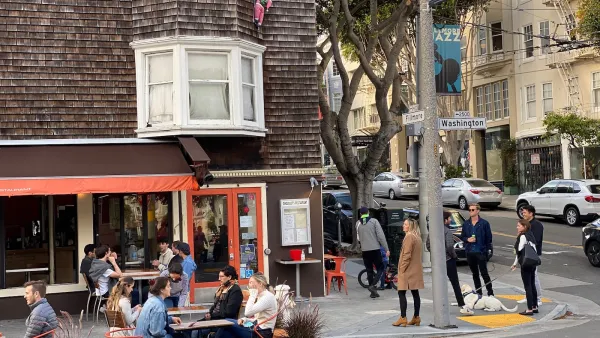
San Francisco leaders shelve proposed patio smoking ban
Facing backlash from business owners, supervisors postponed a discussion of legislation that would bar smoking from restaurant and bar patios.
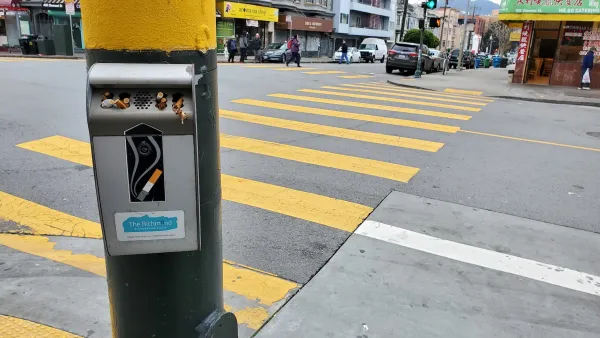
San Francisco weighs patio smoking ban
Business owners say the ban could force patrons onto sidewalks and disrupt long-standing bar culture, while proponents of the ordinance say second-hand smoke is a threat to patrons and workers.
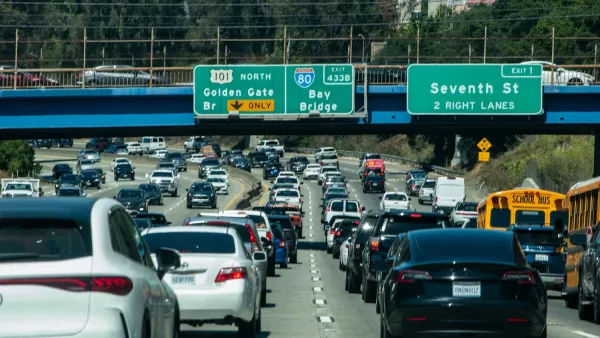
US Commuters Lost 8 Workdays to Traffic in 2024
As more employers call workers back to the office, commute times are growing — and costing drivers in time and money.

Planetizen Federal Action Tracker
A weekly monitor of how Trump’s orders and actions are impacting planners and planning in America.

California plans to bury El Niño’s downpour
If the state plays its cards right, it may be able to store a billion acre-feet of El Niño’s water in aquifers.

Desperate measures: Advocates weigh draining Lake Powell to fill Colorado River
Draining the reservoir could reduce evaporation losses by a couple hundred thousand acre-feet.

US buildings threatened, destroyed by fires set to triple by 2060
Researchers found a high fire risk for socioeconomically vulnerable neighborhoods in the American West.

LA residents may be allowed to paint their own crosswalks
Councilwoman Katy Yaroslavsky put out a motion instructing the Los Angeles Department of Public Transportation to study the feasibility of allowing volunteers to paint crosswalks.

Dallas moves to overhaul its zoning code
The city's zoning reform will allow more multi-family and mixed-use developments.

FREE Course: Walkable City 1: Why Walkability?
After describing his path towards focusing on walkability as the essence of good planning, Jeff Speck marches through his five principal reasons for making more walkable places.
Reinventing Malls: Planning Alchemy—Turning Gray Fields Into Gold
The course focuses on the opportunities and imperatives that shape reinvention of mall sites.

City of Rosemead
Rutgers University, Edward J. Bloustein School of Planning and Public Policy
One Hundred Miles
Hunter College, City University of New York (CUNY)
The Architects Foundation
University of Cincinnati Online
City of Cambridge
Montrose County
The Pocatello Development Authority