If we can bail out the investment industry, we should be able to bail out our failing infrastructure, according to this column from Neal Peirce.


"With the Wall Street mortgage meltdown so massive its costs could reach toward $1 trillion, where's the economic plan to rebuild America's cities and infrastructure, to retool our businesses and people for a risky century?"
"It seems totally missing in official Washington today. Yet it ought to be a central issue of the presidential campaign, asserts Phil Angelides, chairman of the Apollo Alliance and former California state treasurer."
"Today many Americans (and culture war conservatives) prefer flying their flags to admitting how deep our 21st century crises have become. Yet the facts are there. The national security is at risk because of our massive foreign oil addiction, rapidly rising energy costs, Katrina-scale storms and global warming, weakening manufacturing power and a slow, pernicious hollowing out of the middle class."
"That makes the Apollo Alliance's call for "a New Deal, Marshall Plan style commitment to clean energy and good jobs" a bit hard to dismiss as more "liberal" "tax and spend" politics. If we can afford seemingly endless hundreds of billions to bail out unwise investors, how can we not invest forward in our own people and economy?"
Read the full story: Beyond Bailout: Reinvesting in “U.S.”
How Does an Economic Downturn Impact City Infrastructure?
From budget cuts to delayed maintenance projects, cities adapt, prioritize, and innovate amidst financial challenges to ensure sustainable and resilient urban environments.
How the Discount Rate Impacts Future Generations
A wonky policy tool can have significant effects on how public and private money is spent.
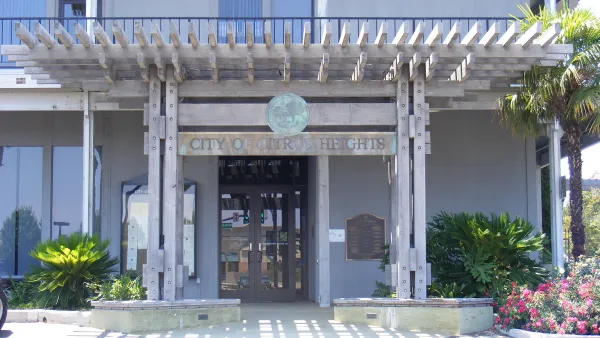
How Infrastructure Improvements Spur Economic Development
A formerly underutilized corridor in Citrus Heights, California is being transformed into a vibrant, walkable street—and stimulating economic growth in the process.

Planetizen Federal Action Tracker
A weekly monitor of how Trump’s orders and actions are impacting planners and planning in America.

Eastern Nebraska is running out of electricity
Data centers and electrification are straining eastern Nebraska’s grid, throttling economic development.

Study reveals best places in the U.S. for cycling, walking
New research from Streetlight Data examines bicycle and pedestrian miles per capita in the 100 largest U.S. cities by population.

Next-generation nuclear reactors are coming to Texas
The reactors will not require towering containment structures thanks to new safety features.

California distributes $1.3 billion to prevent transit service cuts, bolster projects
Twenty-eight projects across California received a portion of the funding.

Pennsylvania Democrats have 15 affordability, clean energy bills for flipped state Senate
Bills in consideration include a bill supporting geothermal energy and a bill supporting solar on warehouses.

FREE Course: Walkable City 1: Why Walkability?
After describing his path towards focusing on walkability as the essence of good planning, Jeff Speck marches through his five principal reasons for making more walkable places.
Reinventing Malls: Planning Alchemy—Turning Gray Fields Into Gold
The course focuses on the opportunities and imperatives that shape reinvention of mall sites.

City of Charlotte
City of Rosemead
Rutgers University, Edward J. Bloustein School of Planning and Public Policy
University of Michigan School for Environment and Sustainability (SEAS)
Hunter College, City University of New York (CUNY)
The Architects Foundation
City of Cambridge
The Pocatello Development Authority
The Urban Renewal Agency of the City of Pocatello