Seattle is growing, and it's going to have to start thinking about augmenting its single-family neighborhoods with more multi-unit housing if it wants to keep up with the pace of growth.


"Seattle cannot accommodate the people it's projected to gain over the next three decades without adding homes in single-family neighborhoods, according to members of the Northwest EcoBuilding Guild.
The reason is that 65 percent of Seattle's land is zoned single-family, with lots averaging 5,000 square feet, creating a population density less than such cities as Chicago, Boston, San Francisco and even sprawling Los Angeles, three representatives of the group said during a session at the 2008 Housing Washington conference, in Tacoma, on Tuesday."
Read the full story: Seattle's growth projection reflects a city pushing limits

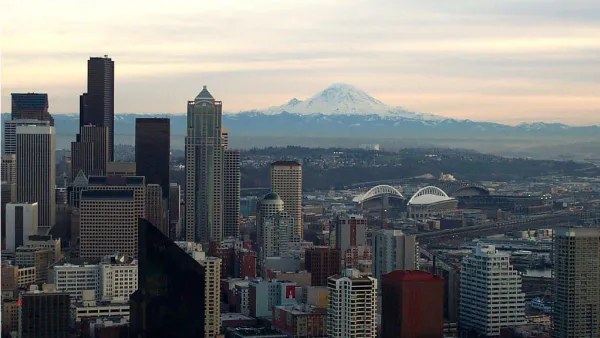
Growth Battles Heating up in Seattle
The growth of Seattle growth is inflaming passions on either side of the issue—some claim that the city wants everyone to "live in cubicles"; others say the city isn't doing enough to prepare for 120,000 expected new residents.
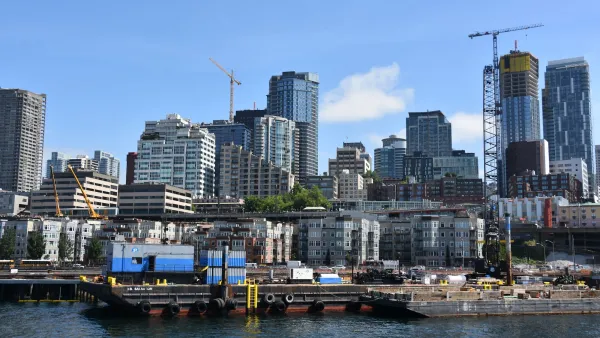
Seattle upzoning proposal seeks to boost density, support eco-friendly building materials
A city committee advanced the plan to target areas already open to multifamily development for additional density and encourage passive house and mass timber construction.
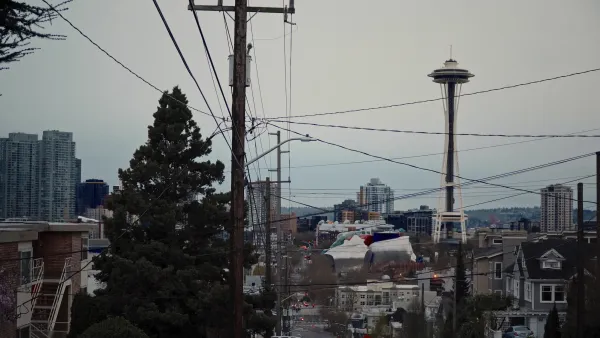
Seattle Density Increase Stymied by Underground Power Line Requirement
A new policy that requires buildings with four or more units to bury their electrical lines is making housing development more costly and causing months-long delays.

Planetizen Federal Action Tracker
A weekly monitor of how Trump’s orders and actions are impacting planners and planning in America.

Amtrak, CN end decades-long dispute with eight-year agreement
The new operating agreement establishes an updated framework for the companies to work together, including processes to resolve disputes.

Judges permit Denver to divert 77,000 acre feet from the Colorado River for reservoir expansion
Overuse and climate change have caused the Colorado River’s water levels to plummet.

'Something we’ve never seen before:' rising utility rates could strain city finances nationwide
Data centers, climate change and other factors have caused utility rates in the United States to increase by 38% since 2020.

Trump to overrule local leaders, lease millions of acres of America’s Pacific Island territories’ seafloors to mining companies
International law says that the Indigenous people of America’s territories have a right to prior and informed consent regarding projects that impact their countries.

A ‘shady’ deal: Chicagoans rally against planned Amtrak maintenance facility
The $900 million facility would allow Amtrak to maintain entire trains in one building, which the company says will reduce delays.

FREE Course: Walkable City 1: Why Walkability?
After describing his path towards focusing on walkability as the essence of good planning, Jeff Speck marches through his five principal reasons for making more walkable places.
Reinventing Malls: Planning Alchemy—Turning Gray Fields Into Gold
The course focuses on the opportunities and imperatives that shape reinvention of mall sites.

KFH Group Inc.
Greater Baltimore Committee
Eagle County Government
The Architects Foundation
University of Cincinnati Online
The Pocatello Development Authority
The Urban Renewal Agency of the City of Pocatello