Atlanta and other cities in the U.S. are fighting for a greater share of hotel taxes paid as a result of bookings through online sites.


"Online travel companies are under legal assault throughout Georgia - and across the nation - as cities seek to recoup tax money they claim is rightfully theirs. The hotel and occupancy tax for Atlanta hotel and motel rooms, for example, is 7 percent. The tax, like others nationwide, was enacted into law as a way to generate money that could be used to promote tourism."
"According to court filings, the online companies contract with hotels and motels for a number of rooms at negotiated 'wholesale' rates. The online companies determine a markup and set the 'retail' rate the consumer will pay. The online companies accept credit-card payments for the room rate, plus taxes and services fees. They return the 'wholesale' rate, plus the estimated tax on that rate, to the hotel.
No hotel and occupancy tax is being paid on the difference between the wholesale rate and the retail rate, Bill Norwood, a lawyer for the city, said Monday.
But Kendrick Smith, a lawyer for the online companies, said that because the Internet-based firms do not buy or rent hotel rooms, they are not subject to the tax."
Read the full story: Atlanta among U.S. cities suing online travel companies

Borscht Belt Meets Rust Belt
The "Borscht Belt", a once-thriving vacation getaway in upstate New York, has entered a serious decline. Legalizing gambling in the region is being discussed as a cure-all to revitalize the Catskills, but Citiography thinks its too late.
Cambodian Cool
The Cambodian city of Siem Reap is a hotbed of tourist activity -- and of tacky hotels. Many say this sprawl of hotels is a major problem in the city, but new designs are making the city a cooler place to visit and live.
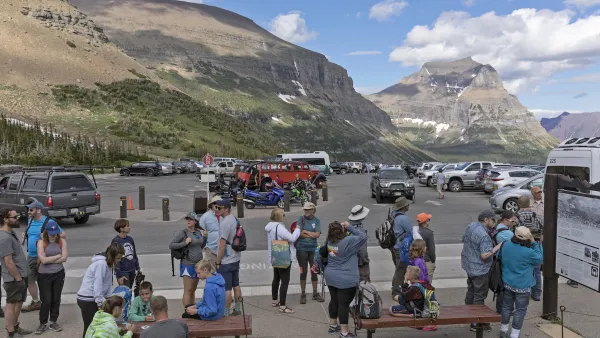
Glacier National Park drops reservation requirement, plans to double down on shuttle network
Since 2021, visitors with cars have had to make a reservation to access the park.

Planetizen Federal Action Tracker
A weekly monitor of how Trump’s orders and actions are impacting planners and planning in America.

California plans to bury El Niño’s downpour
If the state plays its cards right, it may be able to store a billion acre-feet of El Niño’s water in aquifers.

Chicago breaks ground on $3 billion megadevelopment
The new neighborhood, titled Foundry Park, will one day host 3,700 residences.

Satanic place names
From streams and lakes to valleys and canyons, I mapped more than 1,000 places named after the Devil.

California High-Speed Rail Authority CEO resigns after $600,000 scandal
Under Ian Choudri, the authority used taxpayer dollars to fund first class flights and trips to nightclubs.

Want to study the Missouri River? Soon, you may need unanimous approval from 10 states
Legislation would require 10 governors’ permission to study or build projects moving water outside the basin.

FREE Course: Walkable City 1: Why Walkability?
After describing his path towards focusing on walkability as the essence of good planning, Jeff Speck marches through his five principal reasons for making more walkable places.
Reinventing Malls: Planning Alchemy—Turning Gray Fields Into Gold
The course focuses on the opportunities and imperatives that shape reinvention of mall sites.

City of Rosemead
Rutgers University, Edward J. Bloustein School of Planning and Public Policy
One Hundred Miles
Hunter College, City University of New York (CUNY)
The Architects Foundation
University of Cincinnati Online
City of Cambridge
Montrose County
The Pocatello Development Authority