With a federal election now underway in Canada, the focus should be on new, green infrastructure, not a national carbon tax, argues Tom Kent.


"A carbon tax will be hotly debated [in this election]; but to make it the centrepiece of an election platform is to ignore the troubles of Canadians.
The need is for public investment. It is to undertake infrastructure projects that green the economy, that strengthen it, and that employ people now.
One major need is to create a power grid linking Canada's energy resources from sea to sea. Quebec's and Manitoba's hydro could quickly relieve Ontario's energy shortage. [M]uch can be done to shift freight traffic [to rail] and, incidentally, improve passenger service. There are many sections of line across Canada where an additional track could be laid on the existing right of way.
This is the time for capital investments. The sooner they're made, the sooner a carbon tax will be appropriate in a stronger economy."
Read the full story: Let's think modern infrastructure, not carbon tax

Washington Voters Keep Carbon Tax
An initiative that would have ended the state’s “cap and invest” program failed, leaving the program in place.
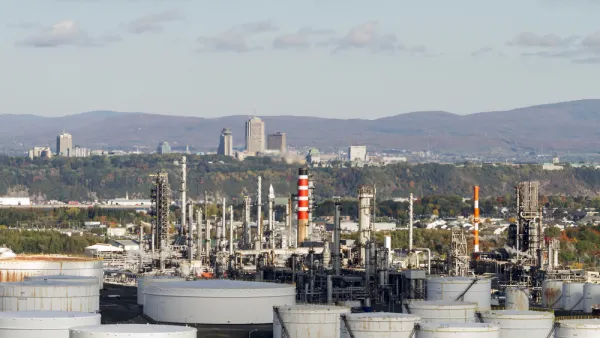
Canadian Supreme Court Upholds Carbon Tax
A historic ruling in Canada allows the federal government to supersede the efforts of provinces in fighting the causes of climate change.
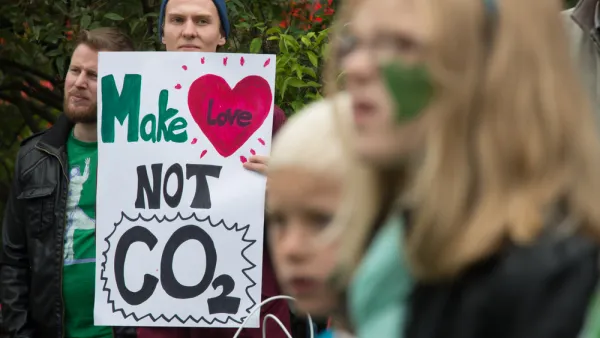
Carbon Neutrality: What Does it Mean, and Is it Possible?
Are 'zero carbon' goals the most effective way to cut greenhouse gases, or are they the most politically feasible strategies? NPR climate and environment reporter, Nathan Rott, explores the challenge in an interview on All Things Considered.

Planetizen Federal Action Tracker
A weekly monitor of how Trump’s orders and actions are impacting planners and planning in America.

California plans to bury El Niño’s downpour
If the state plays its cards right, it may be able to store a billion acre-feet of El Niño’s water in aquifers.

Desperate measures: Advocates weigh draining Lake Powell to fill Colorado River
Draining the reservoir could reduce evaporation losses by a couple hundred thousand acre-feet.

Not in my parking spot: LA renters oppose ADU development in their garages
Some tenants advocates say taking away residents’ parking spaces harms senior citizens and people with disabilities who rely on their cars to navigate the city.

NITA’s first budget outlines $5 billion operating plan
The plan also proposes a $9.73 billion capital program for 2027 through 2031.

In Texas, data centers are swallowing promised parkland
Residents who moved to Taylor, Texas for a rural community now have to contend with three data centers in their backyard.

FREE Course: Walkable City 1: Why Walkability?
After describing his path towards focusing on walkability as the essence of good planning, Jeff Speck marches through his five principal reasons for making more walkable places.
Reinventing Malls: Planning Alchemy—Turning Gray Fields Into Gold
The course focuses on the opportunities and imperatives that shape reinvention of mall sites.

City of Rosemead
Rutgers University, Edward J. Bloustein School of Planning and Public Policy
One Hundred Miles
Hunter College, City University of New York (CUNY)
The Architects Foundation
University of Cincinnati Online
City of Cambridge
Montrose County
The Pocatello Development Authority