Corrupt and inconsistent mob-controlled garbage collection in Naples, Italy, has left the city swimming in uncollected trash and with little hope of a resolution.


"When you go up against trash here in Campania province, you are going up against a powerful, vicious mafia known as the Camorra. The Naples-based Camorra controls the import, transport and disposal of millions of tons of rubbish, an extremely lucrative business in which the group follows its own rules, ignores regulations on toxic waste and contaminates once-fertile farmland, country fields, forests and rivers."
"Beyond the ugliness of it all, evidence now suggests that the garbage is poisoning the food chain and may be causing cancer, birth defects and other health problems."
"For most of the last year, Campania suffocated under towering mountains of festering, uncollected garbage. Dumps, legal and illegal, were full to overflowing. Until cleanup crews finally made their move in July, seas of trash blocked roads and doorways and swallowed sidewalks and parks. The Camorra periodically paid Gypsy boys to set fire to portions of the waste, creating Dantesque scenes of a land ablaze, villages and towns filled with toxic smoke."
"The blighted condition of southern Italy has earned sanctions from the European Union and condemnation from international health organizations. It ignited violent protests this year and contributed to the downfall of the government of Prime Minister Romano Prodi in the spring."
"This is not a new problem. For more than 15 years, with the government spending more than $2 billion and appointing seven "trash czars," the problem hasn't gone away. It doesn't get fixed because the mafiosi , and politicians in their pocket, don't want it to be."
Read the full story: Italy mobsters block efforts to clean up toxic trash heaps
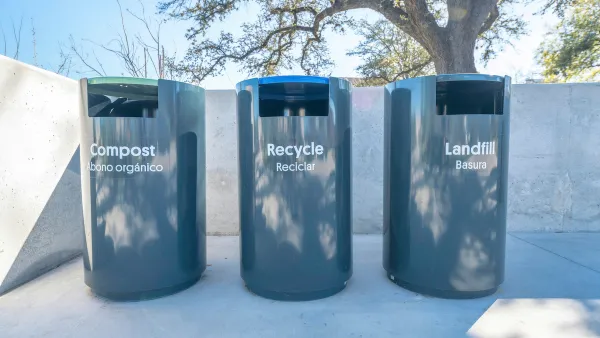
Austin Reveals New Zero Waste Plan
The city aims to eliminate the majority of landfill waste by 2040.

Unique Garbage Challenges in Juneau
Juneau, Alaska's tiny capital city, is not accessible from elsewhere by road. Its isolation makes waste disposal problematic and expensive, spurring an aggressive recycling effort.
Mexico City Trash Pickers Fight for Their Livelihood
As city officials introduce plans to overhaul waste disposal in the capital of Mexico, a deeply rooted constituency fights back.

Planetizen Federal Action Tracker
A weekly monitor of how Trump’s orders and actions are impacting planners and planning in America.

California plans to bury El Niño’s downpour
If the state plays its cards right, it may be able to store a billion acre-feet of El Niño’s water in aquifers.

Desperate measures: Advocates weigh draining Lake Powell to fill Colorado River
Draining the reservoir could reduce evaporation losses by a couple hundred thousand acre-feet.

Mamdani’s pied-à-terre tax survives legal challenge
A panel of judges found that the plaintiffs failed to demonstrate injury as a result of New York City's implementation of the tax.

Eastern Nebraska is running out of electricity
Data centers and electrification are straining eastern Nebraska’s grid, throttling economic development.

Seattle passes record-breaking transit services expansion
Proposition 1 will double the city’s transit tax to add 95,000 more bus trips and preserve 180,000 bus trips annually.

FREE Course: Walkable City 1: Why Walkability?
After describing his path towards focusing on walkability as the essence of good planning, Jeff Speck marches through his five principal reasons for making more walkable places.
Reinventing Malls: Planning Alchemy—Turning Gray Fields Into Gold
The course focuses on the opportunities and imperatives that shape reinvention of mall sites.

City of Rosemead
Rutgers University, Edward J. Bloustein School of Planning and Public Policy
One Hundred Miles
Hunter College, City University of New York (CUNY)
The Architects Foundation
University of Cincinnati Online
City of Cambridge
Montrose County
The Pocatello Development Authority