Rami Khouri of the Issam Fares Institute for Public Policy and International Affairs notes the unprecedented phenomenon of the "instant" cities of the Persian Gulf which, for all their wealth, lack civil societies.


"In the world of nation-states, the small Arab emirates and states of the Persian Gulf have been peculiar beasts since their birth in the middle of the last century, in the wake of the retreating British. Their transformation into glittering, bustling city-states in a matter of decades has been impressive - and perhaps unprecedented in the history of civilization.
The gulf city-states' chosen course of breakneck speed and foreign-manned socio-economic development and their brand of overnight nationalism anchored in cities that barely existed decades ago deserve analysis in their own right, and also for what they might teach other Arab countries.
These dazzling centres of seemingly endless growth are defined by massive new public and private building projects, hundreds of soaring towers and towns built virtually overnight. At the same time, these are countries without politics, and are largely devoid of any civil society institutions where citizens can gather in various associations to debate, analyze and advance their own societies."
FULL STORY: The gulf city-states are dazzling oases of growth but, oddly, no politics

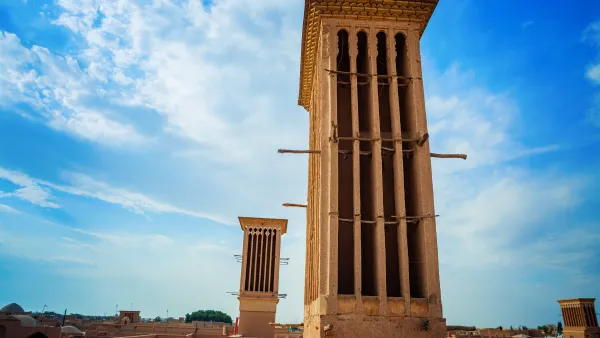
Looking to the Middle East for Cooling Architecture
Cooling mechanisms built into traditional architecture offer lessons for U.S. builders as heat waves grow more intense.
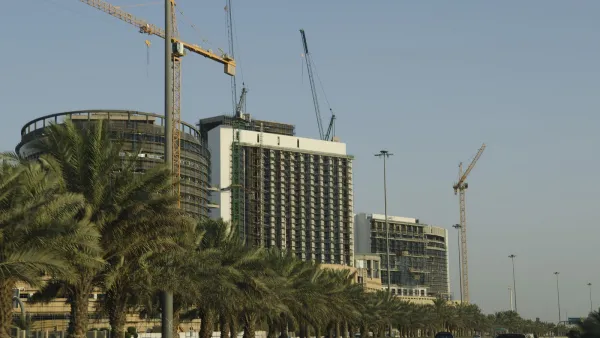
Saudi Arabia Plans New Mega City on the Red Sea
The announcement by Saudi Crown Prince Mohammed bin Salman to create the mega-city of NEOM would offer a Dubai-like 'free-zone' city.
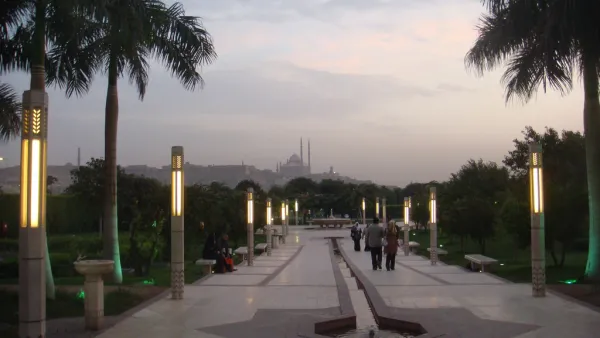
Open Spaces Are Contested Spaces in the Middle East
Parks and other public open spaces continue to be squeezed out by private development and attempts to limit political dissent throughout cities in Arab countries.

Planetizen Federal Action Tracker
A weekly monitor of how Trump’s orders and actions are impacting planners and planning in America.

The state-sanctioned urbicide of Austin
People don’t kill cities. Freeways do.

US to reduce Colorado River water deliveries to Mexico
A new Colorado Treaty amendment reduces Mexico’s Colorado River water allocation by 250,000 acre feet.

Guerilla urbanists are building DIY bus stop benches in Chicago
A before-and-after of one of the bus stops with a new bench. The new benches are not officially sanctioned or permitted, but the residents who placed them hope they will be the start of a network of DIY benches across the city.

Mamdani overhauls NYC's Vision Zero plan with 100 new policy goals
The overhaul aims to reduce traffic deaths and make streets safer for pedestrians, cyclists and drivers through lower speed limits, new safety infrastructure and more.

Amtrak not solely to blame for New Jersey commuter rail's unreliability, report finds
A new study from the Garden State Initiative found that NJ Transit’s budget grew 20% across a 4 year period, but reliability declined significantly over the same period.

FREE Course: Walkable City 1: Why Walkability?
After describing his path towards focusing on walkability as the essence of good planning, Jeff Speck marches through his five principal reasons for making more walkable places.
Reinventing Malls: Planning Alchemy—Turning Gray Fields Into Gold
The course focuses on the opportunities and imperatives that shape reinvention of mall sites.

Eagle County Government
Harvard University Graduate School of Design
Nashville Planning Department
The Architects Foundation
University of Cincinnati Online
The Pocatello Development Authority
The Urban Renewal Agency of the City of Pocatello
Journal of the American Planning Association