Parks and other public open spaces continue to be squeezed out by private development and attempts to limit political dissent throughout cities in Arab countries.


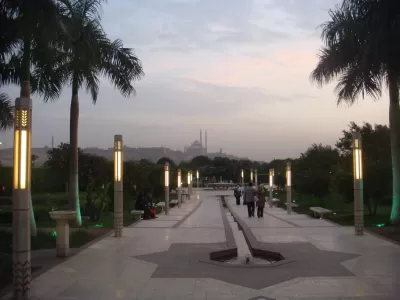
The Economist looks at the increasingly endangered open spaces throughout cities in Arab countries, including Lebanon, Egypt, and Saudi Arabia. Citing research from UN Habitat, the article notes that open space comprise just 2 percent of the area of cities in the Middle East compared to 12 percent for European cities. In cities across the region, parks and other green spaces have been bulldozed for private development. More recently, public open spaces have been restricted or removed in order to quell demonstrations. The elimination of these public places is anathema to the traditional design of cities across Arab countries, which typically incorporated gardens and large open spaces for their residents.
"...since the 2011 Arab Spring, when the people took over squares to stage protests, security concerns have trumped any other. Egypt's generals have ringed the roundabout in Cairo's Tahrir Square with iron grating. Bahrain's King Hamad has leveled the Pearl roundabout where his subjects protested, and turned it into a traffic junction."
Increasingly, protestors and average citizens have sought out greener spaces, continuing to occupy the public squares and parks despite attempts to block them. As the article concludes, the best open space for many Arabs remains in cyberspace.
Read the full story: No Bed of Roses

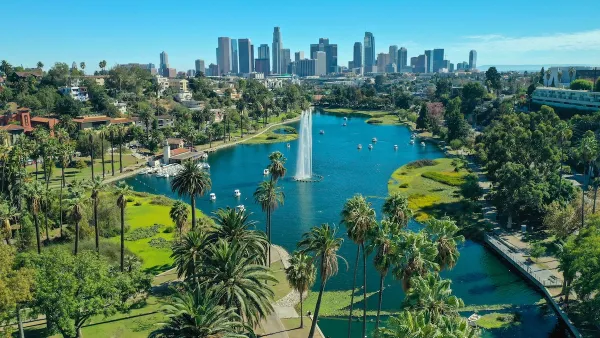
A Historic Investment in LA County’s Parks and Open Spaces
Los Angeles County has launched its largest-ever competitive grant program, investing $58 million to expand park access, enhance climate resilience, and support community-driven projects in the areas that need them most.
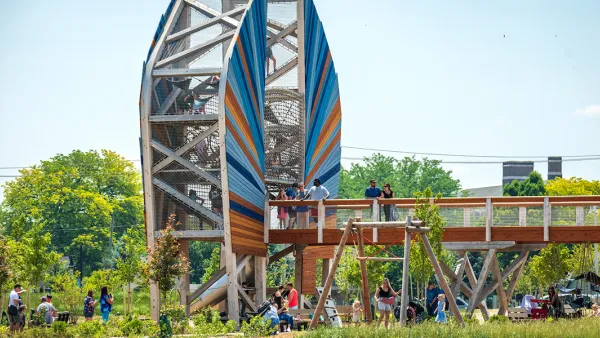
Innovative Park Agencies Receive National Recognition
The National Recreation and Park Association (NRPA) recently announced the recipients of this year’s awards for innovation in health and wellness, equity, conservation, and park design.
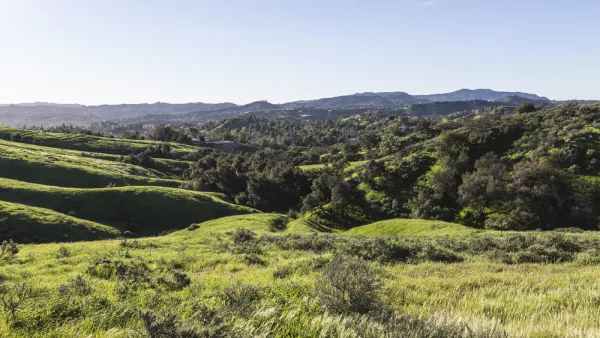
Regenerating and Healing Land Through Parks
Through thoughtful planning and restoration efforts, parks can help heal degraded land, meeting multiple community needs, improving soil quality, restoring native vegetation, and creating habitats for wildlife.

Planetizen Federal Action Tracker
A weekly monitor of how Trump’s orders and actions are impacting planners and planning in America.

Amtrak, CN end decades-long dispute with eight-year agreement
The new operating agreement establishes an updated framework for the companies to work together, including processes to resolve disputes.
Nation's most wind-powered state turns to coal as data centers increase energy demand
For the first time in decades, Iowa has increased its generation of coal power.

Alabama scores up to $2.5 billion federal loan for largest infrastructure project in state’s history
The Mobile River Bridge and Bayway Project aims to ease congestion at Alabama’s worst bottleneck.

Trump is considering data centers on 6 states' public land — some state officials say they had no idea
If the administration approves the proposed projects, data center and data center-related developments will cover 17,600 acres of public land.

Despite court ruling, Trump is keeping nearly all wind projects in the US on hold
At least 110 wind energy projects have not heard from the government since a federal judge ruled that the Trump administration's freeze on wind turbine clearances was likely illegal.

FREE Course: Walkable City 1: Why Walkability?
After describing his path towards focusing on walkability as the essence of good planning, Jeff Speck marches through his five principal reasons for making more walkable places.
Reinventing Malls: Planning Alchemy—Turning Gray Fields Into Gold
The course focuses on the opportunities and imperatives that shape reinvention of mall sites.

KFH Group Inc.
Greater Baltimore Committee
Eagle County Government
The Architects Foundation
University of Cincinnati Online
The Pocatello Development Authority
The Urban Renewal Agency of the City of Pocatello