The expansion of a Baltimore hospital has sparked a neighborhood-wide urban renewal project.


"The area, sometimes referred to as Middle East Baltimore, is re-emerging as the New East Baltimore, offering the promise of turning what had become an urban wasteland into a vibrant 88-acre community centered on a medical science and technology office park, which includes laboratory space."
"In the first phase, 1,200 houses, three-fourth of them vacant, were acquired and torn down. A 278,000-square-foot building, called the John G. Rangos Sr. Building, opened in April and now has five tenants. Slightly more than half of the space is still available, although other leases are said to be close to signing."
"This is the first of five planned buildings. Work on the second is expected to get under way early next year. The first four buildings are to be devoted largely to lab facilities and science and technology companies. The fifth is to include more traditional office tenants."
FULL STORY: Building a Technology Park in Baltimore by Rehabilitating a Neighborhood

Baltimore Points The Way Forward For Urban Renewal
Neal Peirce describes how Baltimore's first mixed income neighborhood since WWII is taking shape on the east side just north of the Johns Hopkins campus.
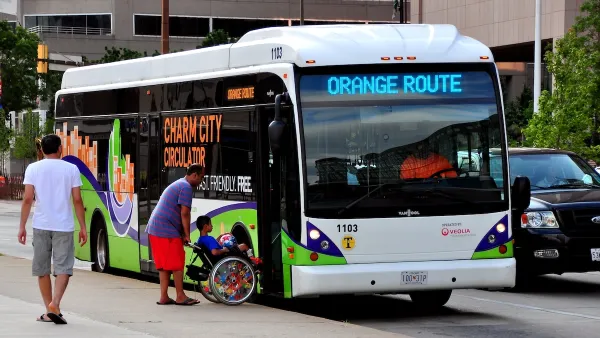
Baltimore to break ground on $50 million Transit Priority Project
The project will bring faster bus trips, safer streets and better bike connections to Baltimore.
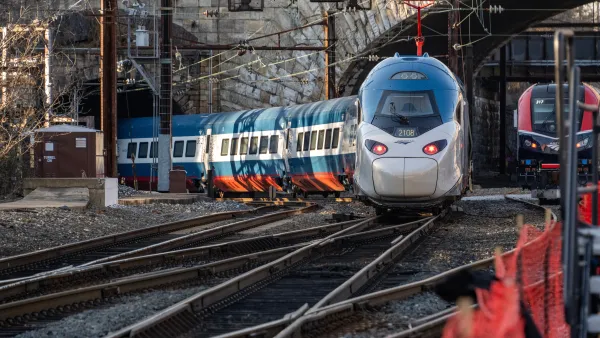
Amtrak’s $6 billion tunnel project moves closer to a faster Northeast Corridor
The Baltimore & Potomac Tunnel Replacement Program is Amtrak's largest-ever single infrastructure investment, and will pave the way for more reliable passenger rail service between Baltimore, Washington and Virginia.

Planetizen Federal Action Tracker
A weekly monitor of how Trump’s orders and actions are impacting planners and planning in America.

The state-sanctioned urbicide of Austin
People don’t kill cities. Freeways do.

US to reduce Colorado River water deliveries to Mexico
A new Colorado Treaty amendment reduces Mexico’s Colorado River water allocation by 250,000 acre feet.

LA Metro’s ultimatum: no extra buses for LA28 if federal funding isn’t imminently secured
If Metro does not provide additional buses, LA28 organizers will have to find a new way to manage Olympic traffic. LA28’s budget does not include a line item for transit.

Colorado’s Largest Data Center Could Rise Next to Homes — Without a Public Hearing
The proposed campus would consume 11 times the power of Denver International Airport; as it has across the country, opposition mounts.

5 New England states march closer to 800 megawatt wind energy project
Securing federal approval for the project may be complicated under the Trump administration, which has historically been hostile towards domestic wind power.

FREE Course: Walkable City 1: Why Walkability?
After describing his path towards focusing on walkability as the essence of good planning, Jeff Speck marches through his five principal reasons for making more walkable places.
Reinventing Malls: Planning Alchemy—Turning Gray Fields Into Gold
The course focuses on the opportunities and imperatives that shape reinvention of mall sites.

Eagle County Government
Harvard University Graduate School of Design
Nashville Planning Department
The Architects Foundation
University of Cincinnati Online
The Pocatello Development Authority
The Urban Renewal Agency of the City of Pocatello
Journal of the American Planning Association