Some states have made progress in repairing old bridges since the 2007 Minneapolis bridge collapse, but many states still have thousands in disrepair. Billions are needed to get them up-to-date.


"The fatal collapse of a bridge in Minneapolis a year ago jolted states into better inspections of the nation's 600,000 bridges, but they aren't coming up with the billions of dollars needed to ensure that all of them are sound."
"Since the tragedy, Pennsylvania has approved $350 million in bonds to repair 411 bridges. Road tolls will go up next year."
"It would cost $9.4 billion a year for 20 years to eliminate all bridge deficiencies in the USA, according to the latest estimate, made in 2005, by the American Society of Civil Engineers."
"A USA TODAY review found that beefed-up inspections since the collapse led 16 states to close bridges, reduce weight limits or make immediate repairs. All states inspected bridges designed like the one that fell. Some, including Arizona, Delaware, Louisiana, Maine, Minnesota, New Jersey, New York and Tennessee, conducted broader reviews to identify bridges needing the most work."
"South Carolina and Wisconsin are installing high-tech sensors that record the deterioration of a bridge, which inspectors can track on the Internet."
Read the full story: Billions needed to shore up nation's bridges

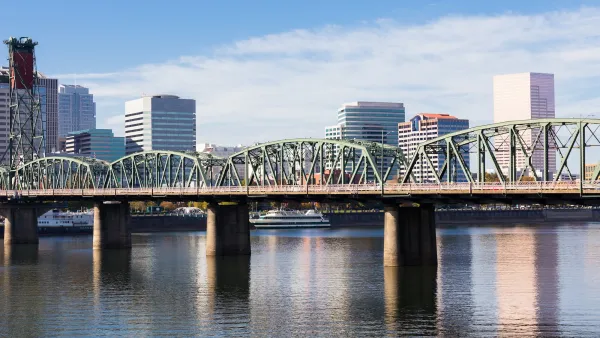
Federal agencies give go-ahead to I-5 Columbia River bridge project
The next few months will clarify whether the massive bridge replacement project will secure the funding to move forward as planned.

Now you can cross from Iowa to South Dakota on a pedestrian bridge
The Big Sioux Pedestrian Bridge connects a park and a golf course on the other side of the Big Sioux River.
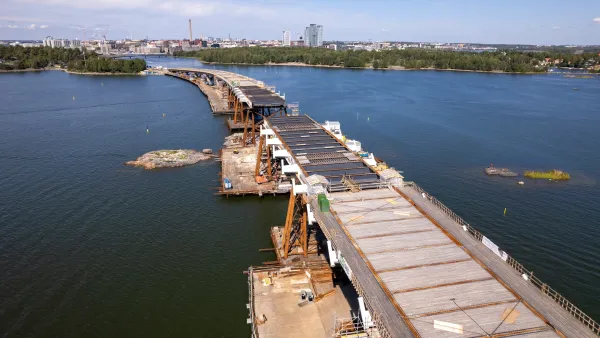
April must-reads: Top 10 articles from last month
The world's longest car-free bridge opens in Finland, Amtrak's new Mardi Gras line shatters ridership predictions, and Bay Area commuters could lose a third of Caltrain stations.

Planetizen Federal Action Tracker
A weekly monitor of how Trump’s orders and actions are impacting planners and planning in America.

The state-sanctioned urbicide of Austin
People don’t kill cities. Freeways do.

US to reduce Colorado River water deliveries to Mexico
A new Colorado Treaty amendment reduces Mexico’s Colorado River water allocation by 250,000 acre feet.

Nation's most wind-powered state turns to coal as data centers increase energy demand
For the first time in decades, Iowa has increased its generation of coal power.

NYC cools commuters with city's first rain garden above a bus stop
New York City officials say the plants in the rain garden can absorb 16 gallons of rainwater during heavy storms.

Brightline West’s future may rely on $6 billion federal loan
The company has until Nov. 2 to make a $400 million equity investment into its proposed high-speed rail line.

FREE Course: Walkable City 1: Why Walkability?
After describing his path towards focusing on walkability as the essence of good planning, Jeff Speck marches through his five principal reasons for making more walkable places.
Reinventing Malls: Planning Alchemy—Turning Gray Fields Into Gold
The course focuses on the opportunities and imperatives that shape reinvention of mall sites.

Greater Baltimore Committee
Eagle County Government
Harvard University Graduate School of Design
The Architects Foundation
University of Cincinnati Online
The Pocatello Development Authority
The Urban Renewal Agency of the City of Pocatello
Journal of the American Planning Association