The City of Palo Alto, CA concludes that grocery stores are a lynchpin of walkable neighborhoods, and votes to establish new "grocery" zoning districts.


Spurred by the potential closure of JJ&F Market, the Palo Alto Planning and Transportation Commission has launched an effort to retain, and encourage, grocery stores. Midsize grocery stores accessible to bicyclists and pedestrians are key components of a thriving community, the commissioners agreed Wednesday night.
"We all do eat," Commissioner Lee Lippert said.
But grocery stores are akin to residences for low-income families, important but also hard to build and operate at a profit "unless there are some really, strong incentives," Lippert said.
The commission voted unanimously Wednesday night to investigate creating a new zoning designation: "G" for grocery. The G would be added as a "combining district" to existing zones, such as neighborhood commercial, to either require or provide incentives for property owners to include new or retain existing grocery stores.
The commission intends to flesh out the details of the proposal at an upcoming study session, Assistant City Attorney Donald Larkin said.
Read the full story: 'Keeping grocery stores' moves to top shelf


Vermont Program Encourages Walking for Grocery Trips
A Burlington program is using grocery trolleys to remind residents that, for many of them, a grocery store is less than a mile away.
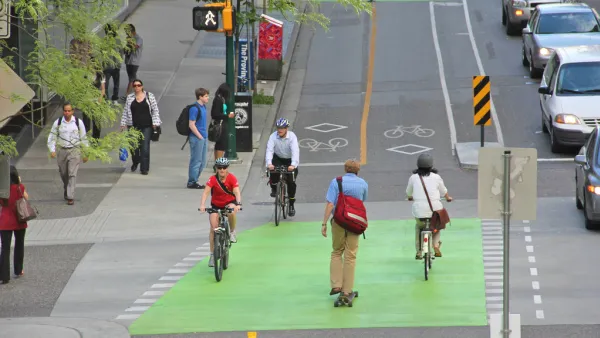
Study: Most of Vancouver Is a ‘15-Minute City’
A large majority of Vancouver residents can access a grocery store in 15 minutes or less by bicycle or on foot.
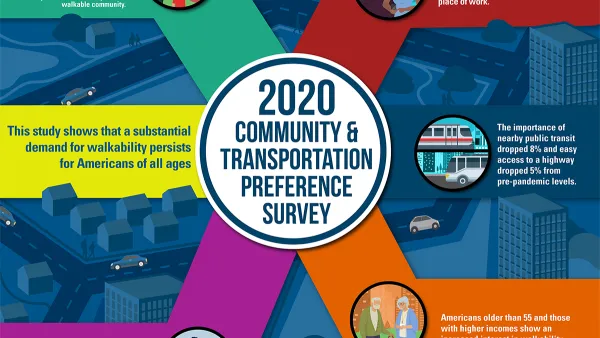
Insights from the 2020 Community and Transportation Preference Survey
The National Association of Realtors' recent Community and Transportation Preference Survey shows that many households prefer living in walkable urban neighborhoods, and those that do have a higher quality of life.

Planetizen Federal Action Tracker
A weekly monitor of how Trump’s orders and actions are impacting planners and planning in America.

‘Going backwards:’ Baltimore mayor, students rally against state's transit funding plan
Maryland's proposed six-year plan provides no funding for Baltimore’s BMORE bus program and reduces its road maintenance funding.

Detroit to transform waterfront with $2.2 billion investment
Developers will convert about 18 acres of unused parking lot space into civic spaces.

Newsom vetoes high-speed rail supervision bill after agency receives condemnatory audit
The audit found the CHSRA approved almost $600,000 in unallowable travel expenses.

Nation sees first electric plane-boat hybrid take off in public demo
The Viceroy Seaglider can fly at speeds of 180mph for up to 180 miles.

One of nation’s poorest counties to receive $6 billion data center
The developers estimate the project will create 200 permanent jobs and 1,000 temporary construction jobs.

FREE Course: Walkable City 1: Why Walkability?
After describing his path towards focusing on walkability as the essence of good planning, Jeff Speck marches through his five principal reasons for making more walkable places.
Reinventing Malls: Planning Alchemy—Turning Gray Fields Into Gold
The course focuses on the opportunities and imperatives that shape reinvention of mall sites.

City of Thousand Oaks
City of Wisconsin Rapids
Harvard University Graduate School of Design
The Architects Foundation
University of Cincinnati Online
Northern Illinois Transit Authority (NITA)
The Pocatello Development Authority
The Urban Renewal Agency of the City of Pocatello