While mega-condo developments are enlivening districts in and around Miami's urban core, a long moribund downtown business district struggles to keep up. Many hope that small improvements will make a big difference in the area's quest for vitality.


"A year ago, a top Macy's executive ripped the condition of downtown Miami in front of a shocked Chamber of Commerce audience, describing the city's urban core as a place of 'broken curbs, collapsed sidewalks and garbage-strewn empty lots.'
The stinging speech served as something of a wake-up call to community leaders. In the year since, many sidewalks have been repaired. Six uniformed downtown ''ambassadors'' have been hired to deter crime and guide visitors. And new residents have steadily trickled in, attracted by shiny high-rises and short commutes.
The city's central business district, where thousands make the daily trek to work in the office towers and government centers, still has a ways to go. 'What people need to understand is that that place was derelict and in decay for decades,' Miami Mayor Manny Diaz said. 'You can't flip on a switch and change it overnight.'"
Read the full story: Small changes help downtown Miami clean up its image
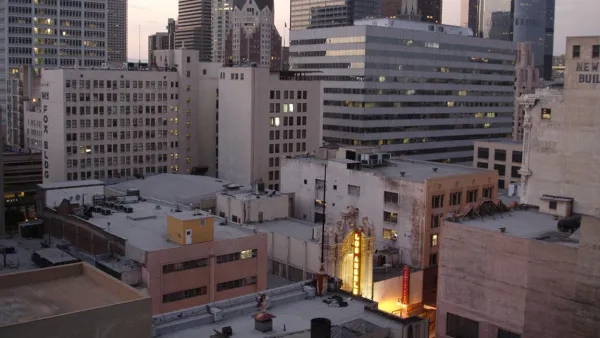
Surveying the Rising Trend of Office-to-Residential Conversions
With office vacancies climbing and a stubborn supply crunch driving up the cost of housing, some downtowns have emerged at the forefront of a new wave of adaptive reuse.
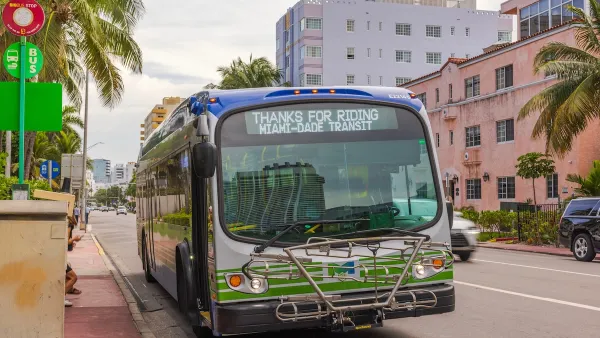
More money, less service: Miami-Dade slashes bus routes after hiking fare
The department is facing a multi-million dollar funding gap.
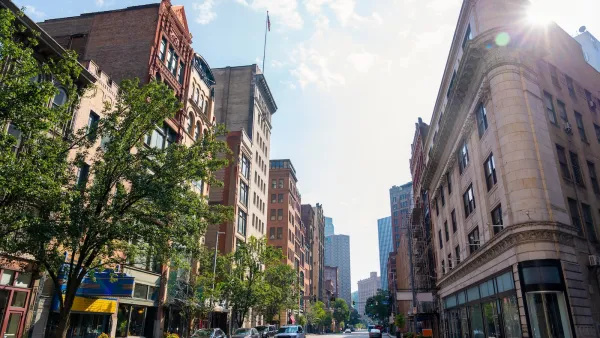
Pittsburgh downtown tax diversion plan draws criticism for lack of transparency
A proposed new development tax faces opposition from transit advocates.

Planetizen Federal Action Tracker
A weekly monitor of how Trump’s orders and actions are impacting planners and planning in America.

California plans to bury El Niño’s downpour
If the state plays its cards right, it may be able to store a billion acre-feet of El Niño’s water in aquifers.

Desperate measures: Advocates weigh draining Lake Powell to fill Colorado River
Draining the reservoir could reduce evaporation losses by a couple hundred thousand acre-feet.

Los Angeles just elected an urban planner as its mayor
Transportation analysts are optimistic that Raman will be more aggressive in addressing transit issues than Bass.

Mamdani’s pied-à-terre tax survives legal challenge
A panel of judges found that the plaintiffs failed to demonstrate injury as a result of New York City's implementation of the tax.

Eastern Nebraska is running out of electricity
Data centers and electrification are straining eastern Nebraska’s grid, throttling economic development.

FREE Course: Walkable City 1: Why Walkability?
After describing his path towards focusing on walkability as the essence of good planning, Jeff Speck marches through his five principal reasons for making more walkable places.
Reinventing Malls: Planning Alchemy—Turning Gray Fields Into Gold
The course focuses on the opportunities and imperatives that shape reinvention of mall sites.

City of Rosemead
Rutgers University, Edward J. Bloustein School of Planning and Public Policy
One Hundred Miles
University of Michigan School for Environment and Sustainability (SEAS)
Hunter College, City University of New York (CUNY)
The Architects Foundation
City of Cambridge
Montrose County
The Pocatello Development Authority