A new report from the U.S. Census shows that the Sunbelt continues to lead the nation in population growth, with Dallas-Fort Worth showing the greatest gains.


"More people moved to Dallas-Fort Worth, Texas, than to any other metropolitan area in the United States last year. The population there increased by 162,250 between July 1, 2006, and July 1, 2007, according to a new U.S. Census Bureau report. Atlanta, Phoenix and Houston also saw their ranks swell by more than 100,000 people each.
The census measures metro areas with the biggest population increases, as well as the fastest-growing metro areas. But the survey actually shows slower growth compared to previous years, according to William Frey, demographer at the Brookings Institution in Washington, D.C.
St. George, Utah; Raleigh-Cary, N.C.; and Gainesville, Ga., were also among the fastest growing metropolitan areas in the United States.
Indeed, eight out of the top ten fastest growing metro areas were located in the South, and the South also accounted for more than half of the 50 fastest growing regions.
The Sunbelt is the fastest growing part of the country because in large part thanks to its lower cost of living - from housing and groceries to taxes. The region has been one of the fastest growing for years now, says Frey and, "growth breeds more growth." As more people move to an area, there is increasing demand for goods and services, which creates more jobs.
Raleigh and Charlotte have been growing rapidly for close to 30 years, according to Bill Tillman, state demographer of the North Carolina Office of State Budget and Management. Research Triangle Park, a science and technology hub, and the increasing number of national banks based in Charlotte are the area's biggest draws."
Read the full story: Dallas-Fort Worth tops population growth

US Census Starts Using Postal Workers as Census Takers
A test program is using postal carriers to administer Census questionnaires.
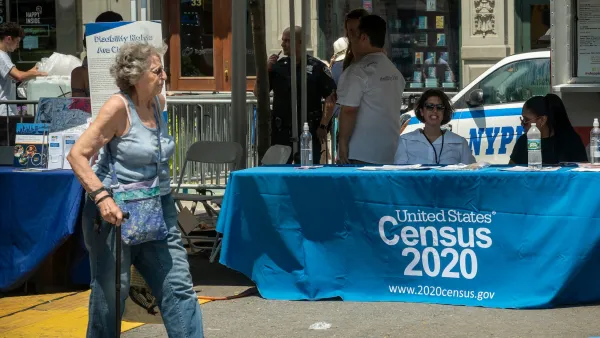
Two Lawsuits Aim to Strip Immigrants, Privacy Protections From US Census
The two cases could have major impacts on how Americans are counted in the next census.
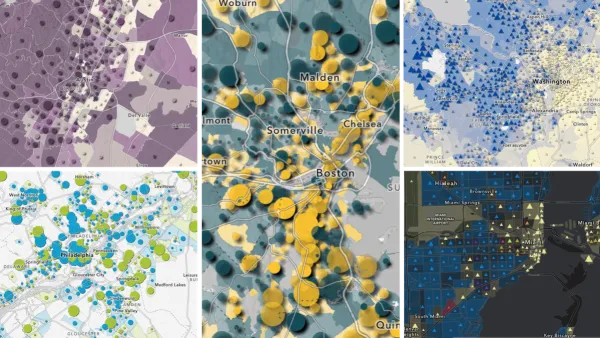
Explore US Demographics With the New ACS Atlas Collection
Esri's new ACS Atlas Collection offers interactive applications that visualize the latest U.S. demographic and socio-economic data, enabling users to explore over 175 curated web maps across various thematic areas.

Planetizen Federal Action Tracker
A weekly monitor of how Trump’s orders and actions are impacting planners and planning in America.

California plans to bury El Niño’s downpour
If the state plays its cards right, it may be able to store a billion acre-feet of El Niño’s water in aquifers.

Desperate measures: Advocates weigh draining Lake Powell to fill Colorado River
Draining the reservoir could reduce evaporation losses by a couple hundred thousand acre-feet.

US buildings threatened, destroyed by fires set to triple by 2060
Researchers found a high fire risk for socioeconomically vulnerable neighborhoods in the American West.

LA residents may be allowed to paint their own crosswalks
Councilwoman Katy Yaroslavsky put out a motion instructing the Los Angeles Department of Public Transportation to study the feasibility of allowing volunteers to paint crosswalks.

Dallas moves to overhaul its zoning code
The city's zoning reform will allow more multi-family and mixed-use developments.

FREE Course: Walkable City 1: Why Walkability?
After describing his path towards focusing on walkability as the essence of good planning, Jeff Speck marches through his five principal reasons for making more walkable places.
Reinventing Malls: Planning Alchemy—Turning Gray Fields Into Gold
The course focuses on the opportunities and imperatives that shape reinvention of mall sites.

City of Rosemead
Rutgers University, Edward J. Bloustein School of Planning and Public Policy
One Hundred Miles
Hunter College, City University of New York (CUNY)
The Architects Foundation
University of Cincinnati Online
City of Cambridge
Montrose County
The Pocatello Development Authority