Officials in Miami-Dade County have just released their parks master plan, an ambitious proposal that looks to go beyond creating park space by redefining the region's public realm.


"Miami-Dade County on Friday will roll out an extraordinarily ambitious parks and open-space master plan that aims over the next half-century to re-green and reconnect a community that has spent much of the previous 50 years carving up and paving over the natural landscape."
"'This is probably the single most important thing that Miami-Dade Parks and Recreation has been involved in in decades,' said county parks director Jack Kardys. 'It really is about leaving a legacy for the community.'"
"The plan, approved last month by the County Commission, reaches well beyond traditional park concepts to what planners call 'the public realm' -- laying out new principles to guide not only how the county plans parks and public places, but also how it builds and designs streets and sidewalks to encourage more people to walk and bicycle. It calls for what amounts to a massive makeover of Miami-Dade's asphalt look and, planners hope, its increasingly congested quality of life."
"Among its most ambitious elements: a 40-mile-plus bikeable loop connecting Biscayne and Everglades national parks along Southwest 328th and 344th streets at the southern end of the county, and a vast north-to-south recreational and ecological zone along the eastern edge of the Everglades, most of it on land already under public control."
Read the full story: Dade rolling out massive parks plan
Best Ideas of the Week
We all know there's a lot of planning going on around the world. Much of it is poor, short-sighted and generally just no good. But there are also some really great ideas being developed and adopted, and they should be considered by cities and communities all over the world as instructive examples of good planning. Here are what I think are some of the best ideas in urban planning from the last week.
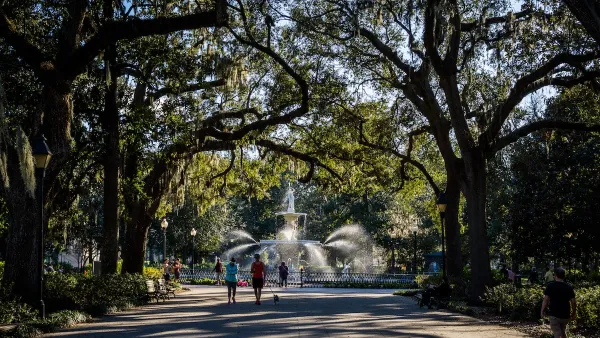
Survey: US Public Spaces Not Meeting Community Needs
A lack of funding prevents many U.S. parks and public spaces from playing a more significant role in helping residents meet daily needs.
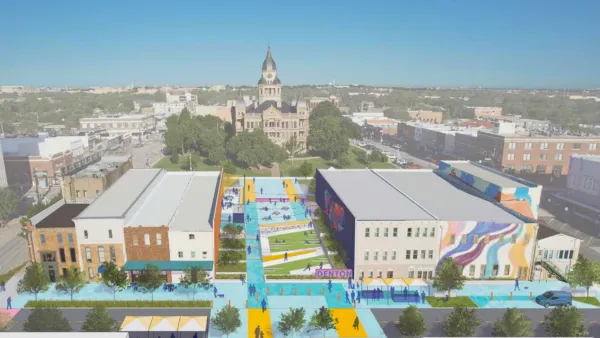
North Texas Town Launches Downtown Revitalization Plan
The Design Downtown Denton plan takes aim at improving walkability and highlighting the city’s historic assets.

Planetizen Federal Action Tracker
A weekly monitor of how Trump’s orders and actions are impacting planners and planning in America.

California plans to bury El Niño’s downpour
If the state plays its cards right, it may be able to store a billion acre-feet of El Niño’s water in aquifers.

Desperate measures: Advocates weigh draining Lake Powell to fill Colorado River
Draining the reservoir could reduce evaporation losses by a couple hundred thousand acre-feet.

Mamdani’s pied-à-terre tax survives legal challenge
A panel of judges found that the plaintiffs failed to demonstrate injury as a result of New York City's implementation of the tax.

Eastern Nebraska is running out of electricity
Data centers and electrification are straining eastern Nebraska’s grid, throttling economic development.

Seattle passes record-breaking transit services expansion
Proposition 1 will double the city’s transit tax to add 95,000 more bus trips and preserve 180,000 bus trips annually.

FREE Course: Walkable City 1: Why Walkability?
After describing his path towards focusing on walkability as the essence of good planning, Jeff Speck marches through his five principal reasons for making more walkable places.
Reinventing Malls: Planning Alchemy—Turning Gray Fields Into Gold
The course focuses on the opportunities and imperatives that shape reinvention of mall sites.

City of Rosemead
Rutgers University, Edward J. Bloustein School of Planning and Public Policy
One Hundred Miles
University of Michigan School for Environment and Sustainability (SEAS)
Hunter College, City University of New York (CUNY)
The Architects Foundation
City of Cambridge
Montrose County
The Pocatello Development Authority