The coal industry, electric utilities and manufacturers are in line to get trillions of dollars in federal funding to reduce carbon emissions, leaving virtually no money for smart growth and transit solutions to climate change.


"Some of planners' favorite ways of combating climate change are facing major obstacles, including "smart growth." In Washington, DC, the coal companies and utilities are doing a better job of lobbying than are the proponents of smart growth and transportation alternatives, reports Bill Fulton. Planning and transit advocates -- who want to reduce reliance on the automobile and therefore cut tailpipe emissions -- have simply not been involved in the climate change bill that would direct up to $4.5 trillion over 50 years toward reducing greenhouse gas emissions."
"Meanwhile, in California, a coalition of environmental justice advocates has announced its firm opposition to a cap and trade system that many people see as essential to the state meeting its greenhouse gas emissions reduction goals. The EJ advocates have important allies in their fight against what they contend is business as usual at the expense of poor people."
Thanks to Paul Shigley
Read the full story: Big Coal Dominates While Smart Growthers Snooze

EPA Plans “Largest Deregulatory Action” in History
The agency plans to repeal a key 2009 rule that underpins the government’s authority to regulate greenhouse gas emissions.
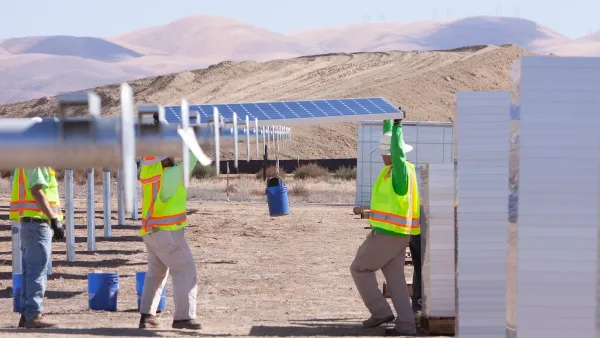
21 Climate Resilience Projects Cancelled by the EPA
The federal government has pulled funding for at least 21 projects related to farming, food systems, and environmental justice to comply with one of Trump’s early executive orders.
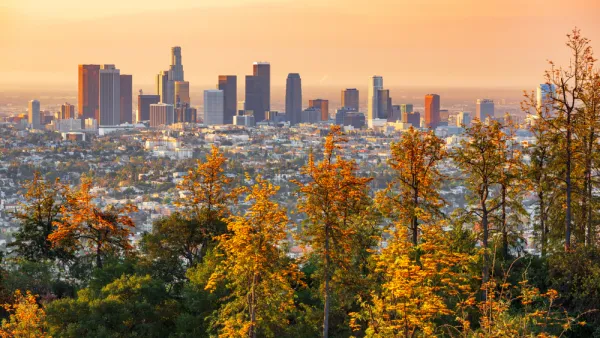
LA’s Trees Absorb More Carbon Than Expected, But Can’t Do It Alone
A USC study finds that Los Angeles’ urban trees absorb more carbon than expected, but while they provide crucial environmental benefits, they cannot replace the urgent need for systemic emissions reductions.

Planetizen Federal Action Tracker
A weekly monitor of how Trump’s orders and actions are impacting planners and planning in America.

California plans to bury El Niño’s downpour
If the state plays its cards right, it may be able to store a billion acre-feet of El Niño’s water in aquifers.

Chicago breaks ground on $3 billion megadevelopment
The new neighborhood, titled Foundry Park, will one day host 3,700 residences.

This road in NYC is infamously dangerous — and Mamdani can't fix it
New York City's Ocean Parkway is known for reckless driving, but the power to implement safety measures lies with the state rather than the city.

One of Denver’s busiest corridors to gain BRT
The project will span 18 miles and contain 74 bus rapid transit stations.

275,000 bus trips are at stake on Seattle's ballot
If passed, the Seattle Transit Measure would trigger a 0.3% sales tax and raise an average of $138 million per year to maintain and expand Seattle’s bus services.

FREE Course: Walkable City 1: Why Walkability?
After describing his path towards focusing on walkability as the essence of good planning, Jeff Speck marches through his five principal reasons for making more walkable places.
Reinventing Malls: Planning Alchemy—Turning Gray Fields Into Gold
The course focuses on the opportunities and imperatives that shape reinvention of mall sites.

City of Rosemead
Rutgers University, Edward J. Bloustein School of Planning and Public Policy
One Hundred Miles
Hunter College, City University of New York (CUNY)
The Architects Foundation
University of Cincinnati Online
City of Cambridge
Montrose County
The Pocatello Development Authority