Proposed housing developments in the urban core of Waco, Texas, have given many in the city high hopes for a denser, more vibrant central city.


"Residential construction planned in the next two years at the old Waco High School and around Heritage Square would bring at least 860 new residents to downtown."
"That includes 368 beds of student housing that Town Square Partners are planning next to the Courtyard at Marriott. A block away, the Austin Avenue Flats are under construction, with about half of the first 47 apartments already sold or leased. Construction will begin next year on the second phase of 120 flats, and developer Michael Wray is already scoping out land for more downtown apartments."
"'This is the first or second inning of nine,' Wray said. 'I think this is going to shock people, but over the next five to seven years it would not be surprising to have three or four thousand people living within six blocks of City Hall.'"
"To put that in perspective consider the 2000 census figures for downtown. Census Tract 1 - about 1 square mile bordered by the Brazos River, Waco Drive, 17th Street and Clay Avenue - had only 1,254 residents, not counting those in group homes or institutions. And only a handful of people at that time lived within six blocks of City Hall."
Read the full story: Waco's urban pioneers want vibrant downtown

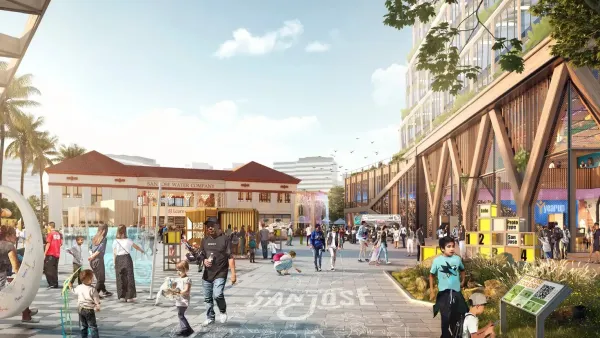
Google Razed 80 Acres in Downtown San Jose. Then… Nothing Happened.
The project was expected to generate about $79 million annually in property taxes.

Office Conversions Have Increased Every Year This Decade
Since the pandemic, office vacancy rates remain high, leading many cities to adjust zoning codes to accommodate adaptive reuse.
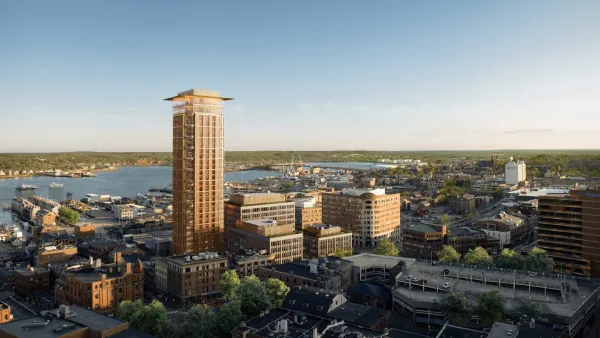
Downtown Portland Ready for Maine's Tallest Building
The city of Portland anticipates a major new urban development addition called the “Old Port Square” project.

Planetizen Federal Action Tracker
A weekly monitor of how Trump’s orders and actions are impacting planners and planning in America.

‘Going backwards:’ Baltimore mayor, students rally against state's transit funding plan
Maryland's proposed six-year plan provides no funding for Baltimore’s BMORE bus program and reduces its road maintenance funding.

Detroit to transform waterfront with $2.2 billion investment
Developers will convert about 18 acres of unused parking lot space into civic spaces.

85-year-old ranch is Texas’ newest state park
The 650 acre ranch is one of the largest parcels of land along Lake Palestine.

MIT to create AI-powered hub for public transportation companies
Google awarded the project, titled the Public Transit Intelligence Hub, $2.1 million in funding.

A 3D concrete printer may solve Virginia’s housing crisis
The printer is able to build concrete walls much faster than humans, and can do so directly at job sites.

FREE Course: Walkable City 1: Why Walkability?
After describing his path towards focusing on walkability as the essence of good planning, Jeff Speck marches through his five principal reasons for making more walkable places.
Reinventing Malls: Planning Alchemy—Turning Gray Fields Into Gold
The course focuses on the opportunities and imperatives that shape reinvention of mall sites.

City of Thousand Oaks
City of Wisconsin Rapids
Harvard University Graduate School of Design
The Architects Foundation
University of Cincinnati Online
Northern Illinois Transit Authority (NITA)
The Pocatello Development Authority
The Urban Renewal Agency of the City of Pocatello