After opting to use an electric car instead of repairing her Volvo, Cori Howard wonders if the electric car has a future.


"There are currently 20 electric cars on public roads in British Columbia and 10 more in private areas. [They are] only allowed to go up to 40 kilometres an hour. The IT can't go on roads, bridges or highways with speed limits above 50 km/h. This is according to federal Department of Transportation legislation that has only been adopted in British Columbia. (Ontario and Quebec have both recently expressed an interest in fast-tracking low-speed vehicle legislation, but no further action has been taken.) The speed restrictions are based on safety concerns; the vehicle has never been crash-tested.
But there are limitations beyond the speed. The electric car only travels 50 kilometres before running out of juice. After that, you have to plug it into an electrical outlet overnight.
For driving around a 10-block radius, this car is great. But it's still not reliable or useful. If it can't make it across town for drinks with friends or to a hockey game, what's the point? And I can't quite envision a near future with electrical outlets stationed all over the city for a quick plug-in.
Until the electric car goes faster and farther, my Volvo doesn't seem like such a bad ride for me and my family."
Read the full story: Stalling out on Electric Avenue


Swapping your gas car for an EV is greener than keeping it, research shows
An EV repays the 'carbon debt' caused by building it after 4,400 miles.

Florida wants to shift its entire EV charger budget to air taxi 'vertiports'
FDOT argues the private sector is already building out the state's fast-charging infrastructure, so the state could redirect those funds elsewhere.
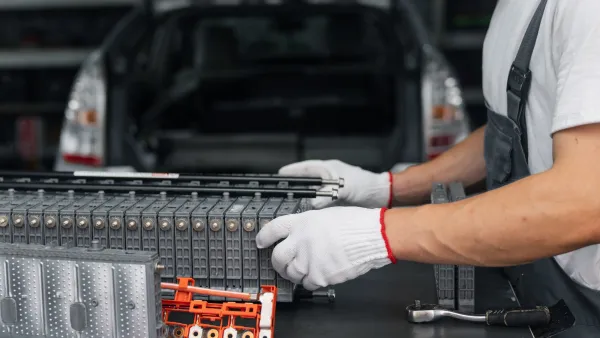
EV battery waste threatens to overwhelm China's recycling system
The county processed over 400,000 metric tons of EV battery waste last year.

Planetizen Federal Action Tracker
A weekly monitor of how Trump’s orders and actions are impacting planners and planning in America.

Data reveals that NYC’s bet on congestion pricing has paid off
After almost two years of the program, reports show positive impacts on traffic and air quality and no disruptions to parking.

HUD modernizes 50-year-old manufactured housing framework
The Next Generation Manufactured Housing Action Plan establishes new energy-efficiency standards for manufactured homes, and new guidelines for anchoring them.

Chicago city vehicles are on the hunt for illegally-parked cars
Cameras on the vehicles can automatically issue tickets to drivers who park their cars in bus or bike lanes.

Small single-family homes are illegal in most of MA. Voters can change that
Most land zoned for single-family housing in Massachusetts requires at least 40,000 square feet of land per house.

Public steps inside U.S.’s first battery-powered train
Metra’s groundbreaking train feature modern seats and a futuristic battery car.

FREE Course: Walkable City 1: Why Walkability?
After describing his path towards focusing on walkability as the essence of good planning, Jeff Speck marches through his five principal reasons for making more walkable places.
Reinventing Malls: Planning Alchemy—Turning Gray Fields Into Gold
The course focuses on the opportunities and imperatives that shape reinvention of mall sites.

One Hundred Miles
County of Mendocino
planning NEXT
The Architects Foundation
University of Cincinnati Online
Montrose County
Northern Illinois Transit Authority (NITA)
The Pocatello Development Authority