A proposal to sell the naming rights of Chicago's Wrigley Field is being seen as a relaxation of the ballpark's historic landmark restrictions and may open the door for city-wide landmark designation challenges, according to this commentary.


"By arguing that the City of Chicago should 'relax' landmark restrictions on the ballpark, proponents of a deal that would have a state agency buy and renovate the park would undermine decades of carefully structured protection for Chicago's architectural treasures."
"The deal would almost surely embolden some property owners of landmark building throughout Chicago -- there are 259 individual landmarks and 49 landmark districts across the city, encompassing more than 9,000 properties -- to go back and challenge landmark status that the City Council had previously approved."
"And that would wreak havoc with legal protections for the city's architectural and historical treasures that were set up 40 years ago to safeguard such structures as Louis Sullivan's former Carson Pirie Scott & Co. store or Frank Lloyd Wright's Robie House."
FULL STORY: Why Wrigley Field's landmark status should be preserved

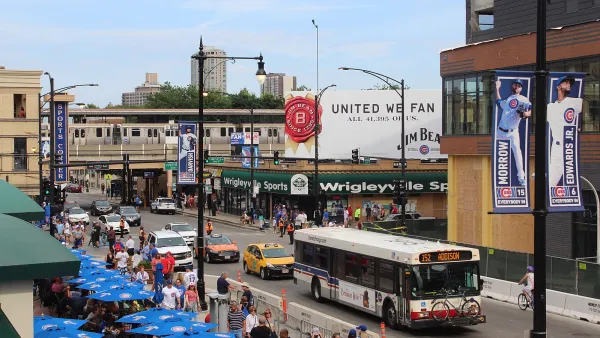
New Development Continues in Wrigleyville
New mixed-use projects bring residential units, retail, and entertainment venues to the neighborhood surrounding Chicago's Wrigley Field as stadium-adjacent development grows in popularity.
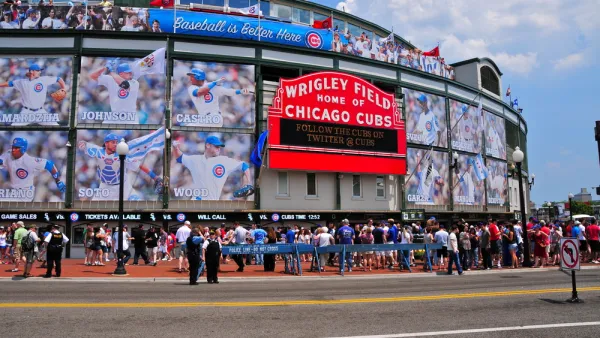
Dynamic Parking Prices Lack Political Will, Local Support Near Wrigley Field
Setting the example for the rest of city was too tough a pill to swallow for businesses located near Wrigley Field.
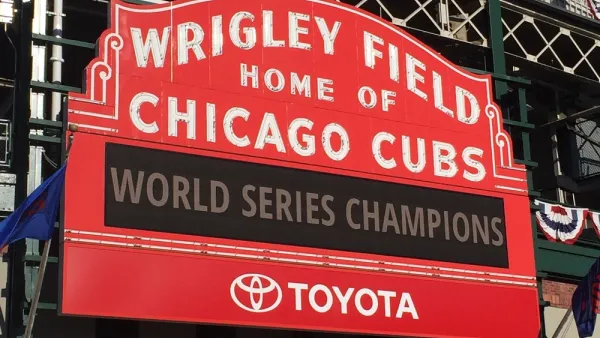
New Public Space Outside Wrigley Field Just Another Win for Chicago
Chicago Cubs fans looking to bask in the glory of the team's first World Series victory since 1908 will find a new public plaza and lawn next to the stadium. The plaza will be open to the public on non-baseball days too.

Planetizen Federal Action Tracker
A weekly monitor of how Trump’s orders and actions are impacting planners and planning in America.

The state-sanctioned urbicide of Austin
People don’t kill cities. Freeways do.

US to reduce Colorado River water deliveries to Mexico
A new Colorado Treaty amendment reduces Mexico’s Colorado River water allocation by 250,000 acre feet.

Mamdani overhauls NYC's Vision Zero plan with 100 new policy goals
The overhaul aims to reduce traffic deaths and make streets safer for pedestrians, cyclists and drivers through lower speed limits, new safety infrastructure and more.

Amtrak not solely to blame for New Jersey commuter rail's unreliability, report finds
A new study from the Garden State Initiative found that NJ Transit’s budget grew 20% across a 4 year period, but reliability declined significantly over the same period.

EPA erases limits on planet-warming pollution from power plants
Under Monday’s plan, power plants would still have some limits on how much mercury, arsenic and other contaminants they can emit.

FREE Course: Walkable City 1: Why Walkability?
After describing his path towards focusing on walkability as the essence of good planning, Jeff Speck marches through his five principal reasons for making more walkable places.
Reinventing Malls: Planning Alchemy—Turning Gray Fields Into Gold
The course focuses on the opportunities and imperatives that shape reinvention of mall sites.

Eagle County Government
Harvard University Graduate School of Design
Nashville Planning Department
The Architects Foundation
University of Cincinnati Online
The Pocatello Development Authority
The Urban Renewal Agency of the City of Pocatello
Journal of the American Planning Association