Sounding eerily similar to his London counterpart, New York Mayor Michael Bloomberg called on the federal government to adopt a national carbon tax. Bloomberg is currently pushing congestion pricing similar to London's program implemented in 2003.


"New York City Mayor Michael Bloomberg called for a national greenhouse gas tax on Friday, Nov. 2, saying it would slow global warming and fund a $500 a year tax cut for the average taxpayer."
Bloomberg acknowledged the regressiveness of a carbon tax:
"The energy industry likely would pass on the cost of the new tax to the consumer, the mayor admitted on his weekly ABC radio show. "So yes, it gets passed on, but the people who suffer the most get the benefit in the other direction, and the whole world benefits because we pollute less," he explained."
Congress has apparently chosen to ignore the carbon tax approach and is considering a "cap and trade" pricing system approach instead.
"But Bloomberg, a former Republican whose switch to the independent party earlier this year sparked speculation of a presidential bid, slammed the cap-and-trade approach.
"The primary flaw of cap-and-trade is economic -- price uncertainty; while the primary flaw of a pollution fee is political -- the difficulty of getting it through Congress."
From NYT blog:
"Mr. Bloomberg presented his carbon tax proposal (in a Friday, Nov.2 speech) at a two-day climate protection summit in Seattle organized by the United States Conference of Mayors. In calling for a carbon tax, Mr. Bloomberg was again speaking out on national issues, as he has on gun control and public health matters like smoking and obesity."
Thanks to Rafael Aguilera
Read the full story: NYC mayor urges carbon tax to cut individual taxes

Eastern Nebraska is running out of electricity
Data centers and electrification are straining eastern Nebraska’s grid, throttling economic development.

Move over, LA: St. Louis gears up for Olympics, invests millions in downtown redevelopment
The Missouri city will host the 2028 Olympic soccer group stage and knockout matches.
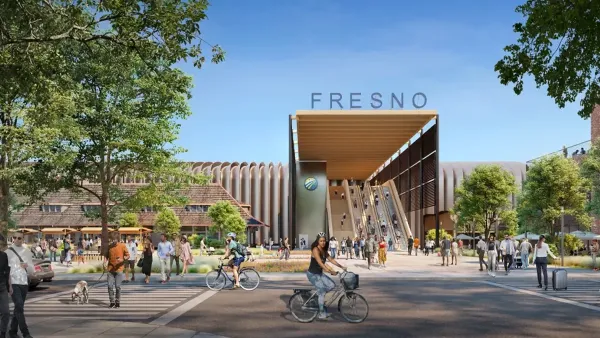
California High-Speed Rail Authority picks trainset manufacturer
The California High-Speed Rail Authority aims to start servicing passengers by 2033.

Dallas releases zoning code overhaul to officials
The drafted overhaul is over 400 pages long.

NYC renovations for dangerous, ‘mercilessly crammed’ street delayed until 2027
Construction was supposed to begin this fall.

San Diego’s Midway Rising project gets greenlight from city council
The project looks to become the largest affordable housing development in California's history.

FREE Course: Walkable City 1: Why Walkability?
After describing his path towards focusing on walkability as the essence of good planning, Jeff Speck marches through his five principal reasons for making more walkable places.
Reinventing Malls: Planning Alchemy—Turning Gray Fields Into Gold
The course focuses on the opportunities and imperatives that shape reinvention of mall sites.

City of Rosemead
Rutgers University, Edward J. Bloustein School of Planning and Public Policy
One Hundred Miles
University of Michigan School for Environment and Sustainability (SEAS)
Hunter College, City University of New York (CUNY)
The Architects Foundation
City of Cambridge
The Pocatello Development Authority
The Urban Renewal Agency of the City of Pocatello