An interview with environmentalist journalist and author David Helvarg about hurricanes, coastal development, New Orleans after Hurricane Katrina, and Bush administration policies.


"...hurricanes are natural phenomena, but they're being unnaturally intensified by our failed policies...It's very disturbing what hasn’t been done in response to last year's hurricane activity, which is we've thrown tens of billions of dollars at contractors in the Gulf region [but] Congress hasn’t committed dollar one to wetlands restoration...which act as natural storm barriers. Every two-and-a-half miles of wetlands reduce storm surge by a foot."
"...no good science goes unpunished in this administration. So, for example, there are a lot of administration people pushing the idea that climate change wasn't linked to last year's hurricanes. In fact, it reflects their inability or unwillingness to hold two thoughts at once...Right now, our government’s in denial. The best available science is creating some of the worst imaginable scenarios, and we have a government that fails to respond."
"It’s foolish to have federal flood insurance that subsidizes people to move in harm's way, that allows people to build second homes on barrier islands. There’s a reason they call them 'barrier islands.'"
"...crisis also is opportunity...150 years ago, some of the leading wealthiest people in this country would have said, 'Getting rid of whale oil is insane. It's the lubricant of the machine age'...Well, we went from whale oil to rock oil. Guess what? The economy expanded. You know, we’re at another moment...I’ve been on the oilrigs...It’s like being on a whaling ship 150 years ago."
Read the full story: "No Good Science Goes Unpunished" - Environmental Journalist David Helvarg on the Bush Administration, Climate Change and Hurricanes


Planetizen Federal Action Tracker
A weekly monitor of how Trump’s orders and actions are impacting planners and planning in America.

The state-sanctioned urbicide of Austin
People don’t kill cities. Freeways do.

Colorado’s Largest Data Center Could Rise Next to Homes — Without a Public Hearing
The proposed campus would consume 11 times the power of Denver International Airport; as it has across the country, opposition mounts.
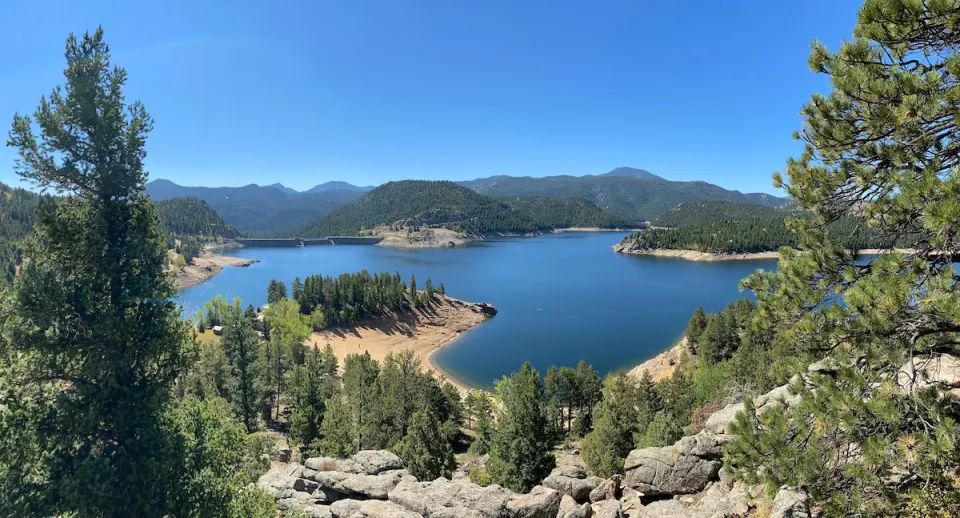
Judges permit Denver to divert 77,000 acre feet from the Colorado River for reservoir expansion
Overuse and climate change have caused the Colorado River’s water levels to plummet.

Amtrak, CN end decades-long dispute with eight-year agreement
The new operating agreement establishes an updated framework for the companies to work together, including processes to resolve disputes.
Raised interest rates may kill financially vulnerable construction projects
The chief economist at ConstructConnect warns that if construction project owners are negatively impacted by the raised rates, it could result in delayed payments to contractors.

FREE Course: Walkable City 1: Why Walkability?
After describing his path towards focusing on walkability as the essence of good planning, Jeff Speck marches through his five principal reasons for making more walkable places.
Reinventing Malls: Planning Alchemy—Turning Gray Fields Into Gold
The course focuses on the opportunities and imperatives that shape reinvention of mall sites.

KFH Group Inc.
Greater Baltimore Committee
Eagle County Government
The Architects Foundation
University of Cincinnati Online
The Pocatello Development Authority
The Urban Renewal Agency of the City of Pocatello