As Miami continues to grow and gentrify, City officials must balance the concerns of their future and existing residents.


"After more than a year of legal challenges and contentious public hearings, Miami city commissioners have settled a pair of high-profile high-rise battles on Biscayne Boulevard: Score it one for developers, one for residents.
But the dust-ups over building heights seem far from over along the rapidly resuscitating upper Biscayne corridor. Residents of its gentrifying neighborhoods have clashed with developers who want to build multistory towers -- buildings now allowed under antiquated rules city leaders are about to scrap.
The developers of Kubik, the edgy 14-story condo-and-retail complex on the boulevard's west side, are set to begin building after the commission gave the project the green light -- for the second time -- by unanimously rejecting an appeal by the Morningside Civic Association."
Read the full story: Commission ends two high-rise building disputes


Planetizen Federal Action Tracker
A weekly monitor of how Trump’s orders and actions are impacting planners and planning in America.

‘Going backwards:’ Baltimore mayor, students rally against state's transit funding plan
Maryland's proposed six-year plan provides no funding for Baltimore’s BMORE bus program and reduces its road maintenance funding.
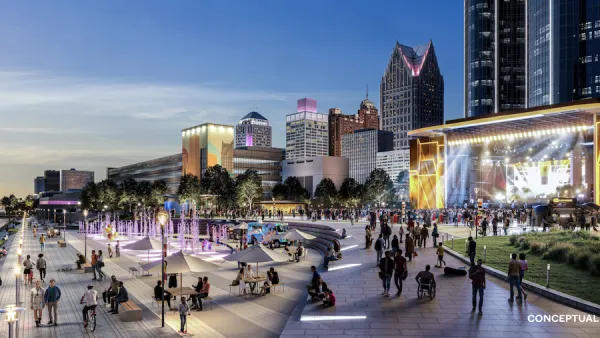
Detroit to transform waterfront with $2.2 billion investment
Developers will convert about 18 acres of unused parking lot space into civic spaces.

25 states, cities sue the EPA over erased power plant emissions limits
The coalition also intends to sue the EPA for not regulating emissions from gas-fired power plants.

Newsom vetoes giving CA tribes greater voice in water projects
In his veto letter, Newsom said the bill would add ‘uncertainty’ to the state’s fight to secure Californians’ water supplies.

Michigan Senate votes to revise 'lax' dam safety laws
A Bridge Michigan investigation found more than 100,000 Michigan residents live in the floodpath of a high or significant-hazard dam.

FREE Course: Walkable City 1: Why Walkability?
After describing his path towards focusing on walkability as the essence of good planning, Jeff Speck marches through his five principal reasons for making more walkable places.
Reinventing Malls: Planning Alchemy—Turning Gray Fields Into Gold
The course focuses on the opportunities and imperatives that shape reinvention of mall sites.

City of Thousand Oaks
City of Wisconsin Rapids
Harvard University Graduate School of Design
The Architects Foundation
University of Cincinnati Online
Northern Illinois Transit Authority (NITA)
The Pocatello Development Authority
The Urban Renewal Agency of the City of Pocatello