The bill makes it very difficult to revoke permits, amplifying the power of whoever is issuing them.


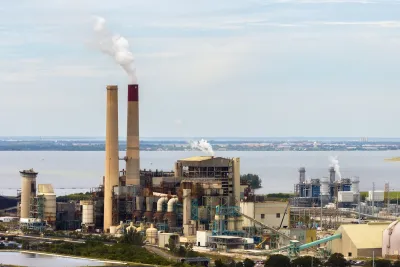
Last week, the Senate voted to open debate on the Bipartisan American Affordability and Jobs Act; on Monday, the Senate voted to close it. A final vote may happen as soon as this week. BAAJA aims to speed up large energy projects, and in doing so, makes it very difficult for government agencies to revoke permits. As such, the bill's impact on climate and energy will depend largely on government leadership: Kate Waxman writes for Inside Climate News, “Permit durability, in other words, is an amplifier. It strengthens whoever happens to be issuing permits.”
What the Trump administration would do if BAAJA passes is uncertain: “Sen. Martin Heinrich (D-N.M.) argues that the bill cuts permitting for a major power line from about two decades to about five years — still too slow for President Donald Trump to finish much, so the next president collects. Earthjustice President Abigail Dillen argues the reverse: Favored industries of the current administration will rush to lock in approvals that no successor can undo. They aren’t disagreeing about the law. They’re making competing forecasts about what could get approved between now and January 2029,” Inside Climate News reports.
Climate models also don’t provide clear results: BAAJA’s impact varies wildly depending on how much fossil fuel production the model assumes will happen. Only time will tell what permits the act will expedite. “Either way, BAAJA doesn’t end the permitting wars. It raises the stakes of every win, for both sides,” Waxman writes.
Read the full story: The New Rules of Permitting

Bill to overhaul energy permitting advances through Senate
The Bipartisan American Affordability and Jobs Act of 2026 still needs to pass the House of Representatives.
Democrats’ victory may threaten act to expedite energy projects
Democrats may decide to vote against the Bipartisan American Affordability and Jobs Act, and negotiate a more favorable bill once the 120th Congress begins.
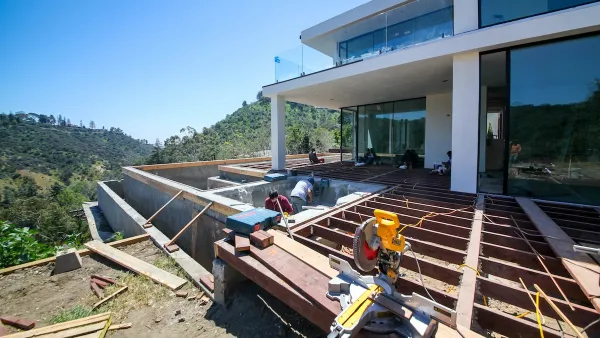
Instead of building new housing, LA developers are turning mansions into mega-mansions
In the richest areas, the number of houses valued at $30 million with demolition permits has skyrocketed since 2018.

Planetizen Federal Action Tracker
A weekly monitor of how Trump’s orders and actions are impacting planners and planning in America.

Eastern Nebraska is running out of electricity
Data centers and electrification are straining eastern Nebraska’s grid, throttling economic development.

Washington state to charge fee to drivers with fuel-efficient cars
Revenue from the fee will go towards supporting the state’s highways.

Final vote on BAAJA may happen this week — what happens if it passes?
The bill makes it very difficult to revoke permits, amplifying the power of whoever is issuing them.

How a Massachusetts city used laser beams to find the root of its tree loss
Cambridge discovered that the most tree loss was occurring on residential lots rather than city-owned property.

Instead of building new housing, LA developers are turning mansions into mega-mansions
In the richest areas, the number of houses valued at $30 million with demolition permits has skyrocketed since 2018.

FREE Course: Walkable City 1: Why Walkability?
After describing his path towards focusing on walkability as the essence of good planning, Jeff Speck marches through his five principal reasons for making more walkable places.
Reinventing Malls: Planning Alchemy—Turning Gray Fields Into Gold
The course focuses on the opportunities and imperatives that shape reinvention of mall sites.

City of Charlotte
City of Rosemead
Rutgers University, Edward J. Bloustein School of Planning and Public Policy
University of Michigan School for Environment and Sustainability (SEAS)
Hunter College, City University of New York (CUNY)
The Architects Foundation
University District Partnership
City of Cambridge
The Pocatello Development Authority