The city is approaching its maximum grid capacity, leaving leaders with tough choices about what projects to siphon energy toward.



San Francisco is approaching its maximum grid capacity — and city leaders will decide today if that justifies extending San Francisco's moratorium on data centers for another 10 and ½ months, Omar Rashad writes for the San Francisco Standard. A recent Planning Department report also warns that if the city allows more data centers, their electricity needs may severely limit housing development and electrification.
The San Francisco Standard reports:
“Concern exists that construction of one or more large data centers in the nearer term could crowd-out available capacity needed for development of new housing and commercial space and for efforts to advance electrification before additional transmission capacity comes online,” the Planning Department report says.
For the extended moratorium to pass, nine of San Francisco's 11 supervisors would need to approve of it. The report also suggested that officials set a threshold on power use for all data centers in San Francisco.
Read the full story: San Francisco’s power grid is nearly maxed out. Will data centers push it over the edge?

Eastern Nebraska is running out of electricity
Data centers and electrification are straining eastern Nebraska’s grid, throttling economic development.

Addressing AI’s Massive Energy Needs
How policy can support ‘efficiency-forward’ approaches to AI growth.
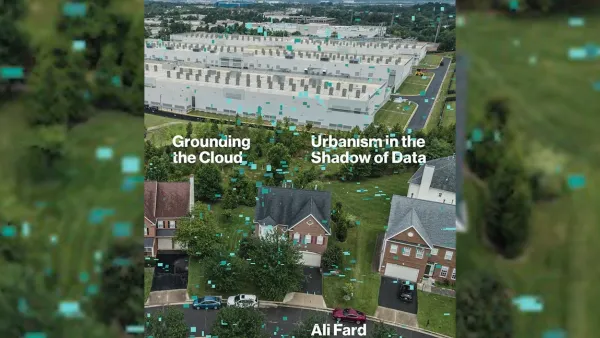
What is the impact of cities' ever-growing reliance on the tech sector?
Book review: "Grounding the Cloud: Urbanism in the Shadow of Data" is an important look at how we define and understand the cloud.

Planetizen Federal Action Tracker
A weekly monitor of how Trump’s orders and actions are impacting planners and planning in America.
Eastern Nebraska is running out of electricity
Data centers and electrification are straining eastern Nebraska’s grid, throttling economic development.

Study reveals best places in the U.S. for cycling, walking
New research from Streetlight Data examines bicycle and pedestrian miles per capita in the 100 largest U.S. cities by population.

Next-generation nuclear reactors are coming to Texas
The reactors will not require towering containment structures thanks to new safety features.

California distributes $1.3 billion to prevent transit service cuts, bolster projects
Twenty-eight projects across California received a portion of the funding.

Pennsylvania Democrats have 15 affordability, clean energy bills for flipped state Senate
Bills in consideration include a bill supporting geothermal energy and a bill supporting solar on warehouses.

FREE Course: Walkable City 1: Why Walkability?
After describing his path towards focusing on walkability as the essence of good planning, Jeff Speck marches through his five principal reasons for making more walkable places.
Reinventing Malls: Planning Alchemy—Turning Gray Fields Into Gold
The course focuses on the opportunities and imperatives that shape reinvention of mall sites.

City of Charlotte
City of Rosemead
Rutgers University, Edward J. Bloustein School of Planning and Public Policy
University of Michigan School for Environment and Sustainability (SEAS)
Hunter College, City University of New York (CUNY)
The Architects Foundation
City of Cambridge
The Pocatello Development Authority
The Urban Renewal Agency of the City of Pocatello