In its permit application, Valar asked for the county to confirm that changes within its outlined plan would still be covered by the permit.


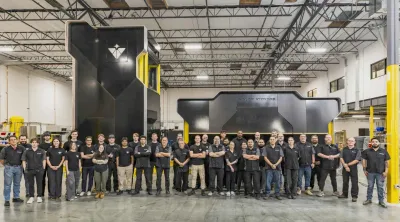
Valar Atomics has officially submitted their plan to build and operate dozens of small nuclear reactors, fabricate nuclear fuel and store the waste on state land in Utah, Sean P. Means writes for the Salt Lake Tribune. The reactors would power manufacturing, data center buildings and labs.
The Salt Lake Tribune reports:
The company’s application for a conditional use permit seeks broad approvals beyond the current plans it describes. Valar wants the county to confirm that it agrees with the company’s reasoning for why all of its planned activities are allowed, and that changes within that outline — such as reactor designs or the number of reactors or buildings — would still be covered by the permit.
Valar plans to build 40 to 120 nuclear reactors on 640 acres of land. Until this week, there has been no opportunity for residents to comment on Valar’s plans.
Read the full story: A Utah startup has officially submitted its plans for nuclear-powered data centers. As it seeks its first permit, here’s what we know.
Trump-backed startup wants 9,000 acres of public land for data center
If approved, developers will build 456 small nuclear reactors on federally-owned land in Utah.
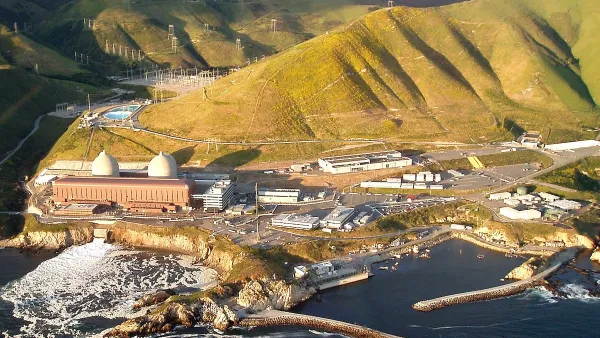
California's Lone Operating Nuclear Plant Gets Five-Year Extension
The Pacific Gas and Electric Company's Diablo Canyon Nuclear Power Plant received approval from the California PUC to operate its two reactors until 2029 and 2030. Five days later, the NRC issued a temporary license renewal.
State Trust Lands Offer Opportunity for Affordable Housing
Western states that hold millions of acres in land trusts are working to turn some of them into affordable housing.

Planetizen Federal Action Tracker
A weekly monitor of how Trump’s orders and actions are impacting planners and planning in America.

Eastern Nebraska is running out of electricity
Data centers and electrification are straining eastern Nebraska’s grid, throttling economic development.

Study reveals best places in the U.S. for cycling, walking
New research from Streetlight Data examines bicycle and pedestrian miles per capita in the 100 largest U.S. cities by population.

To power data centers, Utah company may build hundreds of nuclear reactors on state land
In its permit application, Valar asked for the county to confirm that changes within its outlined plan would still be covered by the permit.

San Antonio is using environmental review to stall ICE detention center
San Antonio sued last month to pause work on the new detention center until the federal government studied its effect on the surrounding area.

Austin plans light rail extension — before breaking ground on light rail
The planned extension is three miles long and will take riders straight to Austin-Bergstrom International Airport.

FREE Course: Walkable City 1: Why Walkability?
After describing his path towards focusing on walkability as the essence of good planning, Jeff Speck marches through his five principal reasons for making more walkable places.
Reinventing Malls: Planning Alchemy—Turning Gray Fields Into Gold
The course focuses on the opportunities and imperatives that shape reinvention of mall sites.

City of Charlotte
City of Rosemead
Rutgers University, Edward J. Bloustein School of Planning and Public Policy
University of Michigan School for Environment and Sustainability (SEAS)
Hunter College, City University of New York (CUNY)
The Architects Foundation
City of Cambridge
The Pocatello Development Authority
The Urban Renewal Agency of the City of Pocatello