The Bipartisan American Affordability and Jobs Act of 2026 still needs to pass the House of Representatives.


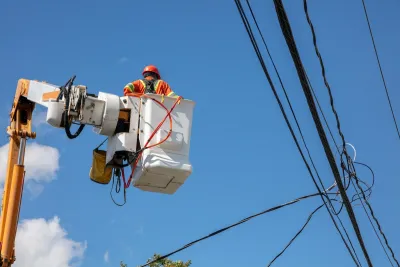
The Senate voted Monday to advance the Bipartisan American Affordability and Jobs Act of 2026, legislation that aims to expedite permitting for large energy projects. The act passed 73-25, propelled primarily by Republicans. Some Democratic senators who voted in favor of the bill emphasized that they would fight for amendments that protect the rights of Native American tribal nations.
“The legislation is an attempt to streamline the rules and regulations that have increased over the past 70 years, hindering the nation’s ability to build infrastructure rapidly. High-voltage transmission lines, crucial for delivery of clean energy, take 10 years on average to build. The issue has become more urgent as electricity demand surges, in part due to the proliferation of artificial intelligence data centers,” Marianne Lavelle and Dan Gearino write for Inside Climate News.
While the bill should make it easier for clean energy projects to get permits, opponents fear the bill will make it harder for states and tribal nations to stop oil and gas pipeline projects. The act still has to pass the House, where Republicans have a slimmer majority.
Read the full story: Senate Advances Permitting Overhaul But Roadblocks Loom
Democrats’ victory may threaten act to expedite energy projects
Democrats may decide to vote against the Bipartisan American Affordability and Jobs Act, and negotiate a more favorable bill once the 120th Congress begins.

Arizona, Wisconsin, Pennsylvania hope to finally advance climate goals post-midterms
The three states have spent years under Republican or divided control.

How a Chicago-sized wind farm beat the odds and powered on
The project spanned five presidential administrations and a standoff with a U.S. military base.

Desperate measures: Advocates weigh draining Lake Powell to fill Colorado River
Draining the reservoir could reduce evaporation losses by a couple hundred thousand acre-feet.

Eastern Nebraska is running out of electricity
Data centers and electrification are straining eastern Nebraska’s grid, throttling economic development.

Move over, LA: St. Louis gears up for Olympics, invests millions in downtown redevelopment
The Missouri city will host the 2028 Olympic soccer group stage and knockout matches.

MTA sends Dem leaders a wish list to mend Trump’s damages
Requests include exempting new train and bus components from tariffs and increasing transit security funding.

Mass. votes against statewide minimum lot size for single-family homes
Over 2 million residents voted on Question 7; it was decided by just over 30,000 votes.

Maryland’s $15 billion bridge project gains key approval
The Maryland Transit Authority said the project will create over 60,000 jobs and add $23 billion to the local economy.

FREE Course: Walkable City 1: Why Walkability?
After describing his path towards focusing on walkability as the essence of good planning, Jeff Speck marches through his five principal reasons for making more walkable places.
Reinventing Malls: Planning Alchemy—Turning Gray Fields Into Gold
The course focuses on the opportunities and imperatives that shape reinvention of mall sites.

City of Rosemead
Rutgers University, Edward J. Bloustein School of Planning and Public Policy
One Hundred Miles
University of Michigan School for Environment and Sustainability (SEAS)
Hunter College, City University of New York (CUNY)
The Architects Foundation
City of Cambridge
The Pocatello Development Authority
The Urban Renewal Agency of the City of Pocatello