Legislation would require 10 governors’ permission to study or build projects moving water outside the basin.


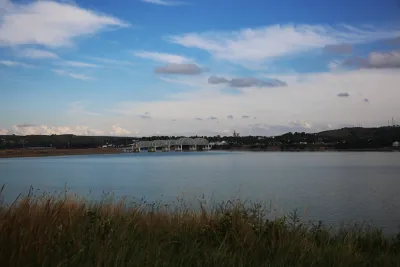
This story was originally published by South Dakota Searchlight, which provides free news and commentary on critical issues facing the state.
Downstream Missouri River states have worried for decades about receiving an insufficient flow of water from upstream dams.
Now they’re worried their share of water could be further diminished by potential pipelines for dry Western states.
The concern is the basis of a dispute about the U.S. House version of the federal Water Resources Development Act. A provision in the bill would require approval from all governors in Missouri River states to study or construct a project that moves water from the river or its tributaries to a non-Missouri River state.
The bill has passed the House and awaits action in the Senate, where a Senate version of the legislation lacks the controversial provision.
Missouri lawmaker and group support provision
The House bill’s definition of “Missouri River states” includes not only the seven states where the river flows — Montana, North Dakota, South Dakota, Nebraska, Iowa, Kansas and Missouri — but also Colorado, Minnesota and Wyoming, which have land within the river’s 530,000-square-mile drainage basin.
A downstream lawmaker, U.S. Rep. Sam Graves, R-Missouri, sponsors the House bill. Supporters of the controversial provision include an organization in his state, the Coalition to Protect the Missouri River.
Shane Kinne is the coalition’s executive director. He said Missourians’ concerns about water shortages are not hypothetical. For the last four years, the U.S. Army Corps of Engineers has limited water releases from upper Missouri River reservoirs, affecting commercial barge traffic downstream.
Kinne said Missouri River Basin states should collaborate “so we can manage the resource together and protect ourselves from Western states looking for water.”
“If this isn’t the proposal, let’s bring some ideas to address this concern,” he said.
Joint opposition: Dakotas, Montana, Wyoming, Colorado, Utah
Kinne’s view faces opposition in upstream states.
The governors of Montana, North Dakota and South Dakota — where the Missouri River flows through a series of dams and reservoirs — recently joined with governors in the Missouri River Basin states of Colorado and Wyoming on a letter opposing the House provision.
Also signing the letter was the governor of Utah, which is not part of the Missouri River Basin. Utah relies on the Colorado River for some of its water, and the state’s Great Salt Lake Commission has mentioned the Missouri River as a potential source of imported water for the vanishing Great Salt Lake.
The governors’ letter says the House provision would give each governor in the 10 Missouri River Basin states “absolute veto power” to stop other states from even “studying the feasibility of projects in a watershed that encompasses one-sixth of the continental United States.”
When the House approved its bill by a vote of 415-9, U.S. Rep. Dusty Johnson, R-South Dakota, was among the nine votes against the legislation, along with representatives from states including North Dakota, Wyoming and Montana. Johnson said the Missouri River provision would hamstring the Army Corps of Engineers’ management of dams and reservoirs.
“Why should the Corps need unanimous approval of the governors to study a project that provides water across state lines?” Johnson said in a statement to South Dakota Searchlight.
Upstream officials worry about implications
Some South Dakota water officials also oppose the House provision.
Jay Gilbertson manages the East Dakota Water Development District, based in Brookings. He acknowledges the bill language would not impede several currently proposed Missouri River pipeline projects in South Dakota, because they would not transport water outside the Missouri River states mentioned in the bill. But he worries “it’s the start of a process that’s going to limit our ability to do things in the future.”
Gilbertson said the provision’s language requiring approval from all 10 governors is bad policy.
“You can’t get 10 states to agree on anything,” he said.
Darrell Raschke views it the same way. He serves on the boards of the Mid-Dakota Rural Water System and the Upper Missouri Water Association.
“One governor says no, you just shot the whole project down,” Raschke said. “Why would you put that in law?”
Read the full story: Potential of Missouri River pipelines to Western states opens new front in upstream-downstream fight

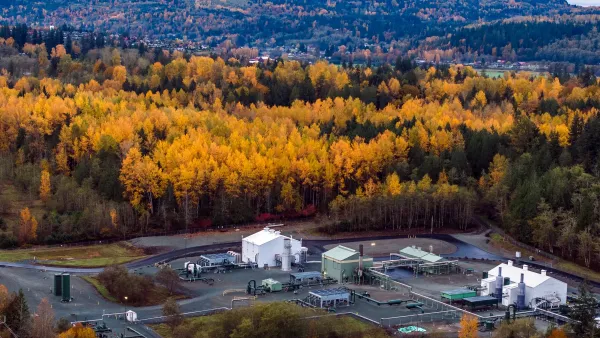
Developers may expand largest gas pipeline network in Northwest
Pipeline giant Williams has proposed new expansions for its Northwest Pipeline from the Colorado Rockies through Idaho, Oregon and Washington.
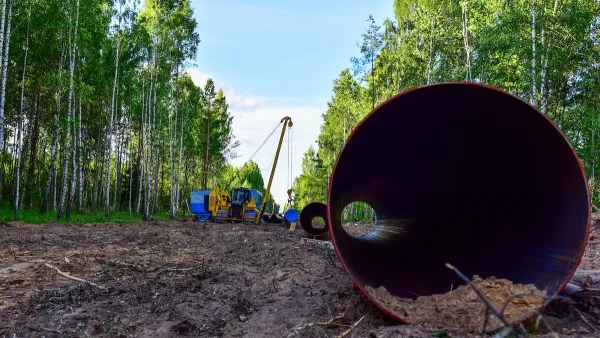
Developers sue Mississippi landowners who object to pipeline through their land
Because the Federal Energy Regulatory Commission approved the pipeline project, the developer can use private land without the consent of the owner.
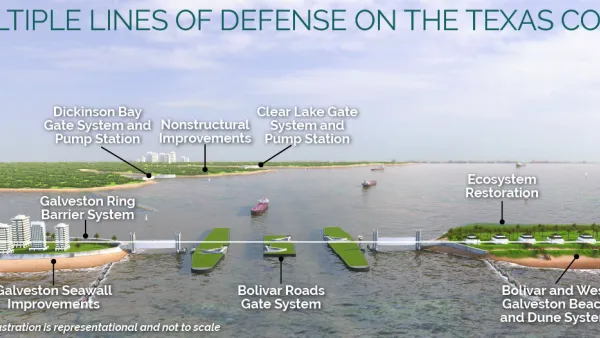
$31 Billion ‘Ike Dike’ Hurricane Protection Project Moving Through Congress
Congress authorized the $31 billion ‘Ike Dike’ sea-level rise adaptation project, along with a laundry list of other water infrastructure projects.

Planetizen Federal Action Tracker
A weekly monitor of how Trump’s orders and actions are impacting planners and planning in America.

California plans to bury El Niño’s downpour
If the state plays its cards right, it may be able to store a billion acre-feet of El Niño’s water in aquifers.

Chicago breaks ground on $3 billion megadevelopment
The new neighborhood, titled Foundry Park, will one day host 3,700 residences.

Want to study the Missouri River? Soon, you may need unanimous approval from 10 states
Legislation would require 10 governors’ permission to study or build projects moving water outside the basin.

Desperate measures: Advocates weigh draining Lake Powell to fill Colorado River
Draining the reservoir could reduce evaporation losses by a couple hundred thousand acre-feet.

This road in NYC is infamously dangerous — and Mamdani can't fix it
New York City's Ocean Parkway is known for reckless driving, but the power to implement safety measures lies with the state rather than the city.

FREE Course: Walkable City 1: Why Walkability?
After describing his path towards focusing on walkability as the essence of good planning, Jeff Speck marches through his five principal reasons for making more walkable places.
Reinventing Malls: Planning Alchemy—Turning Gray Fields Into Gold
The course focuses on the opportunities and imperatives that shape reinvention of mall sites.

City of Rosemead
Rutgers University, Edward J. Bloustein School of Planning and Public Policy
One Hundred Miles
Hunter College, City University of New York (CUNY)
The Architects Foundation
University of Cincinnati Online
City of Cambridge
Montrose County
The Pocatello Development Authority