The new technology marks the Metropolitan Transit Authority's first turnstile redesign in decades.


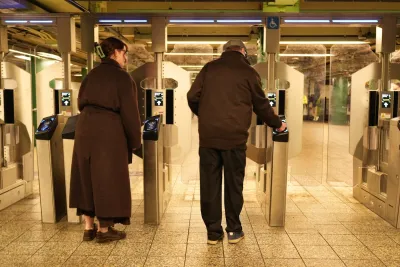
In the agency’s first turnstile redesign since the 1990s, the Metropolitan Transit Authority announced on Oct. 7 it would invest $1.1 billion in modern fare gates that have sliding doors instead of the traditional rotating arms. New York Gov. Kathy Hochul said the new technology would preserve $100 million in fares per year that passengers would otherwise never pay.
The MTA installed the new technology at 20 stations over the last year to test its effectiveness. On average, the new gates reduced fare evasion by 35% — two stations saw a 72% drop. The new gates have tall double doors and cutting-edge sensors, making them “nearly impossible” to crawl under or jump over, Hochul said.
“The MTA said the new gates will roll out to 20 more stations by the end of the year, and will eventually expand to cover 150 of the city’s busiest stations,” Ramsey Khalifeh writes for Gothamist.
Read the full story: MTA moves ahead with $1.1B plan to put modern fare gates at 150 subway stations
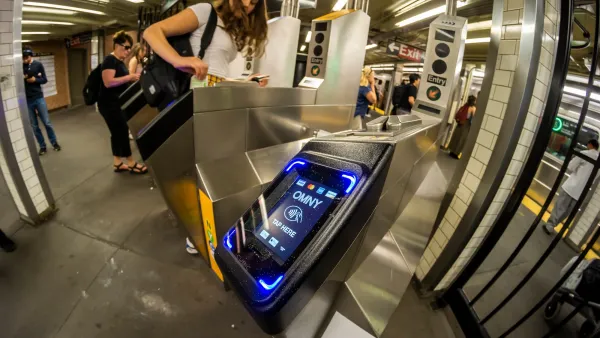
Popular transit payment system linked to Palantir could give ICE access to rider data
The tap-to-pay system is being used widely in transit systems including New York City, Boston and Chicago.
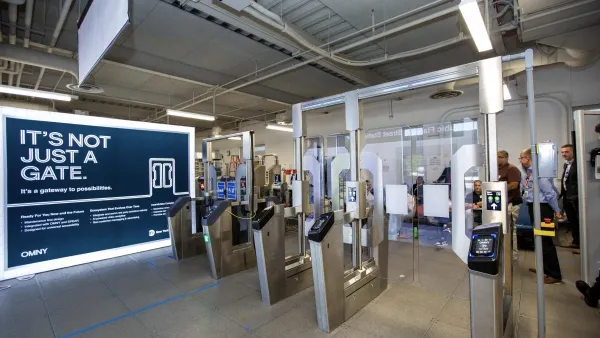
New York MTA Installs ‘Smart’ Fare Gates to Stop Turnstile Hoppers
New fare gates use sensors and higher panels to prevent people from passing without paying, but the tech had a “bumpy rollout” on its first day.
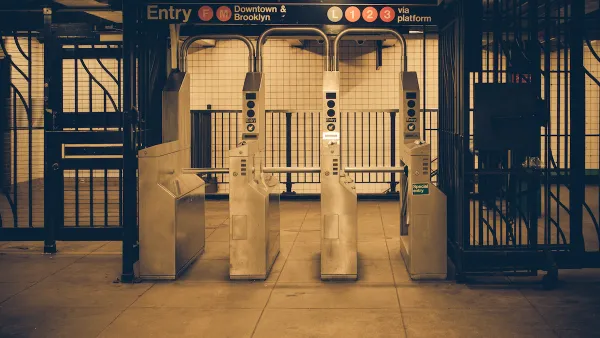
NYC Tests New Subway Gates to Limit Fare Evasion
The mayor has taken a strong interest in enforcing fare collection at the city’s transit stations.

Washington state to charge fee to drivers with fuel-efficient cars
Revenue from the fee will go towards supporting the state’s highways.

Illinois considers spending $1 billion in taxpayer money on data center
A quantum computing campus and data center are currently under construction in Chicago.

Trump to blast ‘hydrocarbon highway’ through ‘world’s longest art gallery’
Environmental and historic preservation groups are suing to stop the project.

NYC, state sue feds over mixed-immigration-status housing assistance rule
The state’s lawsuit argues that the rule change violates the Administrative Procedure Act.

Michigan to turn neighborhood into virtual power plant
Residents will soon be able to divert their excess energy to the grid in exchange for compensation.

Data center, mining project swarm to long-awaited Alaska railroad line
The state-owned railroad approved final plans for the spur line this week; the project is expected to cost $311 million, mostly funded by the federal government

FREE Course: Walkable City 1: Why Walkability?
After describing his path towards focusing on walkability as the essence of good planning, Jeff Speck marches through his five principal reasons for making more walkable places.
Reinventing Malls: Planning Alchemy—Turning Gray Fields Into Gold
The course focuses on the opportunities and imperatives that shape reinvention of mall sites.

City of Charlotte
City of Rosemead
Rutgers University, Edward J. Bloustein School of Planning and Public Policy
University of Michigan School for Environment and Sustainability (SEAS)
Hunter College, City University of New York (CUNY)
The Architects Foundation
University District Partnership