100,000 bikers, pedestrians and horseback riders compete for space on the loop daily, sometimes resulting in deadly collisions.


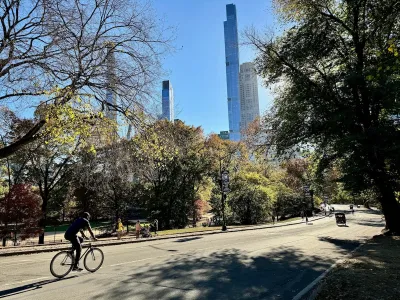
Three people have died in crashes on Central Park’s loop since June, despite then-Mayor Bill de Blasio banning cars from Central Park’s loop in 2018. 100,000 bikers, pedestrians, horseback riders and residents on illegal electric scooters all compete for space on the loop daily, sometimes leading to deadly collisions.
“The latest [death] came on Monday, when police said a 71-year-old man fell from his bike on East Drive near 84th Street while trying to avoid a golden retriever that crossed the busy roadway while off its leash. A 41-year-old man walking at the same intersection was hit and killed by a cyclist last month. And in June, a teen tourist died on West Drive after falling from a runaway horse-drawn carriage,” Liam Quigley writes for Gothamist.
Former Mayor Eric Adams imposed a 15 mph speed limit for bikes in the park, which a local cycling club is suing to block. Other residents have suggested more cycling infrastructure in the park, and a ban on electric bikes and scooters to make the loop safer.
Read the full story: Central Park's car-free loop is busier than ever. Crashes keep piling up.


Researchers Digitally Reconstruct Lost NYC Free Black Village
Central Park rests on the remains of a displaced village built by free Black Americans in the 1820s.
Central Park Climate Lab Launches With a Mission to Save Urban Parks
A unique partnership will offer tools and resources for protecting urban parks from the effects of climate change.

Design in the Time of Cholera: How Pandemics Reshaped the Built Environment
Some of the most beloved public parks and essential advances in public sanitation can be traced back to their roots in the Cholera outbreaks in the 1800s.

Planetizen Federal Action Tracker
A weekly monitor of how Trump’s orders and actions are impacting planners and planning in America.

‘Going backwards:’ Baltimore mayor, students rally against state's transit funding plan
Maryland's proposed six-year plan provides no funding for Baltimore’s BMORE bus program and reduces its road maintenance funding.

Detroit to transform waterfront with $2.2 billion investment
Developers will convert about 18 acres of unused parking lot space into civic spaces.

Central Park has seen three deadly crashes since June. It banned cars 8 years ago.
100,000 bikers, pedestrians and horseback riders compete for space on the loop daily, sometimes resulting in deadly collisions.

SF residents can no longer use potential shadows to block housing developments
The SHADE act also halves the allotted time for certain appeals before projects can progress.

HUD, USDA agree on framework to simplify housing environmental review standards
Their agreement is a requirement of the 21st Century ROAD to Housing Act.

FREE Course: Walkable City 1: Why Walkability?
After describing his path towards focusing on walkability as the essence of good planning, Jeff Speck marches through his five principal reasons for making more walkable places.
Reinventing Malls: Planning Alchemy—Turning Gray Fields Into Gold
The course focuses on the opportunities and imperatives that shape reinvention of mall sites.

planning NEXT
City of Thousand Oaks
City of Wisconsin Rapids
The Architects Foundation
University of Cincinnati Online
Northern Illinois Transit Authority (NITA)
The Pocatello Development Authority
The Urban Renewal Agency of the City of Pocatello