A unique partnership will offer tools and resources for protecting urban parks from the effects of climate change.


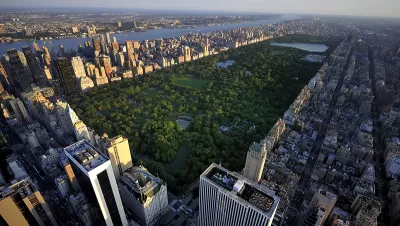
The Central Park Conservancy, the Yale School of the Environment, and the Natural Areas Conservancy have launched a new initiative called the Central Park Climate Lab, which will offer research and new tools to help urban parks deal with the effects of climate change.
According to the announcement, published on January 11, 2022, urban parks in the United States are facing vulnerabilities from climate change without a go-to source of information and policy recommendations about how to adapt.
Enter the Central Park Climate Lab. Central Park offers a unique setting to begin studying climate change adaptation in urban parks as it has been impacted by some of the more severe effects of climate change within the past decade. Research will then expand to other New York City greenspaces and select city parks around the country. With the data acquired, the Lab will build on the work of leading researchers in the field to create new, scalable strategies for implementing climate mitigation and adaption protocols.
The announcement is published as part of a website with more to read an explore. Check it out at the link below.
Read the full story: The Central Park Climate Lab
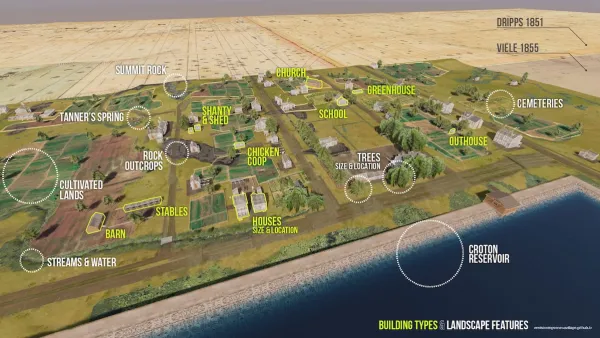
Researchers Digitally Reconstruct Lost NYC Free Black Village
Central Park rests on the remains of a displaced village built by free Black Americans in the 1820s.
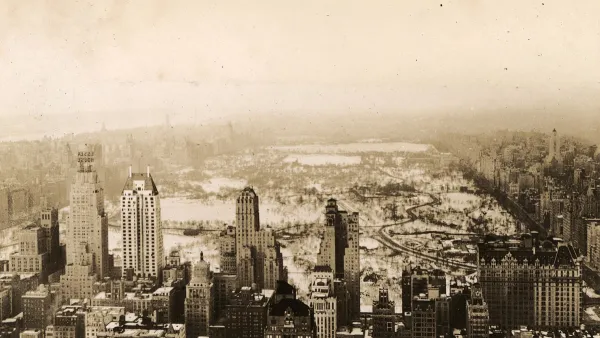
Design in the Time of Cholera: How Pandemics Reshaped the Built Environment
Some of the most beloved public parks and essential advances in public sanitation can be traced back to their roots in the Cholera outbreaks in the 1800s.
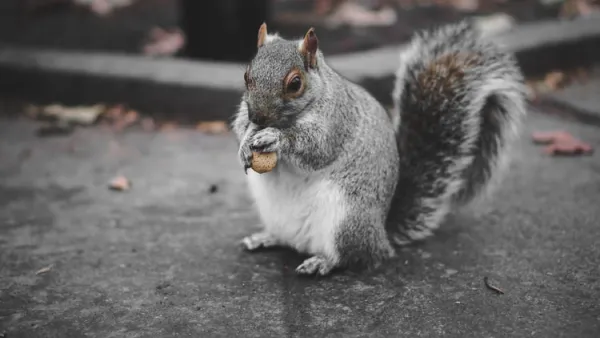
The Central Park Squirrel Census
Some people ask why anyone would want to do a census of all the squirrels in Central Park. Others ask why not?

Planetizen Federal Action Tracker
A weekly monitor of how Trump’s orders and actions are impacting planners and planning in America.

California plans to bury El Niño’s downpour
If the state plays its cards right, it may be able to store a billion acre-feet of El Niño’s water in aquifers.

Desperate measures: Advocates weigh draining Lake Powell to fill Colorado River
Draining the reservoir could reduce evaporation losses by a couple hundred thousand acre-feet.

Los Angeles just elected an urban planner as its mayor
Transportation analysts are optimistic that Raman will be more aggressive in addressing transit issues than Bass.

Mamdani’s pied-à-terre tax survives legal challenge
A panel of judges found that the plaintiffs failed to demonstrate injury as a result of New York City's implementation of the tax.

Eastern Nebraska is running out of electricity
Data centers and electrification are straining eastern Nebraska’s grid, throttling economic development.

FREE Course: Walkable City 1: Why Walkability?
After describing his path towards focusing on walkability as the essence of good planning, Jeff Speck marches through his five principal reasons for making more walkable places.
Reinventing Malls: Planning Alchemy—Turning Gray Fields Into Gold
The course focuses on the opportunities and imperatives that shape reinvention of mall sites.

City of Rosemead
Rutgers University, Edward J. Bloustein School of Planning and Public Policy
One Hundred Miles
University of Michigan School for Environment and Sustainability (SEAS)
Hunter College, City University of New York (CUNY)
The Architects Foundation
City of Cambridge
Montrose County
The Pocatello Development Authority