The chief economist at ConstructConnect warns that if construction project owners are negatively impacted by the raised rates, it could result in delayed payments to contractors.



The Federal Reserve raised interest rates for the first time since 2023 on Sept. 16, potentially damaging the viability of construction projects on shoestring budgets. Construction Dive spoke with Michael Guckes, chief economist at ConstructConnect, a commercial construction data provider, who said the hike could stall or outright kill financially vulnerable projects.
Construction Dive reports:
“If the change in rates severely impacts the project owner, this could result in an unexpected delay in contractor payments,” said Guckes. “In a worst-case scenario, higher rates could force the owner to put the project on hold, or even abandon it, which would leave the contractor saddled with immediate expenses and accounts receivable that are difficult to recoup from the owner.”
Construction Dive also interviewed Brian Strawberry, chief economist at FMI, a construction consulting firm. Strawberry told the publication that while raised interest rates would initially make floating-rate construction loans more expensive, it may be beneficial to construction companies down the line:
“A hike would immediately raise the cost of floating-rate construction loans, which is real money on projects carrying debt, but the bigger effect is likely lower long-term rates,” Strawberry told Construction Dive. “A hike that convinces markets the Fed is serious about inflation tends to pull the 10-year [Treasury] down, and that is where construction actually borrows.”
Read the full story: Fed raises rates but construction has a bigger problem
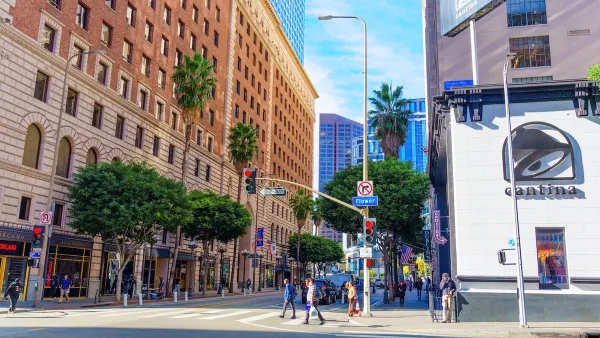
The LA housing policies making developers turn away from the city
Despite LA’s housing shortage, developers say the city’s "mansion-tax" and pandemic-era policies make it an unappealing place to build housing.
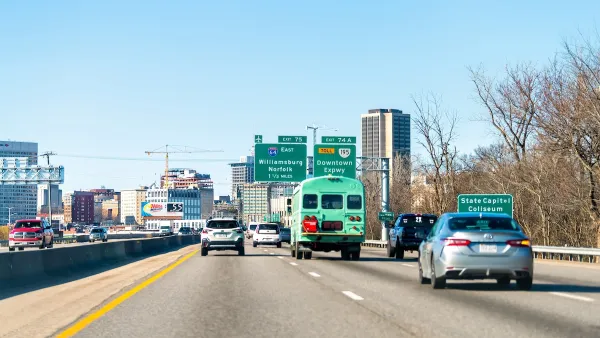
'This is going to be painful:’ Virginia stares down $1.7 billion funding gap for highway maintenance
The state may address the deficit by shifting $290 million from its construction budget to maintenance projects.
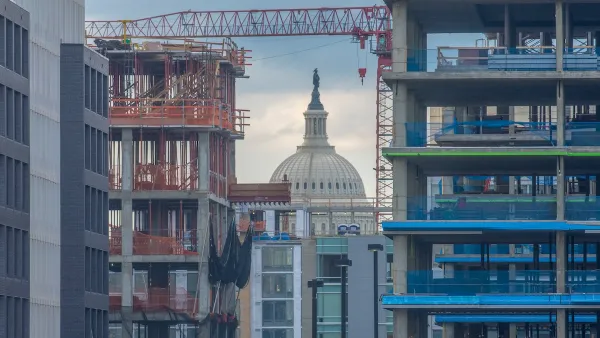
92% of DC Construction Groups Struggle to Hire Workers Amid ICE Raids
Contractors are being forced to delay project timelines as more workers stay home to avoid ICE dragnets.

Planetizen Federal Action Tracker
A weekly monitor of how Trump’s orders and actions are impacting planners and planning in America.

California plans to bury El Niño’s downpour
If the state plays its cards right, it may be able to store a billion acre-feet of El Niño’s water in aquifers.

Desperate measures: Advocates weigh draining Lake Powell to fill Colorado River
Draining the reservoir could reduce evaporation losses by a couple hundred thousand acre-feet.

In Texas, data centers are swallowing promised parkland
Residents who moved to Taylor, Texas for a rural community now have to contend with three data centers in their backyard.

How a Chicago-sized wind farm beat the odds and powered on
The project spanned five presidential administrations and a standoff with a U.S. military base.

MTA gives itself 30 days to transform pit into basketball court
The site has been under construction since 2022; the city originally estimated it would finish the court in 2024.

FREE Course: Walkable City 1: Why Walkability?
After describing his path towards focusing on walkability as the essence of good planning, Jeff Speck marches through his five principal reasons for making more walkable places.
Reinventing Malls: Planning Alchemy—Turning Gray Fields Into Gold
The course focuses on the opportunities and imperatives that shape reinvention of mall sites.

City of Rosemead
Rutgers University, Edward J. Bloustein School of Planning and Public Policy
One Hundred Miles
Hunter College, City University of New York (CUNY)
The Architects Foundation
University of Cincinnati Online
City of Cambridge
Montrose County
The Pocatello Development Authority